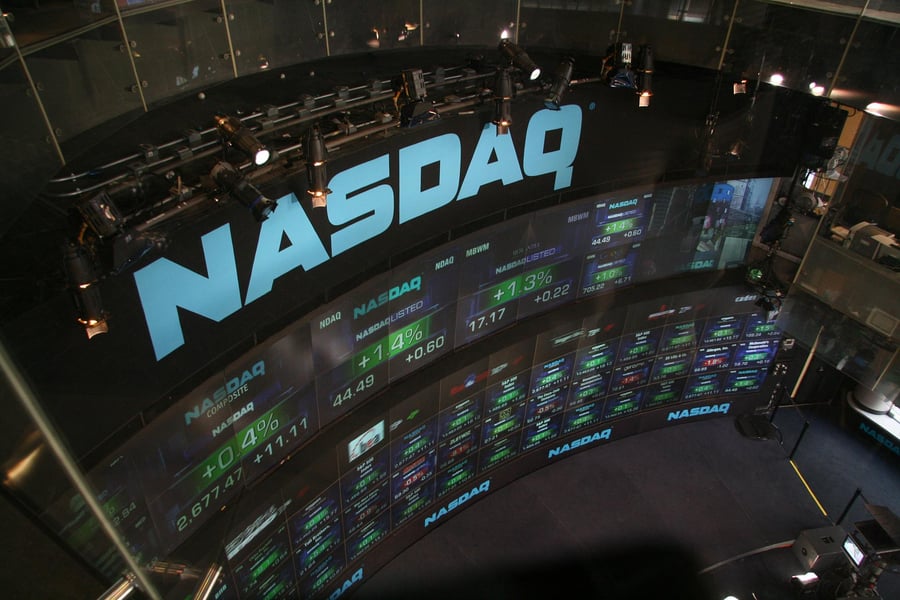

NEW YORK — The number on the tape said the Nasdaq Composite was having a bad Friday. The number the week before told a different story.
The Composite — the broadest measure of the Nasdaq-listed universe, encompassing more than 3,000 companies across technology, biotechnology, consumer discretionary, and other sectors — closed Friday down 0.52% at 26,402.42. The session’s decline came after Federal Reserve Chair Kevin Warsh delivered remarks at the Jackson Hole symposium in Wyoming that were more cautious on inflation than traders had positioned for. For the week, the Composite still posted a 0.9% gain, a result that would not exist without NVIDIA Corporation’s extraordinary Thursday surge.
The Nasdaq Composite is a different instrument from the Nasdaq-100 Index, a distinction the week made visible. The Nasdaq-100 tracks the 100 largest non-financial Nasdaq-listed companies; those 100 stocks account for an overwhelming share of the Composite’s total market capitalization. But the Composite’s breadth — its 3,000-plus constituents, including small and mid-cap technology, pharmaceutical development companies, early-stage semiconductor firms, and software names well below the megacap tier — means it captures signals the Nasdaq-100 cannot. When rate expectations shift, smaller and more leveraged companies feel it before the megacaps do. Friday’s Composite breadth reading was negative, with declining stocks outnumbering advancers across the broader Nasdaq-listed universe, even as the index’s megacap weighting muted the headline decline.
NVIDIA’s week defined the Composite’s week. The company reported second-quarter fiscal 2027 revenue of $96.2 billion — against analyst forecasts of $89.1 billion — with data center revenue of $89 billion growing 138% year-on-year. NVDA’s stock jumped 8.7% on Thursday, reaching a $4 trillion market capitalization. That single session move added enormous market-cap weight to the Composite’s Thursday close. The detailed NVIDIA coverage is in the NVDA stock today report.
The week’s broader megacap contribution was constructive. Amazon gained 3.47% as Amazon Web Services posted 37% year-on-year growth at a 39.4% operating margin, crossing an annual run rate past $200 billion. Microsoft rose 1.93% on Azure’s approach to a $100 billion annual run rate and a $678 billion cloud-and-AI backlog disclosure. Apple added 1.58%. Meta Platforms closed Friday at $575.99 with a $1.47 trillion market capitalization. The full stock-level reports are available: AMZN, MSFT, and AAPL.
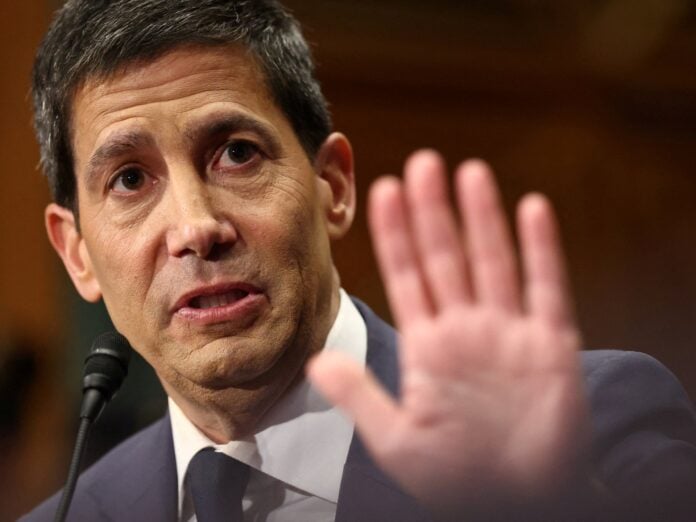
Friday changed the mood. Warsh’s prepared remarks, delivered at approximately 10 a.m. Eastern time, included this line: “While this summer’s PCE and CPI readings were better than expected, they do not tell me that underlying trends have meaningfully improved,” NBC News reported. The 10-year Treasury yield moved to 4.679%. Fed funds futures priced in a 57% probability of a September rate increase, up from approximately 50-50 at the week’s open. The response in the Composite was immediate and orderly: the megacap names held their weekly gains while the session’s momentum reversed, with rate-sensitive growth names at smaller market caps absorbing proportionally more pressure.
Tesla Inc. fell 2.36% on Friday, its sharpest single-session decline in several weeks, consistent with its position as one of the Composite’s most rate-sensitive large-cap constituents. Advanced Micro Devices fell 0.89%. Palantir Technologies, which had been sliding through the week from elevated levels, ended Friday at $152.62, approximately 35% below its August high. SandiskBrands Corp. stood at $979.07, about 25% off its recent peak. The PLTR stock today and SNDK stock today reports cover those moves separately.
Friday also carried additional mechanical volatility from quarterly options expiration — the simultaneous expiry of index futures, index options, single-stock futures, and single-stock options that traders call “quad witch.” Quad witch sessions typically produce elevated volume and wider intraday ranges as dealers manage their books and institutional positions roll. Combined with the Warsh speech, the session’s intraday swings were wider than the closing movement suggested. The Nasdaq Futures report covers the derivatives-market dynamics.
The Nasdaq Composite’s AI-era architecture is different from any prior technology bull market the index has hosted. In 2000, the Composite’s largest components were companies with high revenue growth expectations and limited current earnings. In 2026, the Composite’s largest components are companies posting some of the largest absolute dollar earnings in corporate history while simultaneously growing revenue at double-digit-to-triple-digit percentage rates. NVIDIA’s $96.2 billion quarterly revenue number is not a speculative projection — it is a reported fact. That distinction changes what a rate shock does to the index compared with 2000.
What the week did not resolve: the tension between NVIDIA’s demonstrated revenue trajectory and the rate environment that Warsh has now signaled he is in no rush to ease, CBS News reported. Earnings are real. The discount rate is also real. The Composite’s 0.9% weekly gain reflects the week when those two facts coexisted without forcing a reckoning. September may not be as accommodating.