
NEW YORK — Before Kevin Warsh said a word at Jackson Hole, the futures market had already placed its bet.
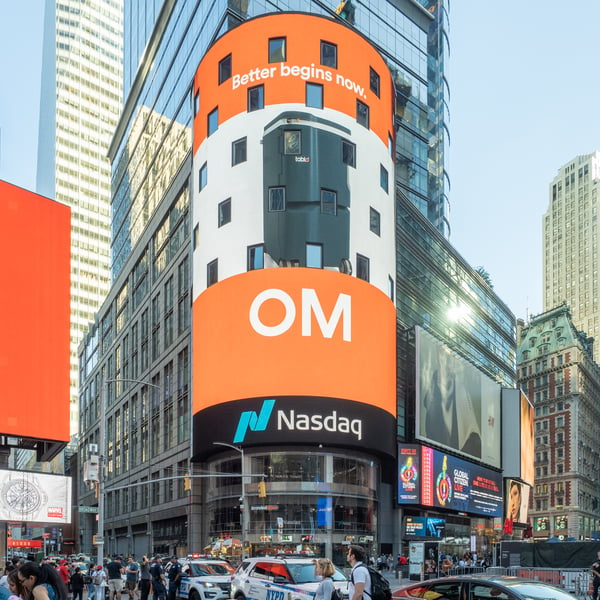
Nasdaq 100 E-mini futures — the instrument through which professional traders position overnight and in the pre-market hours — opened Friday’s session pointing slightly lower, a tentative posture that hardened across the morning as speculation about the new Federal Reserve chair’s first major policy address ran through trading desks. By early afternoon, after Warsh delivered remarks that were measurably more cautious on inflation than the market had priced, the futures curve had repriced quickly and the cash Nasdaq Composite closed down 0.52% at 26,402.42.
That sequence — pre-market caution, a speech that validated the caution, a session that sold off — defines how August 28 traded.
Nasdaq futures contracts allow equity exposure 23 hours a day on CME Group exchange sessions. The E-mini Nasdaq 100 future (ticker: NQ) tracks the Nasdaq-100 Index, which covers the 100 largest non-financial companies listed on Nasdaq and is the benchmark most closely followed by institutional futures traders. A related contract, the Micro E-mini Nasdaq 100 (MNQ), serves as a smaller-denomination vehicle for retail participants. Both settled lower on Friday.
The session’s calendar context mattered. Friday was the quarterly options expiration for index and equity derivatives — a date traders call “quad witch” — when stock index futures, stock index options, single-stock futures, and single-stock options all expire simultaneously. Quad witch sessions historically produce elevated volume and amplified intraday swings, as dealers hedge their exposure and large position rolls take place. The combination of an unusually consequential Fed speech with a mechanically volatile session date made Friday’s range wider than a typical late-August day.
The pre-market setup on Friday reflected two competing impulses. NVIDIA Corporation’s blowout second-quarter fiscal 2027 results — $96.2 billion in revenue against analyst forecasts of $89.1 billion — had powered a strong Thursday session, with NVDA jumping 8.7% and the broader Nasdaq posting one of its sharpest single-day advances in months. Futures opened Friday with some of those gains still embedded in positioning. But Warsh’s first Jackson Hole keynote as chair — his first major public speech on monetary policy — introduced policy uncertainty that the market had not fully discounted, with his remarks interpreted as more hawkish than expected, CBS News reported.
Warsh’s prepared remarks arrived at roughly 10 a.m. Eastern time. The market’s initial reaction was measured, then accelerated. “While this summer’s PCE and CPI readings were better than expected,” Warsh said, “they do not tell me that underlying trends have meaningfully improved,” NBC News reported. Within minutes of that line appearing on terminal screens, NQ futures extended their losses and the 10-year Treasury yield moved to 4.679%. Fed funds futures, which had been pricing a roughly even chance of a September rate increase at the week’s start, shifted to 57% probability of a hike.
The mechanics of how futures react to Fed communications have become faster in 2026, as algorithmic systems trained on Fed linguistic patterns parse prepared remarks within seconds of release. Warsh, who comes to the chair having been previously critical of overly transparent forward guidance, apparently anticipated this: his remarks were notably sparse on forward guidance, describing a philosophy of central bank restraint rather than a data-based path. That deliberate vagueness, combined with the hawkish inflation line, produced a sharp initial move and then a second wave of selling as human traders confirmed the machine read.
For the week overall, Nasdaq futures ended in a constructive position despite Friday’s pullback. The contracts had opened Monday with NVIDIA’s earnings looming and closed the week reflecting a 0.9% net gain in the Nasdaq Composite, a number that would look better than the mood on Friday’s close suggested. The Nasdaq Today report carries the full session breakdown.
The rate sensitivity embedded in Nasdaq futures pricing is a structural feature of 2026 markets that the NVIDIA earnings week illustrated in compressed form. Growth-oriented technology companies — particularly those valued on future earnings streams — are most sensitive to changes in the discount rate. A 57% probability of a September hike is not certainty, but it materially changes the calculus for positioning in long-duration technology names. The Nasdaq-100’s top five holdings — Apple, Microsoft, NVIDIA, Amazon, and Broadcom — collectively represent more than 40% of the index’s weight. A rate-driven repricing of any one of them cascades through the futures market faster than through the broader Composite.
By Friday’s close, Apple Inc. had added 1.58% for the week, Microsoft Corporation 1.93%, and Amazon 3.47%, all despite Friday’s pressure. Tesla Inc. fell 2.36% on the day, among the session’s largest decliners, consistent with its sensitivity to rate expectations. Advanced Micro Devices slid 0.89%. The individual stock moves are tracked in dedicated reports: AMZN stock today, MSFT stock today, and AAPL stock today.
The week ahead will determine whether Friday’s futures repricing was a durable recalibration or a one-day reaction. The next major data point for the Fed is the August jobs report, due September 5. If payrolls come in strong, the 57% probability of a September hike will move higher and the Nasdaq futures will face another test. If the data softens, the pricing will unwind and the NVIDIA earnings tailwind may reassert itself. What Friday’s session made clear is that the Nasdaq futures market is now treating every Fed communication — not just scheduled meetings — as a live event, regardless of how Warsh describes his preference for quieter central banking.