
NEW YORK — The technology sector arrived at Thursday’s session well-positioned. The NASDAQ 100 had spent much of August building toward new highs, lifted by a string of earnings beats across semiconductor, cloud, and artificial intelligence names. What it was not positioned for was Kevin Warsh.
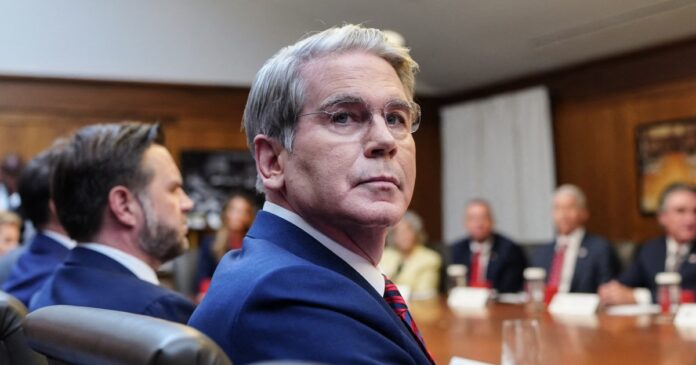
The Federal Reserve Governor’s speech before the Chicago Council on Global Affairs landed like a rate shock across the entire index. By the close, the NASDAQ 100 had fallen 2.3% — its worst single-session drop in two months — as traders moved rapidly to reprice long-duration equity across every major technology subcategory. No corner of the index was spared.
Warsh, who has been among the more hawkish voices at the Fed in recent months, used Thursday’s Chicago appearance to signal that the central bank should not allow financial market conditions or short-term growth softness to divert it from its inflation mandate. The remarks had the explicit quality of a policy warning rather than a mere opinion. Bond yields ticked higher within minutes of the speech headlines crossing, and equity futures followed.
For the NASDAQ 100 specifically, the transmission mechanism from a hawkish Fed speech to index-level selling is well-established. The index is structurally overweight companies whose valuations are most sensitive to changes in the discount rate: high-multiple growth businesses where a significant portion of their expected earnings lies years or decades in the future. When the risk-free rate moves higher — or appears likely to stay higher for longer — the present value of those future earnings compresses, and the compression shows up immediately in stock prices.
| Stock | Close | % Change |
|---|---|---|
| Palantir (PLTR) | $74.35 | -3.8% |
| Nvidia (NVDA) | ~$220 | -2.7% |
| AMD | $148.32 | -2.9% |
| Meta Platforms (META) | $570.25 | -2.5% |
| Microsoft (MSFT) | ~$467 | -2.1% |
| Amazon (AMZN) | ~$228 | -1.9% |
| Apple (AAPL) | $211.47 | -1.6% |
The damage was concentrated but broad. Palantir Technologies fell 3.8%, the sharpest decline in the index, reflecting a forward price-to-earnings ratio approaching 90 times that leaves almost no margin for a higher-rate world. Nvidia dropped 2.7%, weighed down despite continued evidence of insatiable data center demand for its Blackwell GPU architecture. Meta Platforms fell 2.5% even as its AI-powered advertising platform continues to generate revenue above analyst consensus. Advanced Micro Devices declined 2.9%, giving back recent gains driven by data center GPU market share gains.
The breadth of the selling was notable. Even companies reporting strong fundamental results were not immune. Amazon slid 1.9%, Microsoft fell 2.1%, and Apple declined 1.6% — all three are generating cash at levels that make them less rate-sensitive than pure-growth names, but none were able to escape the macro tide entirely.
What Warsh’s remarks did was shift the forward rate expectations that had been quietly supporting the index’s August advance. Traders had entered the month pricing in a series of Fed rate cuts beginning in the first quarter of 2027, providing a supportive backdrop for technology valuations. Warsh’s Chicago speech called that timeline into question. If rates stay restrictive into late 2027 rather than coming down in early 2027, the earnings streams that justify current NASDAQ 100 levels need to be larger and nearer-term than many models currently project.
The index closed Thursday at approximately 19,840, down 467 points. Volume was elevated across both the index and the major exchange-traded funds that track it, suggesting institutional selling rather than retail-driven volatility. The QQQ ETF, which mirrors the NASDAQ 100, saw above-average redemption pressure through the session.
What the decline does not represent is a fundamental deterioration in the technology sector’s underlying growth trajectory. The AI infrastructure buildout remains intact. Cloud spending continues to expand. Semiconductor demand from data centers is running ahead of prior estimates. None of that changed Thursday. What changed is the rate at which the market is discounting those future cash flows.
Whether Warsh’s comments translate into actual policy or represent a warning shot that the Fed ultimately does not follow through on is the question the market will spend the coming weeks answering. Until it does, the NASDAQ 100 may remain in a holding pattern — strong enough fundamentals to prevent a deeper correction, but a rate overhang too heavy for new highs.