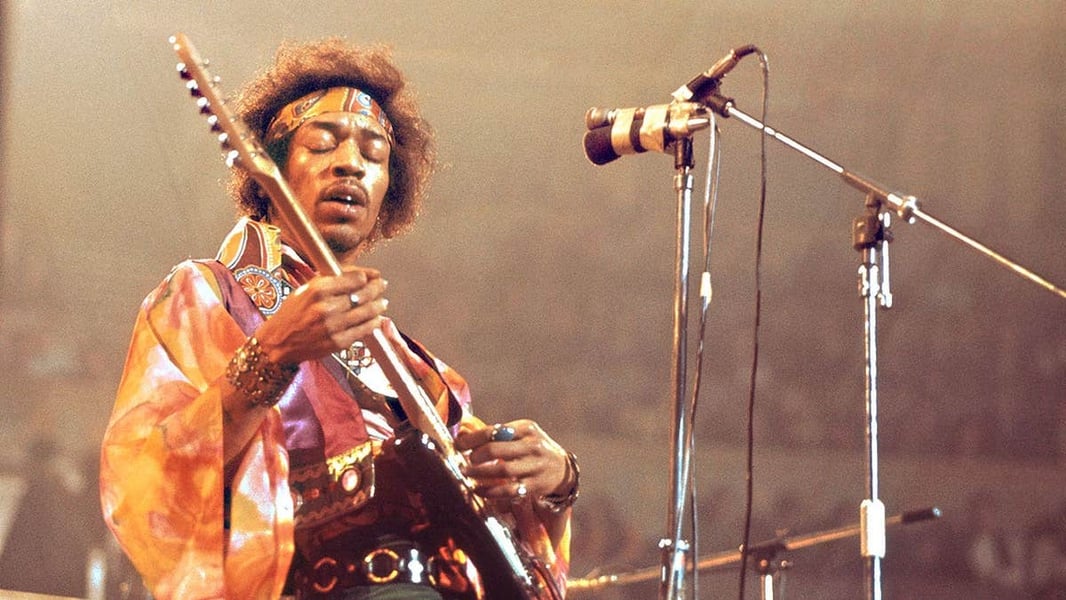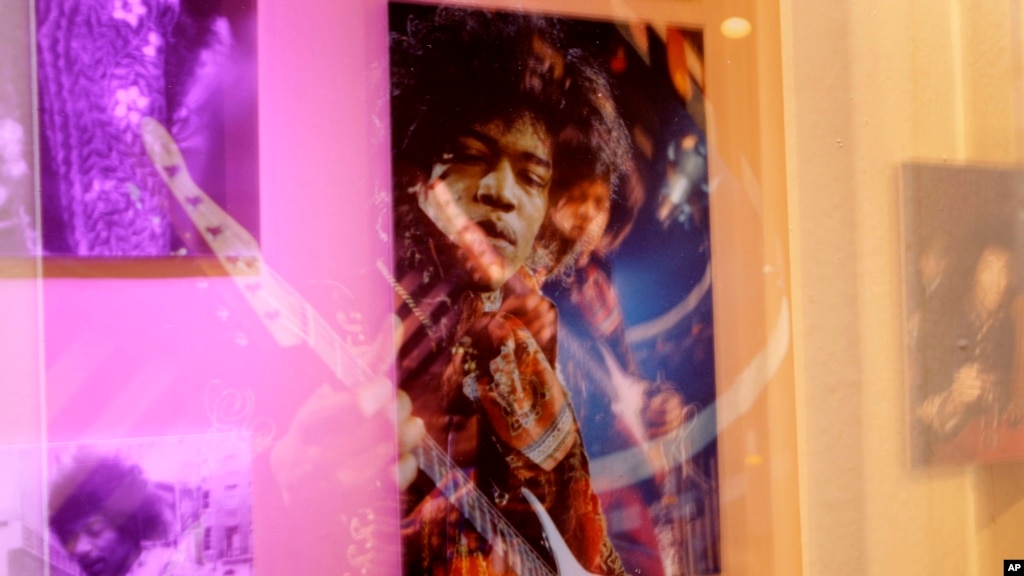

LONDON – The last concert Jimi Hendrix ever played was not the triumphant close the retrospectives tend to describe. It was a German island, a hostile crowd, and several hundred Hells Angels who had, by the time the headliner went on, already taken over the festival, chased off the security staff, and were beating and robbing campers in their tents.
Eric Barrett, who had worked as Hendrix’s roadie since 1968, watched the guitarist retreat alone to his room before the Isle of Fehmarn set. He watched him walk out to a crowd that booed. He watched the band play and leave, and then he watched the bikers close around their departing vehicle.
A Hells Angel raised a baton over Gerry Stickells, Hendrix’s tour manager. Barrett stepped in front of it. He took the blow himself. As he climbed into the car and they pulled away, Hendrix turned to him. “Are you OK, Eric? Are you OK?” he asked, again and again, as the island disappeared behind them.
Those were the last words Jimi Hendrix ever spoke to his roadie. Twelve days later, on September 18, 1970, Hendrix was dead.
Barrett has documented what he witnessed in a newly published memoir, making him one of the last living people to speak from inside that period. His account of the Isle of Fehmarn festival on September 6, 1970, and the chaos that surrounded it fills in a corner of Hendrix’s final weeks that has resisted detailed reconstruction for more than half a century.
The Love and Peace Festival at Fehmarn was a debacle well before Hendrix took the stage. Three days of rain had turned the site to mud. The Hells Angels, brought in as security, had effectively taken control of the grounds before the headliner arrived, and the crowd that remained had endured days of disorder before the first chord sounded. Barrett’s memoir is not, by his own telling, a rock biography but a witness account: the record of someone who was present for events that have resisted full reconstruction for five decades and who has spent those decades carrying what he saw.
The night on the island ended with Barrett absorbing the blow meant for Stickells and Hendrix asking whether his roadie was all right. What it says about Hendrix is not complicated but it is telling: his instinct, under threat, was concern for the person next to him, not for himself.
Hendrix died at the Samarkand Hotel in London, where he had gone with his girlfriend, Monika Dannemann. He had taken nine German tranquilizers, sleeping pills belonging to Dannemann. He vomited while sedated and asphyxiated. Barrett’s telling carries no ambiguity about what happened. There was no foul play. There was a combination of powerful sedatives and a body that could not recover from them.
This puts Barrett’s memoir in direct conflict with one of the more persistent strands of Hendrix mythology: the allegation, advanced most aggressively by former roadie James “Tappy” Wright, that Hendrix was murdered by his manager, Michael Jeffery, for an insurance payout. Jeffery died in a plane crash in 1973, leaving the allegation permanently unresolvable by its subject. Barrett does not entertain it. He says Wright’s account was fabricated to sell books, and says so without qualification.
What Barrett describes instead is an artist whose offstage self bore little resemblance to the performer who had seized concert halls across two continents. Hendrix was quiet, he says. Shy. Generous in the specific ways that do not make press releases: giving Barrett $500 for his birthday once, thanking the people around him, asking after them.
At some point in those years, Hendrix asked Barrett whether people would remember him. “Will they remember me?” The question, in retrospect, is nearly unbearable. It is an expression of ordinary artistic anxiety, the fear that the work will not survive the person, voiced by someone who had already, by any reasonable measure, outrun that fear. He had written “Purple Haze” and “Voodoo Child” and “Little Wing.” He had played Woodstock in 1969 with a guitar that seemed to contain the whole decade. And he was not certain anyone would remember.
Rock music’s relationship with its own losses is complicated by the way early death calcifies legacy. Hendrix was 27 when he died, young enough that his catalog has been frozen in amber ever since, subject to continuous reinterpretation but never revision. Unreleased recordings from his final sessions continue to surface decades later — in one posthumous album review, the archive still found ways to surprise — each release a reminder that his studio work outran his life. Courtney Love, whose husband Kurt Cobain died at the same age in 1994, announced this month that her first solo album in 22 years is finished, having spent part of that interval surviving a near-death health crisis she kept private for years. The contrast is stark: one artist whose story was cut short and has since been written and rewritten by everyone else; another who survived and is still, on her own terms, writing it.
August 2026 has not been gentle with the memories of American music’s giants. Five days before Barrett’s memoir surfaced in coverage, Dolly Parton died in Nashville at 80, taking with her a catalog that includes “Jolene” and “I Will Always Love You,” songs that now belong to anyone who has ever heard them, much as Hendrix’s work does. Her Nashville burial was private — her niece’s tribute reached past the Grammy nominations to the woman who answered her phone. The question Barrett documents, “Will they remember me?” has a clear answer in both cases. What remains open is how memory changes shape over decades, and what it costs to maintain it.
Barrett is certain they will remember Hendrix. He is certain because he was there, and because he knows what the last twelve days after Isle of Fehmarn cannot tell us: what Hendrix was thinking in the stretch between Germany and London, whether he sensed anything was ending, whether the question he had asked came back to him. Those twelve days are the one thing Barrett’s testimony cannot fill in. The last words are documented. What came after them is not.