
NEW YORK — Four days after Coca-Cola stock touched an all-time high of $91.99, shares closed at $89.66 on August 28, still within striking distance of the record but pointing in the wrong direction at a moment when the company would prefer investors focused on its strongest quarterly earnings in three years.
The pullback is modest by almost any measure. KO is still up more than 12% since January, still yielding roughly 2.38% annually, and still the kind of low-volatility consumer staple that institutional investors treat as ballast. But $2.33 below a record high, with an unresolved ransomware crisis hanging over its fastest-growing premium brand, the stock’s near-term ceiling is harder to read than the headline numbers suggest. As part of Wall Street’s August 28 session, Coca-Cola’s retreat tracked a broader Dow pullback driven by rising oil prices and geopolitical tension.
The Q2 results Coca-Cola delivered on July 28 were nearly impossible to argue with. Net revenues rose 7% to $13.4 billion. Organic revenues grew 6%. Volume climbed 5%, driven heavily by Asia Pacific, most significantly India, where the company’s consumer footprint spans everything from its flagship sparkling drinks to Thums Up and Minute Maid products targeted at a middle class that is both growing and spending. Operating margin expanded from 34.1% to 34.9%. Comparable earnings per share grew 11% to $0.97, beating consensus. Full-year guidance was raised.
Argus Research lifted its price target to $97 from $91 after the results, keeping its Buy rating intact. For the kind of investor who buys Coca-Cola for income rather than growth, the dividend backdrop is straightforward: $2.12 per share annually, with an ex-dividend date set for September 15. That near-term catalyst tends to act as a floor for shares in the weeks preceding it.
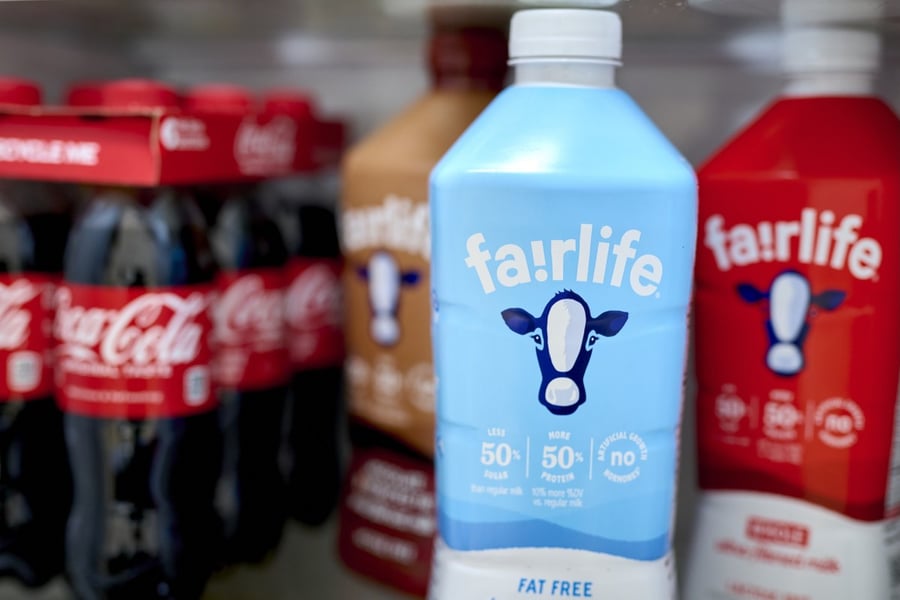
But the number Coca-Cola has not been able to give investors is the cost of Fairlife.
On July 16, Coca-Cola disclosed in a filing with the U.S. Securities and Exchange Commission that Fairlife, its premium dairy subsidiary best known for ultra-filtered milk and protein shakes, had suffered a ransomware attack, the company announced. Production at all US facilities was suspended. Canadian operations remained active. External cybersecurity experts were engaged and federal authorities were notified. TechCrunch reported that product quality and safety were not affected.
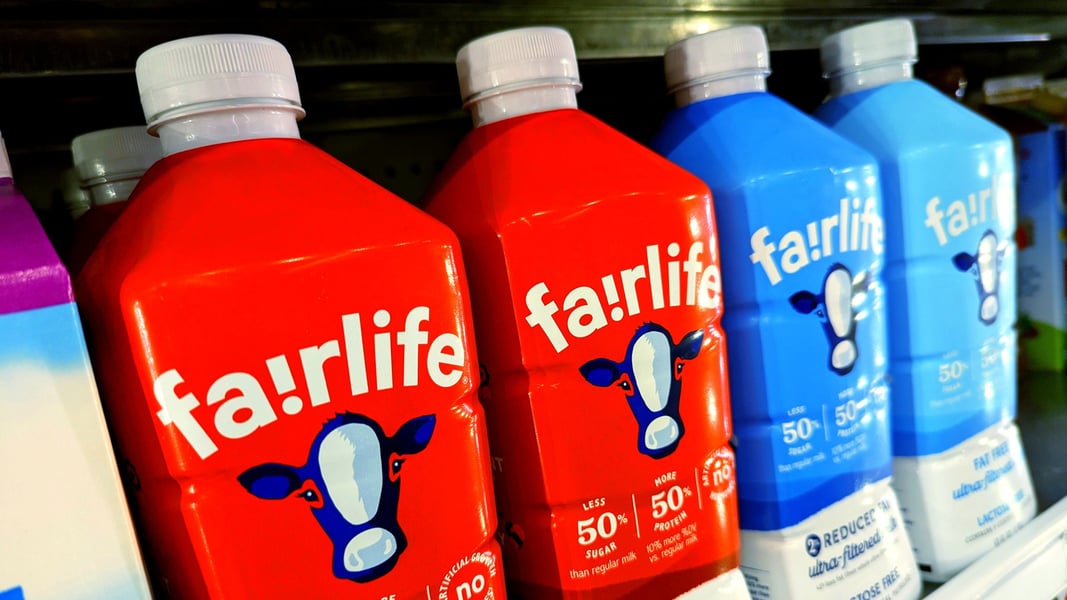
By July 20, the Anubis ransomware group had added Fairlife to its dark web leak site, claiming it had encrypted servers and extracted one terabyte of confidential data. Coca-Cola subsequently confirmed that company data had been accessed by an unauthorized third party, as Engadget reported, and did not disclose the nature or scope of the material obtained.
The attack landed at an inconvenient moment. Fairlife, which Coca-Cola acquired outright in 2020, was generating an estimated $4 billion in annual sales and growing fast, exactly the kind of high-margin, premium asset that gives the KO bull thesis its forward velocity beyond the core carbonated drinks portfolio. When US production stopped, the question was not whether the brand would survive but how many weeks of output had been lost and whether the Anubis group’s data claim carries ongoing liability.
Those questions remain open. Coca-Cola has not disclosed how long US production was suspended, what inventory the company drew down in the interim, what insurance recovery applies, or whether any portion of the stolen data included proprietary formulations or personal consumer information that could trigger regulatory exposure.
That is the gap the $89.66 close is pricing. Not fear of Coca-Cola’s core business (which India is making a stronger argument for every quarter) but uncertainty about what Fairlife’s bad summer ultimately costs.
India is worth examining as a standalone variable. The 5% volume gain in Q2 was not evenly distributed. Asia Pacific carried the growth, and India carried Asia Pacific. The company’s reach there has expanded substantially over the past two years, driven by distribution gains in smaller cities and by premiumization trends pushing consumers toward branded beverages over unbranded local alternatives. That structural tailwind belongs to the medium term, not to one quarter, and it is the reason analysts who model Coca-Cola’s emerging-market exposure have been more bullish on KO than on most of its US-focused consumer peers. A fellow Dow component in a different sector, Cisco, posted record-setting orders the same day, underscoring how differently technology and consumer staples navigate the same macro environment.
Coca-Cola’s third-quarter results, expected in October, will be the first earnings release to carry the full financial footprint of the July attack. Until then, the stock is trading on what it knows (a strong Q2, raised guidance, a dividend incoming on September 15) and what it does not: the complete accounting for Fairlife’s disrupted summer. The record at $91.99 is there to be reclaimed. The path back runs through a disclosure the company has not yet made.