
WASHINGTON — For the third time this year, a formal date has been set for a Senate vote on the CLARITY Act, the most consequential digital asset legislation in American history. The Senate returns from August recess on September 14. The next morning, September 15 at 2:15 p.m., a cloture motion becomes eligible for action, a procedural checkpoint that will reveal, more clearly than any statement from either party, whether 60 senators are prepared to give American crypto markets a federal legal framework.
The stakes are not abstract. The CLARITY Act would resolve a decade of jurisdictional fighting between the Securities and Exchange Commission and the Commodity Futures Trading Commission, assigning most digital tokens, including Bitcoin, Ethereum, and the bulk of the altcoin market, to the CFTC as digital commodities. Tokens issued by companies that retain meaningful control over their networks would remain under the SEC, according to the bill’s text. Stablecoins, decentralized finance protocols, and tokenized securities would receive distinct regulatory treatment under a 278-page framework the House passed 294 to 134 in July, according to reports.
September 15 is not a vote on final passage. It is a vote on whether debate may begin at all, a procedural threshold requiring 60 votes to overcome a filibuster. With 53 Republicans, Majority Leader John Thune must persuade between seven and ten Democrats to cross the line. Those votes are unconfirmed, and the central reason is a standoff the industry did not anticipate when the year began.
Senate Democrats have conditioned their cloture support on two provisions Republicans have resisted: meaningful ethics restrictions barring senior government officials from profiting on digital assets they regulate, and stricter anti-money-laundering requirements for decentralized exchanges. The ethics demand targets the Trump family’s crypto ventures directly. The president’s World Liberty Financial operation and a series of token launches have given Democrats a durable argument that the administration cannot credibly regulate an industry from which it is drawing revenue. The ethics standoff that threatened the bill first became a legislative crisis in July, when Democrats demanded Trump divest from crypto entirely before any floor action.
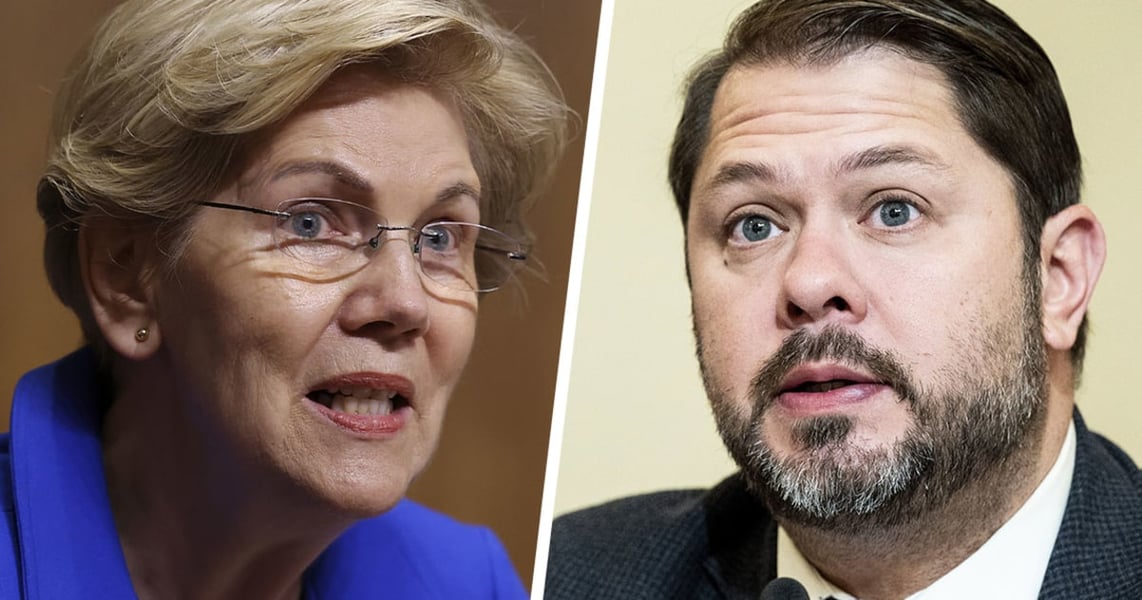
Senators Tom Tillis of North Carolina and Ruben Gallego of Arizona negotiated the most recent ethics compromise before the recess, though the draft text has not been released and White House approval remains pending. Whether the compromise survives intact, or whether the White House will accept it, is the pivotal unknown heading into the week of September 14.
Thune has signaled he may bring the bill regardless, forcing Democrats to vote against cloture and absorb the political cost of blocking legislation that polls well with the public. The crypto industry’s investment provides the backdrop: companies poured $189 million into 2026 midterm campaigns, more than any other corporate sector, creating a well-funded argument against senators who block the bill in their next cycle.
Beyond ethics, three substantive disputes remain. DeFi protocols, the decentralized exchanges and lending platforms that operate without a central operator, are treated inconsistently between the House and Senate versions, with industry groups warning the Senate language would effectively require platforms to register in ways structurally impossible for protocols with no legal operator. Stablecoin yield provisions remain contested: banks argue that permitting interest-bearing stablecoins would let crypto platforms function as unlicensed deposit-taking institutions. Illicit-finance requirements, specifically real-time reporting obligations for exchanges interacting with flagged wallets, have not been finalized despite the bill’s lead sponsor, Senator Cynthia Lummis, publicly arguing the CLARITY Act strengthens rather than weakens law enforcement tools.
The prediction markets have absorbed all of this and revised sharply downward. Passage probability sat above 80 percent in February and now trades between 33 and 37 percent, according to published reports, reflecting the cumulative drag of delays, renegotiations, and the White House’s ambiguous posture on ethics language. The bill’s five corruption vulnerabilities, which this publication identified when the legislation was on an earlier floor path, have not all been addressed in the current draft.
If the cloture vote fails on September 15, the path to 2026 passage narrows considerably. The Senate floor calendar after Labor Day fills with appropriations deadlines, agency nominations, and the political logic of a midterm cycle in which action, or the perception of it, matters more than negotiation. A second attempt would require the very bipartisan agreement that collapsed before August recess.
A bill of this scope clearing the Senate would represent the most significant financial regulation in more than a decade. The House’s 294-to-134 margin, the Senate Banking Committee’s 15-to-9 advance, and the industry’s sustained lobbying effort have all been premised on September as the moment that legislation finally crosses the line. What September 15 reveals is whether that moment is real, or whether regulatory clarity for the American crypto market remains, for another year, the outcome the sector expected but did not receive.