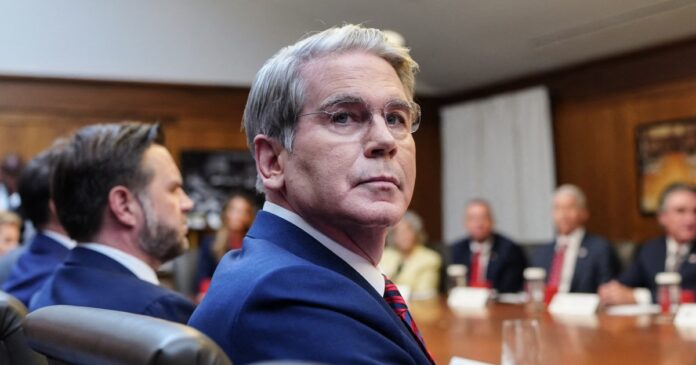

NEW YORK — Six weeks into its existence as an independent automation platform, Honeywell Technologies closed at $217.43 on August 28, down $2.96, or 1.34%. The session’s catalyst was not Honeywell’s. It was Kevin Warsh.
The Federal Reserve chair, speaking at the Jackson Hole Economic Policy Symposium in Wyoming that morning, said inflation remained above the Fed’s 2% target and signaled that rates might need to rise. NPR reported that fed funds futures repriced a September hike from roughly 35% probability to 58% inside a single session. Industrial companies that operate on long capital cycles — building managers, plant operators, utility providers — are acutely sensitive to financing costs. When the rate ceiling rises, the investment cycle tightens. HON’s 1.34% drop is that arithmetic.
The larger question hanging over Honeywell Technologies is structural, not macroeconomic. This is a fundamentally different company than the one that opened 2026. On June 4, Quantinuum — the trapped-ion quantum computing subsidiary built through the 2021 merger of Honeywell Quantum Solutions and Cambridge Quantum — went public on Nasdaq under the ticker QNT at a $17.6 billion valuation. Honeywell recorded a $6.6 billion deconsolidation gain and retained a roughly 48% minority stake. Then, on June 29, Honeywell Aerospace completed its spin-off, listing independently as HONA on Nasdaq. Each Honeywell shareholder of record as of June 15 received one HONA share for every two HON shares — distributing a business with more than $17 billion in annual revenue as a standalone entity.
The HON ticker is now Honeywell Technologies. Its three remaining segments are Building Automation, Industrial Automation, and Energy and Sustainability Solutions — software-intensive, digitally-led businesses where the thesis is secular demand rather than cyclical hardware volume. The Dow itself signaled a similar directional shift in June when Alphabet replaced Verizon, reinforcing the index’s tilt toward software-intensive platforms.
Second-quarter results, reported July 23, 2026, were the first test of that positioning. For Honeywell Technologies excluding Aerospace, the Q2 earnings release showed revenue of $5.2 billion, up 3% reported and 4% organic. Segment margin was 19.0%. Adjusted earnings per share for the segment were $1.95. Orders grew 16%, and the backlog stood at approximately $20 billion.
Full-company Q2 figures are harder to read cleanly because the Quantinuum deconsolidation landed inside the quarter. Consolidated reported earnings per share came in at $17.83, almost entirely reflecting the $6.6 billion one-time gain. Adjusted EPS for the consolidated entity was $4.52. Consolidated Q2 sales of $9.7 billion, up 4%, captured Aerospace’s contribution through June 29.
Management raised the full-year 2026 organic growth outlook to 3% to 4% and increased the adjusted EPS midpoint to $8.20. That guidance is for Honeywell Technologies going forward — not for the conglomerate that no longer exists.
At $217.43, HON trades at roughly 26.5 times that full-year adjusted EPS midpoint. For an automation platform with 16% order growth and $20 billion backlog, that is not a distressed multiple. The argument is secular — AI-driven building management, industrial process optimization, and energy efficiency mandates are pulling forward demand that might otherwise be cyclical. The counterargument is that what looks secular can turn cyclical quickly when interest rates make capital projects discretionary.
The S&P 500 fell 1.9% on August 28 in the broadest rate-driven selloff since April, and Honeywell’s 1.34% decline sat at the milder end of the industrial complex. Warsh’s posture — avoiding forward guidance, delivering a broad assessment of his inflation approach on his 100th day as chair — leaves the September meeting genuinely open. Fed funds futures put a hike at better-than-even odds by close of trading.
The quarterly dividend is $1.13 per share, unchanged. At $217.43, the annualized yield is approximately 2.08%. The dividend will not be why institutional holders stay or leave. What holds the thesis together is whether the 16% Q2 order growth was a real signal of the secular automation upcycle, or whether it was borrowed from a second half that Warsh has now made materially harder to collect.