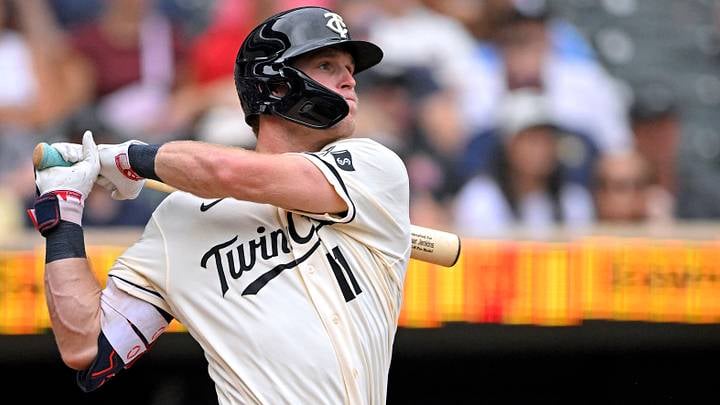

MINNEAPOLIS — Zach McKinstry has not been a pitcher since high school. He was standing on the mound at Target Field in the eighth inning Sunday because the Detroit Tigers were losing by nine and their real pitchers had already done enough damage for one afternoon. He threw Walker Jenkins a 37 mph offering that, in any other context, would have been batting practice.
Jenkins hit it 388 feet into the right-field seats anyway.
The ball left his bat at 98.6 mph, a figure that lands in the 94th percentile among major league hitters, Yahoo Sports reported, and it caught the foul pole on the way down, a two-run homer that officially ended the formalities of an 11-1 rout. The Twins’ fifth overall pick in 2023, exactly four days into his major league career, had his first home run. The fact that it came off a position player says nothing about the exit velocity. What it says is that the Minnesota Twins have a 21-year-old in their lineup who sees good pitches coming from 60 feet away and mediocre ones from the same distance, and hits them about equally hard.
For three days, Minnesota had kept the public preview of Walker Jenkins limited to glimpses. He had looked comfortable in left field and uncertain at the plate, which is precisely what you expect from a prospect in his first week above Triple-A. Sunday changed the framing. Not because one home run off a position player proves anything conclusive. It did not. But the way he hit it told a different story. The barrel found the ball the way it does for hitters with actual feel, not with the desperate lunge of someone still catching up to major league velocity.
Taj Bradley did not need Jenkins to win this game. Bradley worked seven innings, walked none, and struck out nine Detroit hitters in a performance that should have led every conversation about Sunday’s game. He threw 93 pitches, allowed just two hits and a single run, and worked with the controlled aggression of a starter who has found command to match his stuff. Minnesota’s rotation has spent the better part of two months quietly building one of the more formidable pitching pipelines in the American League, and Bradley was the concentrated argument for that case.
Ryan Jeffers added two home runs, both off actual pitchers, both into the seats, both part of a five-run third inning that closed Detroit’s competitive window before most fans had finished their first concession-stand trip. The Twins sent 11 men to the plate in that third, and when it was over the game was a foregone conclusion that Bradley converted into an exercise in pitch economy.
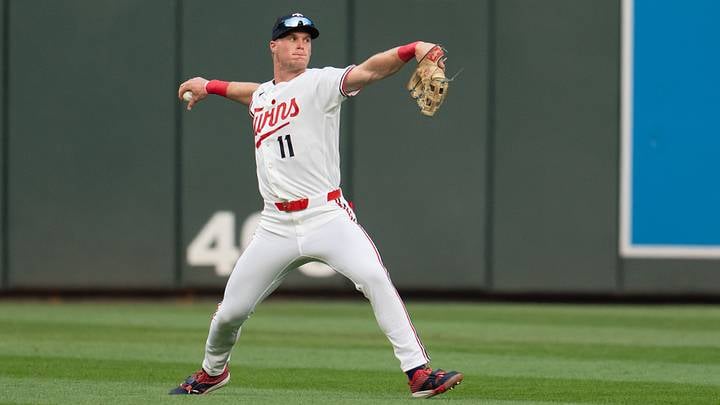
Jenkins is the third-youngest player currently on an active major league roster, a distinction that carries weight in September when teams are assembling the rosters they will carry into October. The 2023 fifth overall pick spent August in Triple-A posting a .323 average and .411 on-base percentage, with 14 home runs and 17 stolen bases across the full minor league season. Those numbers cleared the organizational threshold for a callup. Sunday’s homer cleared the right-field fence, which is a different kind of validation.
What it did not resolve is the decision facing Minnesota over the next two weeks. The Twins have considerable flexibility as expanded September rosters open, and whether Jenkins earns an everyday role or returns to Triple-A for continued development remains genuinely open, Sports Illustrated noted. His defense in left field is still adjusting to major league outfield angles. A home run in a blowout carries weight, but it carries it in a September conversation where weight alone does not settle a roster spot.
The Tigers have become a cautionary exhibit in how rapidly organizational depth advantage compounds. Detroit sits at 63-74 after losing 13 of its last 16 games, a roster that looked credibly rebuilt a year ago and is now so depleted that position players absorb mound work in August blowouts. The deadline decision to trade Tarik Skubal to the Dodgers stripped the rotation of its anchor at precisely the moment Detroit needed it most, and the organizational calendar has not caught up.
What Jenkins represents for Minnesota is not one home run. It is the logic that produced him: patient development, accurate evaluation, the willingness to send a fifth-overall pick back to Triple-A rather than force a premature debut. When Blaze Jordan hit his first major league home run at this same park earlier this season, Twins coaches reacted with the composure of people who had built exactly this outcome. The same restraint held Sunday afternoon in the eighth inning, even as the 21-year-old rounded the bases for the first time as a major leaguer.
Organizations that develop well do not look surprised by their own prospects. The only question Walker Jenkins left unanswered is whether 388 feet is the beginning of a September story, or the first sentence of something that runs considerably longer.
Related Posts