
LAHORE — The Pakistan Cricket Board did not rebuild its Test squad on Monday. It surrendered to one.
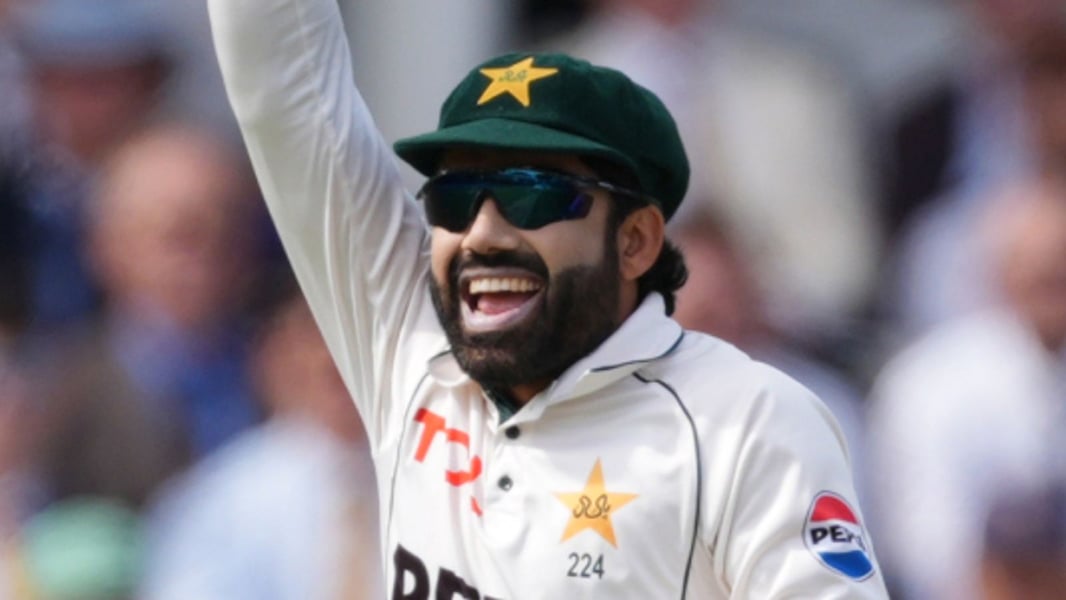
In a statement that took less than an hour to circle the globe on social media, the PCB simultaneously released head coach Sarfaraz Ahmed, pace-bowling chief Umar Gul, and seven players — including wicketkeeper Mohammad Rizwan — from the touring party in England. In their place came seven replacements, five of them without a single Test cap between them. The third Test at Edgbaston begins on September 9.
Pakistan has not reached 200 runs in a single innings through the first two Tests of this series. That is four innings, four failures, four occasions on which the England pace attack reduced the top order to rubble in conditions that were not unusually testing. The numbers are troubling. The pattern beneath them is something else: a batting lineup that has displayed no collective will, no shared method, and no capacity to negotiate the kind of sustained pressure that Test cricket routinely demands.
Sarfaraz Ahmed, who took the coaching role with genuine goodwill behind him after a celebrated playing career, lasted the length of one Test series against a top-ten side. He and Umar Gul were informed of their release on the same day the squad announcement was made — a sequence that suggested little preparation and less dignity — as Sky Sports first reported. Their replacements — New Zealand coaching veteran Mike Hesson and former Australian seamer Ashley Noffke — will have eight days to introduce themselves to a squad they have never worked with, in a country where the broader series narrative is already settled.
England lead 2-0. The series cannot be saved. What remains at Edgbaston is either an act of damage limitation or, as the PCB’s announcement seemed to suggest, the beginning of an audition for players who will be asked to carry Pakistani Test cricket into an uncertain future.
Among the seven players sent home were Rizwan, who has been Pakistan’s most reliable batting presence across formats for three years; Imam-ul-Haq, who suffered a calf injury at Lord’s; Salman Ali Agha; Ali Usman; Aamir Jamal; Muhammad Awais Zafar; and Khurram Shahzad. Some were released for performance. Imam-ul-Haq left on medical grounds. Aamir Jamal and Awais Zafar were sent home without having played in either Test.
The replacements represent the full range of Pakistani cricket’s current depth. Saim Ayub, who brings eight Test appearances and something close to form, joins alongside Abdullah Fazal, who has two caps. Behind them come Arafat Minhas, a left-arm spin-bowling all-rounder; Mohammad Imran Jnr, a left-arm quick; Saad Baig, a wicketkeeper-batter; Mohammad Imran, a right-arm pace all-rounder; and Razaullah, a fast bowler. None of the final five have played at this level before, a point Yahoo Sports noted in its coverage of the announcement.
England’s pace attack removed Pakistan at Headingley in conditions that produced a 103-run innings defeat, and at Lord’s, Ollie Robinson’s 8 for 35 across the match — the finest bowling performance of the summer — consigned them to a 194-run loss. Robinson’s match figures at Lord’s were the defining statement of the series: not because the pitch turned, not because England batted brilliantly, but because no Pakistan batter found an answer to conventional seam bowling on a flat surface. That is the line five uncapped Test players will be asked to cross at Edgbaston in September.
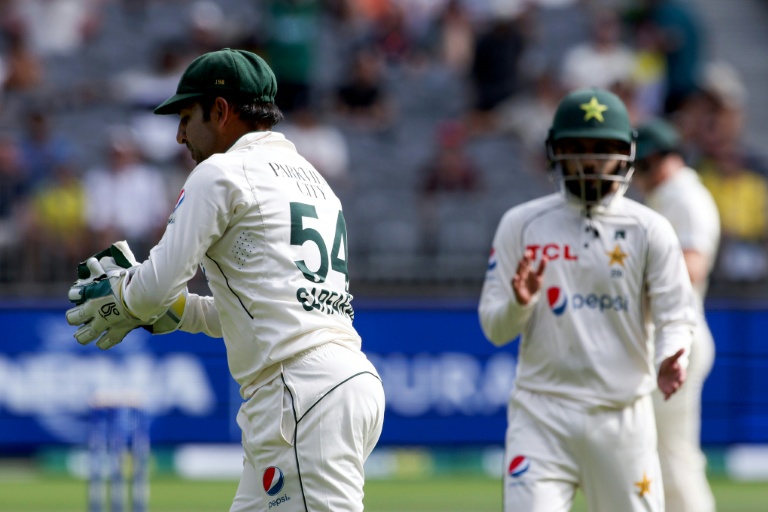
The question the PCB’s decision raises — and cannot yet answer — is whether this constitutes a plan. Five uncapped players flown to Birmingham to face Jofra Archer, Gus Atkinson, and Robinson in a match that carries no consequence for either side’s series standing could be a genuine look at the next generation. It could also be improvisation dressed as strategy. Pakistan’s display at Lord’s, where Babar Azam returned from injury to find a deficit already beyond repair on Day 3, suggested the current structure had nothing left to offer.
Babar Azam retains the captaincy for Edgbaston. Whether he retains it beyond September 13 is the question the PCB has chosen not to answer publicly — and one that no amount of squad reshuffling addresses on its own. Pakistan’s batting vulnerability against England seam bowling has not been a selection problem. It has been a competency problem, and Mike Hesson has eight days to find what Sarfaraz Ahmed could not in eight months.