
LONDON — Joe Root stepped back into the England captaincy this summer with a phrase that was either modest or precise, depending on how well you knew him. “Clarity and simplicity,” he said. He didn’t want to redesign the team. He wanted to know what it was. Two Tests into his second stint in charge, England’s 2-0 series win over Pakistan at Lord’s suggests he found his answer on the first morning of practice.
Ollie Robinson is the answer. Partly.
England beat Pakistan by 194 runs at Lord’s on Sunday, sealing an unassailable 2-0 lead in the three-match Rothesay Test series with a match still to play. The first Test at Headingley was an innings victory, settled inside three days. The second lasted four and was only that long because Saud Shakeel batted for the better part of an afternoon and refused to accept what Robinson had made inevitable since Day 2.
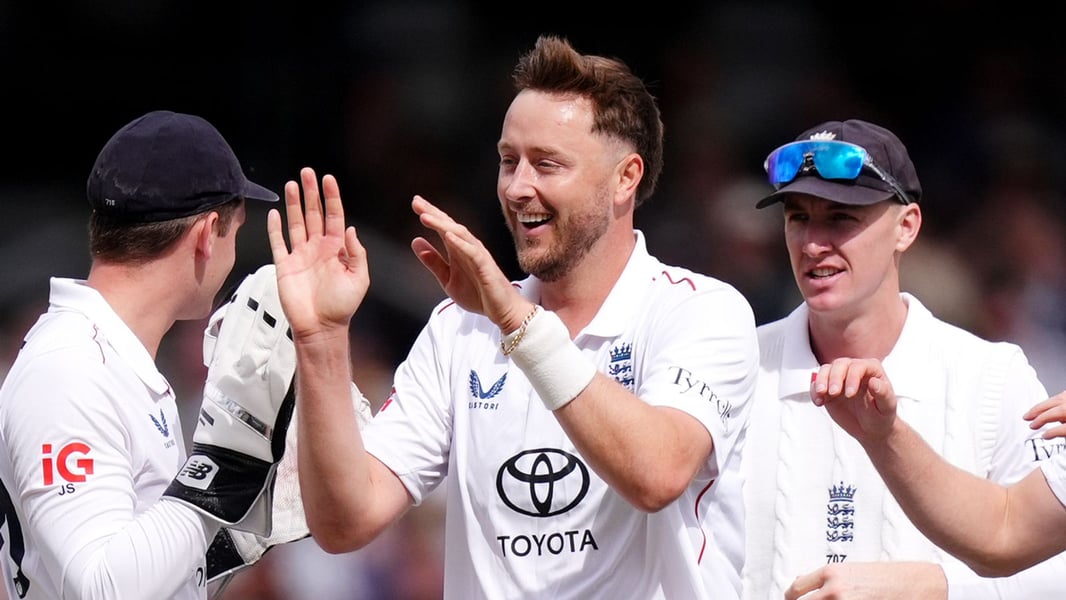
Robinson’s match figures at Lord’s: 8 for 35 in 27 overs. Four for 11 in the first innings, reducing Pakistan to 110 all out with a spell that covered 13 overs and conceded fewer runs than a single six. Four for 24 in the second, when chasing 388 required something that no Pakistani batsman except Shakeel appeared able to locate. Player of the Match. Player of the Series. Root, speaking to Sky Sports after Headingley, described Robinson’s sustained effectiveness as the thing that distinguished this attack: “I thought Robinson was brilliant. The fact that he’s still as effective in the second innings, having bowled 18 overs, and his understanding of what his requirements are in different phases of the game is important.” At Lord’s, Robinson bowled 27 overs. His economy rate across the match was barely above a run per over.
England posted 290 in their first innings — Harry Brook’s 91 the structural foundation before Mohammad Abbas took 5 for 57 to drag England back to 208 in the second. Dan Lawrence’s 54 steadied the reply. The target set for Pakistan: 388, in conditions still offering seam movement, against Robinson at one end and Jofra Archer at the other.
Pakistan’s first innings lasted 30 overs. The top three went in single figures. The surface moved, but it did not move 4 for 11 worth of movement — Robinson extracted that from his rhythm, his ability to angle the ball across left-handers and find the corridor outside off stump that causes right-handers to drive when they shouldn’t. Archer added 3 for 26 in that first innings, his pace creating the complementary discomfort that Robinson’s swing alone does not manufacture. Root described the pairing plainly: “I don’t think people realize how well our bowlers understand that they complement each other in these conditions.”
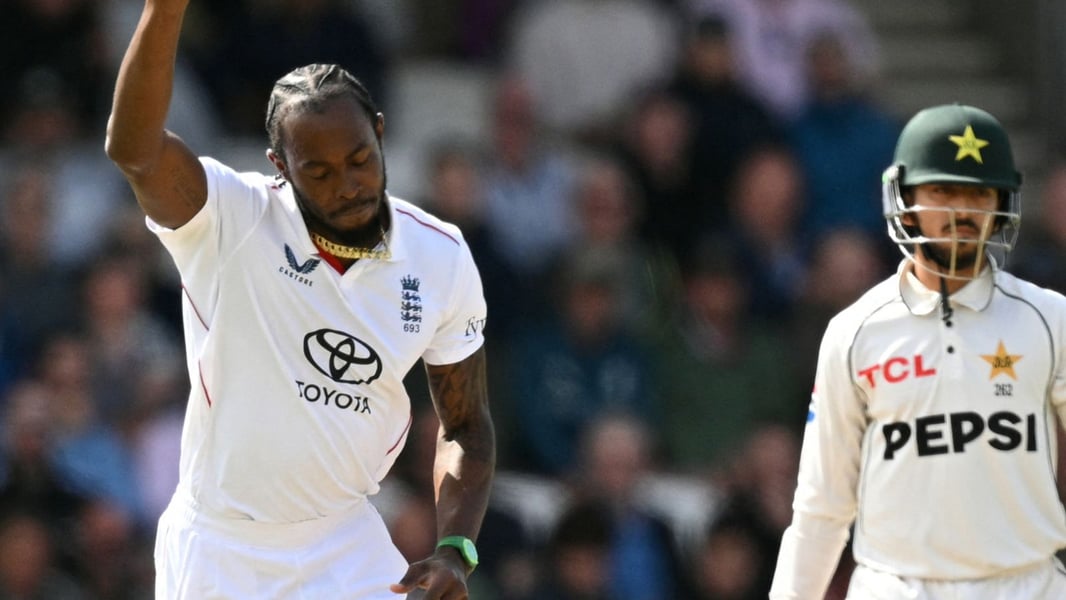
Pakistan chased 388 knowing it was improbable. They were bowled out for 194, a figure that tells you most of what you need to know — except the part Shakeel had in it. He made 97, striking 13 boundaries and two sixes, building two or three partnerships that at their longest gave the scoreboard the appearance of a contest. Josh Tongue took three for 46 to dismantle what Robinson did not reach. Archer collected two more. Shakeel was stranded at 97 as the innings concluded around him.
What Shakeel did across this series is worth measuring separately from the team result. He was the one Pakistan batsman who appeared to understand, technically and temperamentally, what English conditions require. No other Pakistan player averaged above 20 for the two-match series. That is not an indictment of Shakeel. It is a question the Pakistan Cricket Board will need to address before the third Test at The Oval, beginning September 4.
Robinson and Archer have now taken 24 of Pakistan’s 38 possible wickets across these two Tests. That figure reflects a specific pairing that barely existed in Test cricket before this summer — injury and rotation policy had kept both from sharing a new ball in the format. Root identified the dynamic after Headingley: Robinson’s capacity to draw edges from swing and seam, combined with Archer’s pace-induced discomfort from the other end, creates a problem for batting lineups that has no single technical answer. The pitch helps. The combination makes it lethal.
Root’s return to the captaincy follows the end of the partnership between Ben Stokes and head coach Brendon McCullum. Stephen Fleming arrives as incoming head coach, and Root has maintained daily contact with him through the transition. “He’s kept tabs on things,” Root said of Fleming. “It’s just been great to have him on the end of the phone.” Two Tests in, whatever alignment they reached is producing the results. Sky Sports reported England thrashed Pakistan inside three days at Headingley, Root’s first match back in charge. The Lord’s result confirmed it was not a one-match aberration.
England’s last Test series win before this one came in New Zealand in 2024, following a 4-1 Ashes defeat to Australia that accelerated the end of the Stokes era. Root’s second captaincy era is two matches old and unbeaten. The Oval Test from September 4 offers Pakistan a chance to complicate what is otherwise a clean England narrative. Whether anyone beyond Shakeel in the visiting batting order can negotiate Robinson’s angle, survive Archer’s lift, and build an innings long enough to compete — that is the question this series has raised and not answered.
Shakeel’s 97 is the only evidence the answer might be yes.