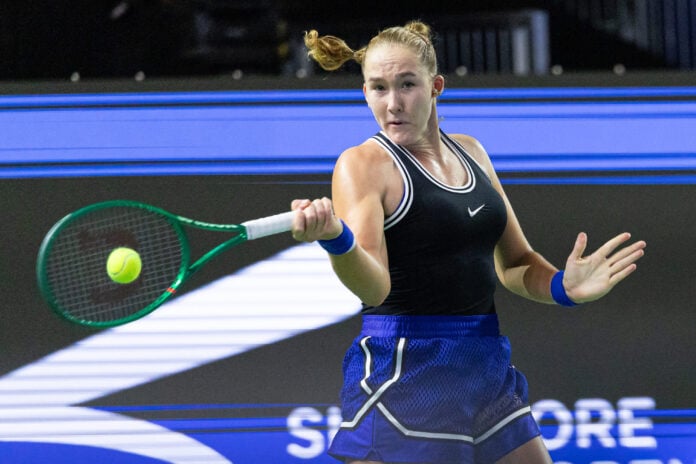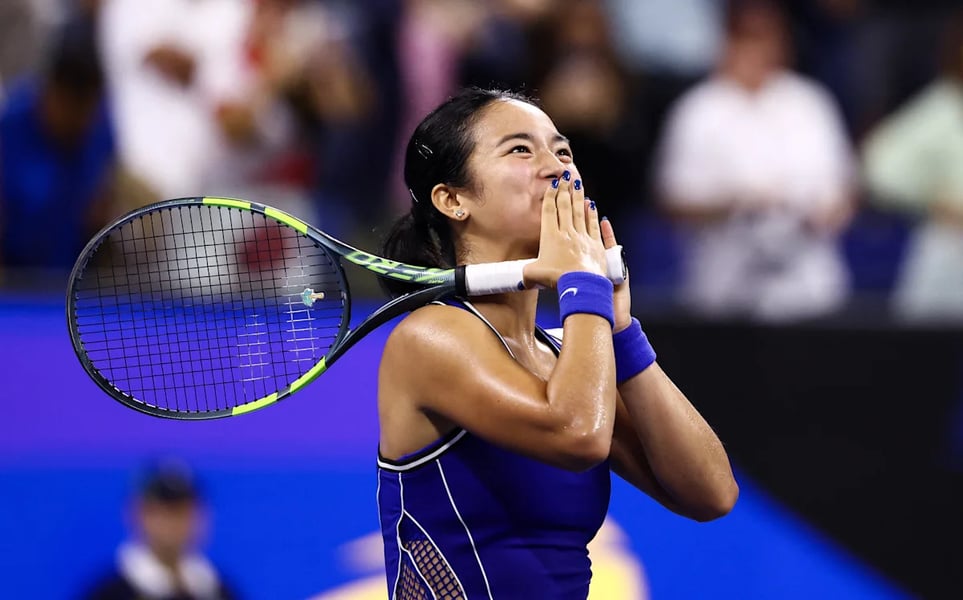

NEW YORK — The chair umpire stopped the fourth game to ask the crowd at Louis Armstrong Stadium to please keep the noise down. The fans were celebrating between points, waving Philippine flags, shouting in a language tennis officials have never had cause to translate, and testing the limits of a sport that has spent a century policing its own silences. The player who caused all of this was Alex Eala, the 17th seed, and she won the first set without losing a game.
Eala defeated American qualifier Mary Stoiana 6-1, 6-2 on Tuesday night at Flushing Meadows, winning in 78 minutes with the calm authority of a player who had not been asked a difficult question. Stoiana, 23, was making her Grand Slam main draw debut after surviving three qualifying rounds; she pulled within a game of Eala at 2-1 in the second set before the Philippine star reasserted herself and the crowd only grew louder. Eala advances to the second round of the 2026 US Open, where she will face Ukraine’s Oleksandra Oliynykova.
The match was not complicated tennis. The story, again, was in the stands.
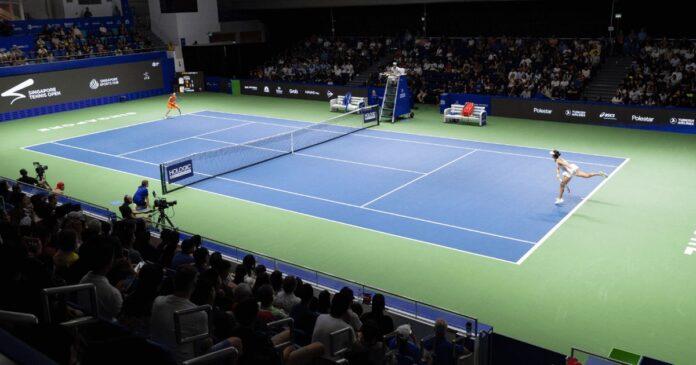
Eala represents the Philippines’ most visible athletic export since Manny Pacquiao, and she arrived at this year’s US Open as the highest-seeded Filipina player in Grand Slam history, a distinction that did not require explanation to the roughly 250,000 Filipinos living in the New York metropolitan area. As Yahoo Sports reported, secondary market tickets for her matches had risen to approximately $400 each. They packed Louis Armstrong Stadium with Philippine flags of all sizes, and the atmosphere inside the enclosed, roofed venue was closer to a playoff basketball crowd than anything a chair umpire is typically trained to manage.
Chair umpire Marijana Veljovic issued a warning midway through the match, asking spectators to “keep voices down out of respect for both players.” The fans had been cheering through live rallies, a breach of tennis’s core etiquette significant enough that GMA News, a Manila television network, published an explainer advising Filipino spectators to wait for rallies to finish before reacting, to stay quiet while the ball is in play, and to hold noise between serves. The explainer was necessary, in part, because Eala’s supporters were not uniformly aware that tennis had those rules, or in any particular hurry to observe them.
“It doesn’t get old,” Eala said after the match. “They still surprise me.”
Jessica Pegula, who lost to Eala in Washington, D.C. earlier this summer, has already played against this crowd. She described the experience as feeling like “a road game,” a phrase more common in basketball than tennis, and added that she preferred an atmosphere like that to “nobody in the stands.” The framing is generous. When Eala is winning and the crowd reacts to every exchange, it is also disorienting for the player on the other side of the net.
This is the new condition at Flushing Meadows when Eala plays: the sport’s established etiquette norms enforced in one stadium, and something closer to a live concert in another. The comparison to Pacquiao is structural, not merely promotional. Pacquiao gave the Philippines a reason to follow a sport that had largely ignored the country, and attendance and viewership followed in numbers that surprised boxing’s existing establishment. Eala is doing something similar in tennis, a discipline that has historically organized itself around European and American markets.
The honest uncertainty is whether any of this benefits or burdens her. Eala, who won two WTA Tour titles in 2026 before arriving at Flushing Meadows, has learned to manage external pressures that most players her age have never encountered. The weight of representing a nation of 114 million people’s sporting ambitions is a different kind of challenge than simply defeating the opponent across the net.
“Once players get into that groove, external factors matter less,” she said.
The 2026 US Open has already produced moments with little to do with shot-making. A rules controversy over Belinda Bencic’s default generated debate about consistency in officiating, and Sebastian Gorzny’s first Grand Slam second round came with its own brief interruption: two birds on the net rather than a crowd. Against Oliynykova in the second round, Eala will face a player ranked inside the top 100 who has beaten higher seeds on hard courts before.
The crowd will return. The question that the USTA Billie Jean King National Tennis Center does not yet have an answer to is whether the noise, the flags, and the chair umpire’s polite requests represent a temporary disruption or a permanent new feature of tennis at the US Open, one that arrived because a player from the Philippines became good enough to earn a 17th seeding at a Grand Slam, and brought her country with her.
Nobody asked the fans to go home on Tuesday. They were still cheering as Eala walked toward the exit.