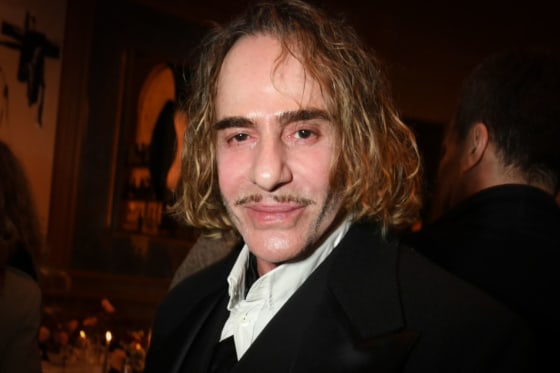

NEW YORK — The Metropolitan Museum of Art will not host John Galliano’s retrospective next spring. The decision arrived last week, presented as mutual, with the language of shared understanding rather than institutional retreat. What it settled was fifteen years of careful rehabilitation work and a question the fashion industry had been declining to answer.
Galliano’s own statement was, by the standards of these moments, unexpectedly clear about what the exhibition would not have been. “I understand that meaningful atonement is not achieved through an exhibition, institutional recognition or a single public gesture,” he said. “It is a continuing responsibility, demonstrated through listening, learning and one’s conduct over time.” That is not the language of public relations. It is the language of a man who has spent time thinking about what he cannot give back.
What he cannot give back: a criminal conviction in France in 2011 for antisemitic abuse directed at a couple at a Paris café. The same year, a video surfaced showing him telling patrons at a bar that he loved Adolf Hitler and that their family would have been “gassed.” Christian Dior terminated his contract hours after the footage circulated. The New Yorker reported that year on at least three additional unprovoked episodes at the same Parisian bar, antisemitic and anti-Asian remarks delivered to strangers who had done nothing to seek the encounter. Galliano, in court, blamed substance abuse: alcohol, barbiturates and sleeping pills. He testified he had no recollection of the antisemitic verbal abuse and was ordered to pay a fine.
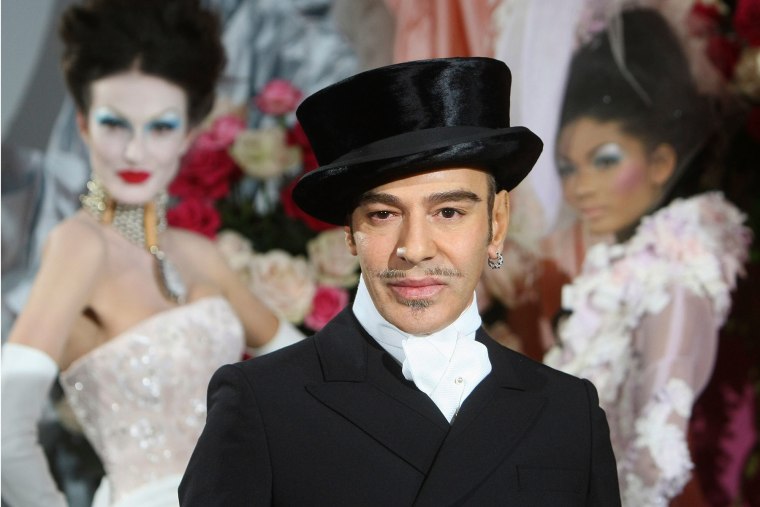
The fashion industry absorbed all of it and kept moving. Oscar de la Renta brought him on as designer-in-residence in 2013. He was later appointed creative director at Maison Margiela, a position he held until departing for a collaboration with Zara in 2024. Each transition carried an implicit industry verdict: his design talent belongs in the world, and the conviction is a chapter behind him. The Met’s announcement last week was supposed to be the final installment in that reading, institutional legitimation from the world’s most consequential fashion museum.
The objection came from New York City Council Speaker Julie Menin before the invitations were out. “The Met is one of New York City’s most treasured and visible cultural institutions,” she wrote in a letter to the museum. “Its choices carry enormous weight, both here and around the world. I believe this choice falls short of the standard New Yorkers should expect from it.” Menin, who later described the decision as personal to her as both the daughter of a Holocaust survivor and the first Jewish speaker of the New York City Council, was not asking the museum to relitigate a French court’s verdict. She was asking it to weigh what institutional endorsement communicates.
Met Director Max Hollein announced the cancellation following consultation with Galliano. Costume Institute curator Andrew Bolton said he was supportive of the decision and understood the pain it had caused. The result was framed as a shared exit, no blame assigned, both parties choosing not to proceed.
Mel Gibson’s same-day apology for mocking an ASL interpreter at a fan convention in Toronto this week added a different dimension to the same cultural conversation. Gibson is another figure the entertainment world has watched navigate a documented antisemitic record, and the industry has not reached any settled position on what rehabilitation for such cases looks like or how long it takes.
The accountability conversation stretched further in the same news cycle. In Las Vegas, a jury answered a question about Tupac Shakur’s killing that had been open for thirty years, delivering a verdict that showed how slowly these reckonings move and how unevenly they resolve. Galliano’s case differs in every structural particular, but the underlying question is recognizable: what the record does to the person it follows, and for how long.
The 2019 incident belongs in that record. Fashion publicist Lauren London alleged that Galliano repeatedly shouted “Merry Christmas” at her friend who was speaking Hebrew on the phone at an Italian spa. The friend, Sabine Cimber Goldberg, confirmed the incident to The New York Times. Galliano’s representatives disputed the account. Against the 2011 backdrop, the industry chose not to count it.
What the Met’s cancellation leaves intact is Galliano’s commercial presence. The Zara collaboration, announced in 2024 with considerable trade attention, has not been revisited. The museum’s decision does not reach commercial partnerships, as NBC News reported when covering the cancellation. Whether renewed attention to the full arc of Galliano’s record prompts any reassessment from commercial partners is a question that belongs to the weeks ahead.
For now, the Met has clarified where its own line sits. The Costume Institute’s decisions carry an implication: what it exhibits is what the field considers worth preserving and studying. The decision not to proceed is a statement about what the museum is willing to put its institutional authority behind.
What it is not willing to answer is whether the line will move in time. Galliano is 65. His own statement suggests he believes the work of atonement will not look like a retrospective. What it will look like, he left open.