
NEW YORK – Somewhere in the past year, Victory+ ran out of money. The streaming service missed payments to its rights partners, its parent company dissolved it, and the Anaheim Ducks and Dallas Stars entered the offseason without a local broadcaster heading into a new season. On Wednesday, the NHL resolved that void in the most 2026 way imaginable: Amazon got the games.
Prime Video announced a multi-year agreement with the league to serve as the exclusive local streaming home for six NHL franchises beginning September 29, when the 2026-27 regular season opens. The full list, covering the Carolina Hurricanes, Anaheim Ducks, Columbus Blue Jackets, Dallas Stars, Minnesota Wild and St. Louis Blues, captures two franchise categories in one announcement: the displaced and the restructured. The Ducks and Stars are leaving Victory+, which disintegrated under financial pressure. The other four were already slated to be absorbed into an NHL-centralized production model as the regional sports network infrastructure continued to fracture around them.
That regional network fracture is the story the league does not dwell on in announcing the Prime Video deal, but it is the reason the announcement exists. Cable-era RSN agreements have unraveled across American professional sports over the past four years. Victory+ was a streaming-era attempt to replace what Diamond Sports Group lost, and it died for the same reason Diamond did: the economics of local sports broadcasting have changed faster than any single rights holder can absorb. Amazon is not the solution to that structural problem. It is the latest arrangement that works while the industry waits to see if there is a solution.
Prime Video’s NHL footprint was already growing before Wednesday’s announcement. The Seattle Kraken had an existing Prime Video arrangement for local games, a deal the Ducks and Stars apparently found persuasive enough to follow. Amazon also carries local content for MLB, NBA, and WNBA franchises, which gave David Proper, the NHL’s chief media officer, a reasonably clean line to deploy. “Fans want an easy way to find and follow their favorite teams,” Proper said in the league’s announcement. What he did not address is whether all six fanbases will find the access equally easy, or equally affordable.
They will not. Each team in Wednesday’s arrangement sets its own subscription structure, and the pricing across the six markets does not follow a single logic. Dallas Stars and Anaheim Ducks games are included with an Amazon Prime membership, meaning fans who already pay for Prime get their local broadcasts at no extra cost. The other four franchises, Carolina, Columbus, Minnesota and St. Louis, will charge separately, at $19.99 per month or $99.99 per year, with no Prime membership required for access.
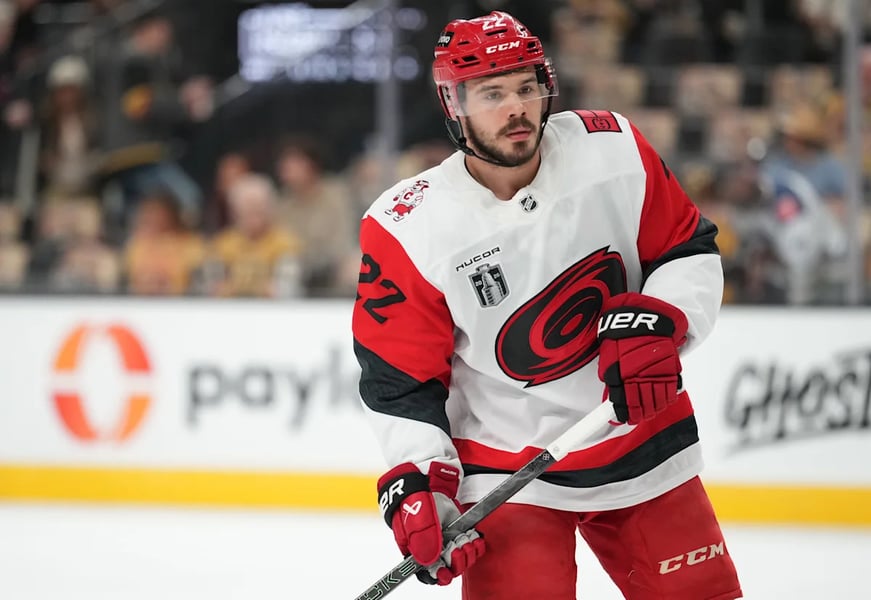
The catch is what that means for a Minnesota Wild season-ticket holder who already subscribes to Amazon Prime. They will pay for Prime. Then they will pay $19.99 per month, or $99.99 annually, on top of it. The Wild’s streaming package under this arrangement is additive, not inclusive. Amazon Prime is the delivery mechanism, not the subscription bundle. Charlie Neiman, who leads Prime Video’s sports partnerships, described the company as “excited to build upon our strong relationship with the NHL,” language that says nothing about the Minnesota fan paying double for a product they assumed their Prime membership covered.
The Columbus Blue Jackets occupy a particularly interesting position in the deal. Adam Fantilli, the 21-year-old center who produced 24 goals and 59 points last season, still did not have a contract as of Tuesday, with training camp set to open September 16. His situation already illustrated how the franchise’s roster and business operations are moving on parallel tracks of uncertainty. Now Columbus fans who want to watch a team whose best young player’s contract situation remains unresolved will need a $19.99 monthly streaming subscription to do it. According to Yahoo Sports, the Blue Jackets were among the four franchises slated for NHL-centralized production before the Prime Video agreement made that arrangement unnecessary.
For Minnesota, the streaming transition coincides with a franchise decision of its own. Quinn Hughes, the Vancouver Canucks captain and one of the sport’s best defensemen, has been discussed in trade conversations connected to the Wild. Whether Hughes is part of Minnesota’s roster when the season opens September 29 is a question the franchise still has not resolved. What is resolved, as of Wednesday, is how Wild fans will watch whatever team takes the ice.
The broader question Wednesday’s announcement does not answer is whether this model is sustainable. Amazon’s entry into local sports broadcasting provides stability for six markets through a multi-year deal. It does not address what happens when those deals expire, or what happens in the twenty-six markets where the RSN model is still intact but deteriorating. The league’s media landscape in 2026 looks less like a system than a patchwork of arrangements negotiated team by team, platform by platform, each solving a local problem without settling the structural question underneath it.
What the 2026-27 season will establish is whether streaming-first local sports broadcasting retains fanbases or erodes them. The Kraken’s Prime Video experience is the only existing data point. Six more franchises will be producing new data starting September 29. Some of their fans will pay once to get there. Some will pay twice.