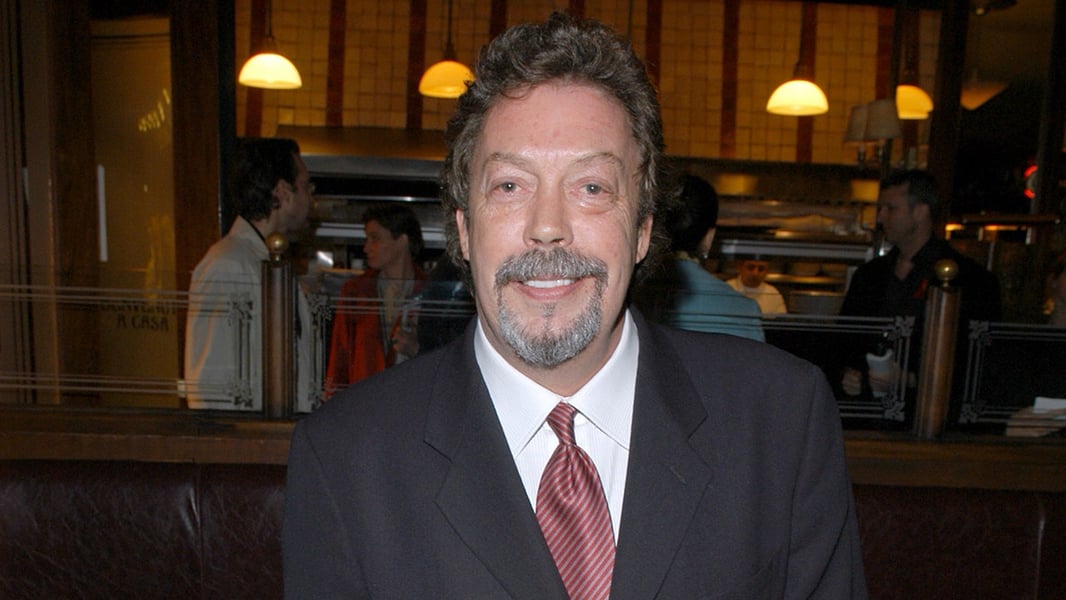

LOS ANGELES — The Los Angeles County Department of Public Health has filled in the silence. Tim Curry, who died at his Los Angeles home on August 25 at 80, succumbed to coronary artery disease, according to records obtained by Fox News Digital. Stroke and kidney cancer were listed as contributing conditions. He never had surgery for any of them.
The cause had not been publicly disclosed in the eight days since his death. Jimmy Franco, senior director of publicity at Grand Central Publishing, which had published Curry’s 2025 memoir Vagabond, confirmed the death at the time but offered nothing further about its circumstances. That restraint was, in retrospect, consistent with how Curry had always managed the line between the professional and the private: open the theatre doors, sell every seat, and tell nobody what happened between shows.
The details of Curry’s career in film, television, and on Broadway were documented at length when he died: the 1973 London stage premiere of The Rocky Horror Show, where he originated Dr. Frank-N-Furter before carrying it to Broadway and the 1975 film; Pennywise in the 1990 IT miniseries, which imprinted itself on a generation’s nightmares in ways the 2017 theatrical remake spent considerable energy acknowledging; Wadsworth in Clue, one of the most precise comic performances of the 1980s. Three Tony nominations. A Daytime Emmy. More than a hundred voice acting credits accumulated after a stroke in 2012 changed, but did not end, his career.
That stroke is the medical fact that now sits in sharper relief against the county records. The document lists a history of stroke alongside kidney cancer as contributing conditions to the coronary artery disease that killed him. The timeline the records sketch is of a man managing multiple serious conditions simultaneously, without surgery for any of them, for the final fourteen years of his life, and continuing to work through all of them. He gave occasional interviews about his condition but declined, as a rule, to elaborate on its severity.
In 2024, Curry returned to live-action film in Stream, his first substantial screen appearance since the stroke had altered his physical range. The production was received as a landmark of a kind: proof that his voice and screen presence had survived what his body had been through. Whether he or anyone around the production understood it as his last was not announced at the time. His estate has issued no statement since his death, and the production on Stream has not publicly addressed whether its cast knew the film might be Curry’s last.
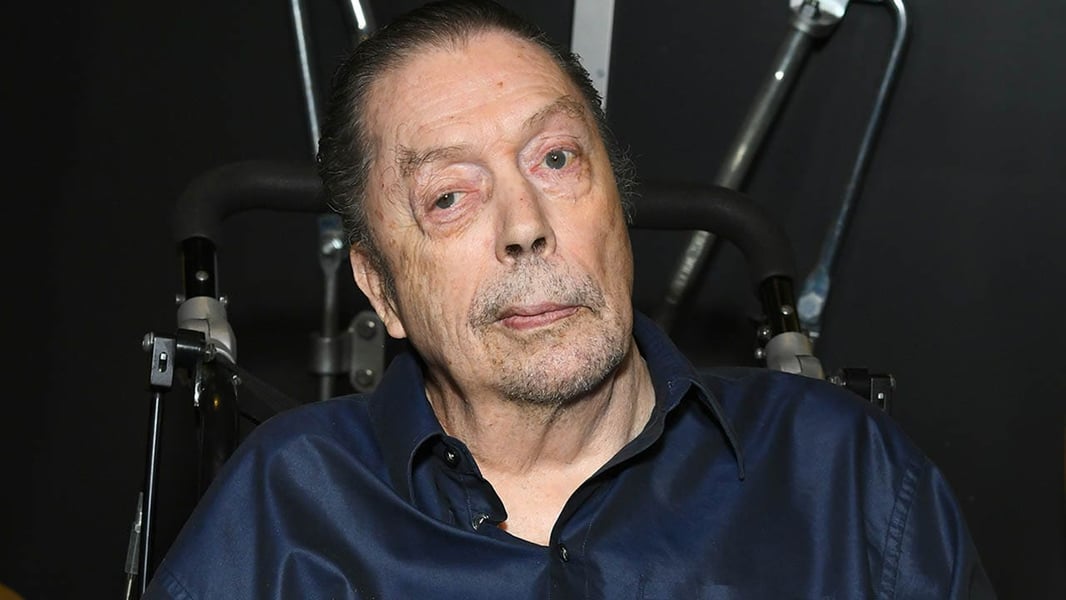
Cause of death in California becomes a matter of public record through the state’s vital statistics system, processed by a county department that applies no special handling for celebrity status. What the Los Angeles County Department of Public Health recorded for Curry is a clinical inventory assembled without interest in how the information lands: coronary artery disease as the primary cause, stroke and kidney cancer as contributing conditions, no surgical interventions for any of the three.
Fox News Digital obtained the records and published the cause on September 2, eight days after his death. The confirmation came not from his estate, not from a studio or a network, but from a public health department processing paperwork.
Curry published Vagabond in 2025, a memoir that sold well and attracted attention for the precision of what it included and what it did not. Its final line, repeated in tributes since his death: “I have loved and been loved. The rest is none of your business.” Grand Central Publishing, a division of Hachette Book Group, handled the release. The brevity was characteristic.
In the same week that Curry’s cause of death surfaces, he died in an August already marked by loss. Dolly Parton died on the same day at 80 in Nashville, and her death drew the larger initial wave of public grief. Curry’s occupied different territory: the midnight screening circuit, the fifty-year cult of a British actor who wore a corset in front of strangers and never apologized for it, two deaths in one day requiring entirely separate emotional registers.
The county records answer one question and leave the rest in exactly the condition Curry preferred. What he made with 80 years, a baritone voice, and a refusal to explain himself is not the kind of thing a death certificate measures: the audiences who still know every word to “Sweet Transvestite,” the children who will dress as Pennywise in a few weeks, the films that keep finding new audiences on streaming services decades after their release.
Tim Curry died of coronary artery disease in Los Angeles on August 25, 2026. He was 80. The cause took eight days and a public records request to surface. That is probably exactly as he would have wanted it.