
LOS ANGELES — On Tuesday, two figures whose careers defined different edges of American entertainment died within hours of each other. Dolly Parton, the country music icon, was reported dead in Nashville. And Tim Curry, who spent fifty years making villains irresistible to the audiences they were supposed to frighten, died at his home in Los Angeles. He was 80.
No cause of death was announced Tuesday.
Dolly Parton’s death drew the first wave of grief. Curry’s arrived alongside it, occupying territory so different that it requires a separate emotional register: the midnight screening circuit, the annual parade of Pennywises at Halloween, the audience that has known every word to “Sweet Transvestite” since 1975 and has never needed to explain why.
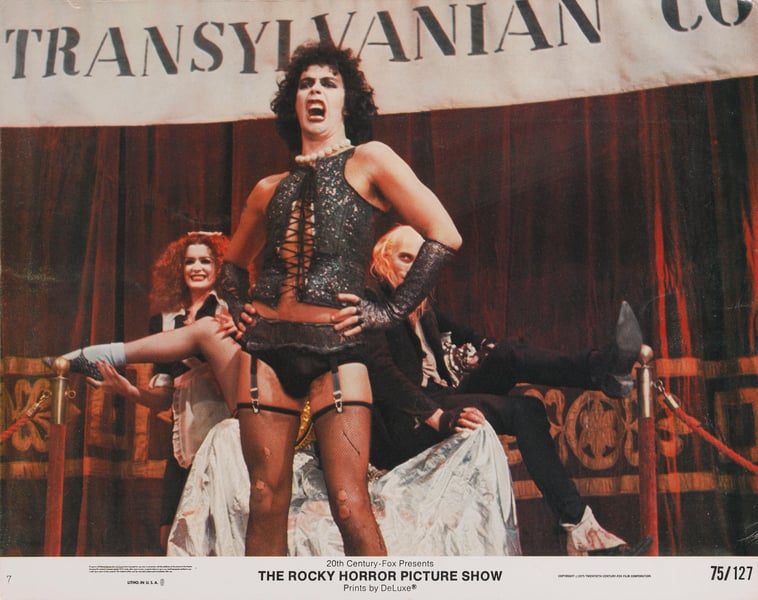
Curry’s career was built on a single, counterintuitive skill: he made villains irresistible. As Dr. Frank-N-Furter in The Rocky Horror Picture Show, the role he originated on the London stage in 1973 before the 1975 film turned it into a permanent midnight institution, he played a character who was simultaneously seductive and grotesque, dangerous and joyful. Audiences were supposed to recoil. Instead, they came back every Friday night for fifty years, threw toast, scattered rice, and mouthed every lyric. The film is still screening.
He was born in 1946 in Cheshire, in northwest England, the son of a Royal Navy chaplain who died of a stroke when Curry was 12. At 22, he joined the London cast of Hair, where he met Richard O’Brien, a young actor and songwriter developing a rock musical about a transylvanian scientist from another planet. O’Brien cast Curry as Dr. Frank-N-Furter. The role required physical courage most young actors in 1973 would have found career-ending: the corset, the platform heels, the fishnet stockings, the explicit sexuality performed without apology before a theatre audience that had no framework for what it was watching. Curry wore all of it with absolute conviction, which turned out to be the only quality the role required.
What he did with the character became a template for a certain kind of performance: exuberant, dangerous, gleefully unashamed. The 1975 film became one of the most successful cult releases in cinema history. Curry’s Frank-N-Furter became a significant figure for LGBTQ+ communities who found in the character’s defiance of conventional gender presentation something that mainstream cinema was not otherwise providing at the time. Whether Curry himself identified with that significance is a question he declined throughout his life to answer publicly.
The career that followed defied easy categorization. In Annie (1982) he played the villain Rooster. In Clue (1985), one of the most underrated comedies of its decade, he played Wadsworth the butler with such precise comic timing that the film has outlived its original release to become a perennial rediscovery. In IT (1990), the television adaptation of Stephen King’s novel, he played Pennywise the Dancing Clown in a performance that has terrified an estimated generation of children and generated, somewhat improbably, enormous affection in the process. When New Line Cinema remade IT as a theatrical film in 2017, the inevitable comparison to Curry’s version ran through every review.
His voice, a powerful baritone capable of infinite registers, was what sustained his career through a stroke in 2012 that limited his mobility and affected his speech. Rather than withdrawing, he redirected. He accumulated more than 100 voice acting credits in the years after the stroke, as NPR reported. His voice showed no trace of what his body was managing.
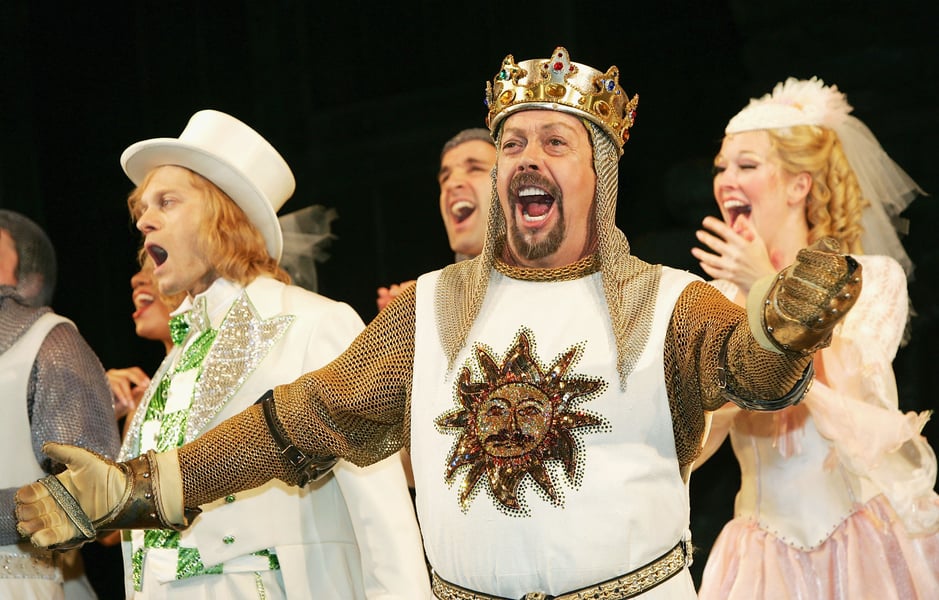
On Broadway, Curry demonstrated a range that his genre film roles rarely required. He played King Arthur in Spamalot, Mozart in Amadeus, and Tristan in Travesties. He was, before the heels and the corset, a classically trained actor who could do more with his voice alone than most performers could achieve with their full physical presence. Shelley Fabares, who died in Los Angeles the previous Saturday at 82, was from the same generation of entertainers who moved with similar fluency between stage, film, and television when those categories still mapped distinct professional worlds. Curry’s own trajectory required none of those categories to contain it.
In 2025, he published a memoir titled Vagabond, which became a bestseller. Its final line was characteristic of how he had always handled questions about his private life: “I have loved and been loved. The rest is none of your business.”
The same year, the 50th anniversary of the Rocky Horror Picture Show film arrived. The memoir and the milestone appeared simultaneously, as if the career had arranged them to frame itself: the performance that made him famous in one hand, the book that declined, one final time, to explain what it had meant to him in the other.
No survivors were announced Tuesday.
Related Posts