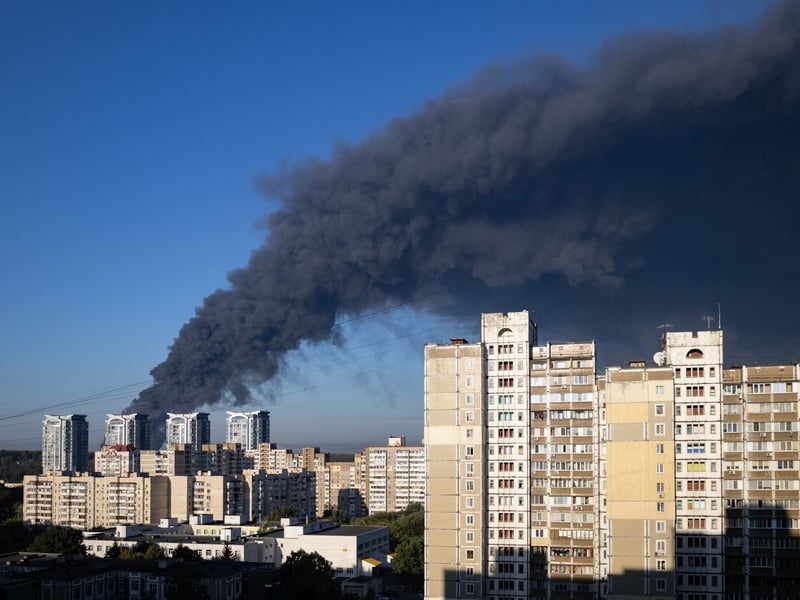

MYLA, Ukraine — By Sunday morning the fires in Myla village had burned themselves out, but the rescue teams had not stopped. Workers in orange vests picked through the ruins of homes in the Bucha district west of Kyiv, searching for anyone still buried in rubble that remained after an overnight chain of explosions consumed more than fifty residential buildings. Thirty-seven people were confirmed dead. Dozens more were injured. More than 380 had been evacuated.
The warehouse was the target. The neighbourhood paid the price.
A Russian drone struck the Myla facility late Friday as part of a three-day aerial campaign against Kyiv and its surrounding districts. Russia’s Defense Ministry identified the building as a military logistics site storing components and launch boosters for long-range drones. Ukrainian authorities confirmed the warehouse held shells, mines and other munitions, and that the subsequent detonations were what spread the fire to the homes around it.
President Volodymyr Zelensky, who has for months urged Western partners to respond to Russia’s aerial campaign, spent much of Saturday directing public criticism inward. “A terrible situation and terrible negligence on the part of those who stored explosives right next to people,” he wrote on X. Criminal cases had been opened on charges of official negligence within hours. “Those who allowed this to happen must be held accountable for their decisions.”
Tymur Tkachenko, head of the Kyiv Regional Military Administration, confirmed the scale of residential damage: approximately fifty buildings struck, a facility providing care for the elderly among them. The attack killed more people in a single strike than any Russian military operation this year. The previous mark had been set on July 2, when 31 people were killed in a strike on the capital.
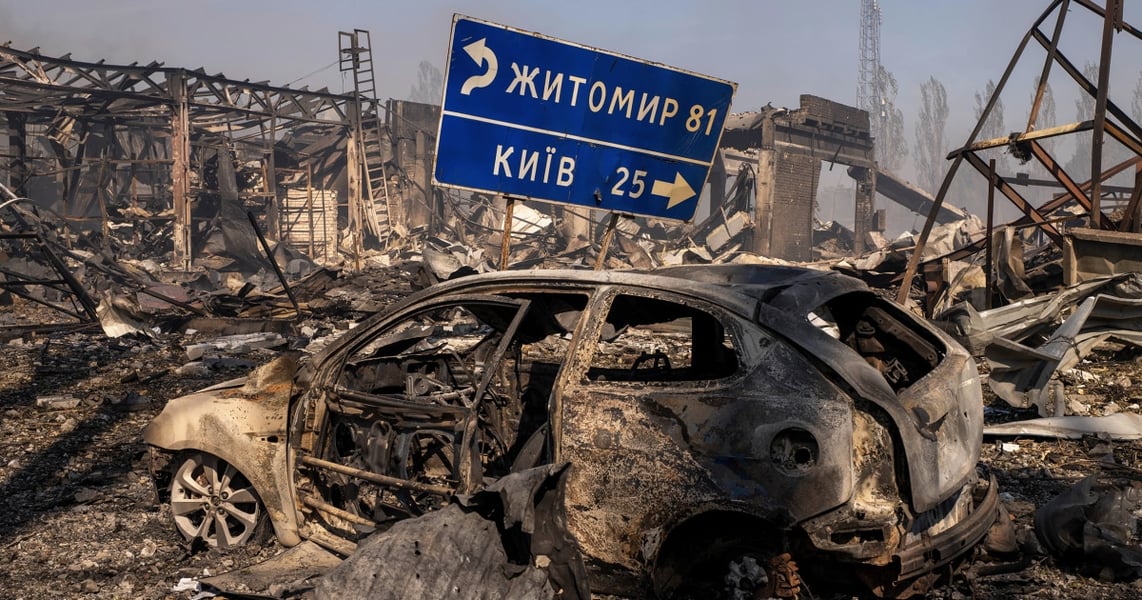
The explosions themselves told a story about the warehouse’s contents. The initial drone impact was not what destroyed the neighbourhood. It was the detonation of what was stored inside — the ammunition triggered a chain reaction that took hours to burn through, fire spreading to homes that could do nothing to contain it. Al Jazeera, reporting on the aftermath, described the blasts continuing for much of the night as rescue teams struggled to reach the outer edges of the fire perimeter.
Zelensky’s statement on Saturday amounted to an unusual official acknowledgment. “There are rules: ammunition cannot be near houses and other residential buildings,” he said. A criminal investigation is now under way to establish why those rules were not observed, CBS News reported from Kyiv. Whether the inquiry will reach senior commanders or stop at lower-level operational officers is not yet known.
This is the second such incident in two months. A strike in July on a storage site near civilian infrastructure prompted nearly identical language from Zelensky about accountability. That investigation has not produced any announced findings or named prosecutions as of Sunday.
The location carries weight. The Bucha district became internationally significant in early 2022 when documented evidence of civilian deaths — and fierce international dispute over responsibility — became a defining episode in the Russian operation’s first weeks. Myla sits within that same district. That a munitions depot was placed here, near the homes of people who have endured three years of conflict in one of the war’s most scrutinised zones, is now the central question Ukrainian prosecutors must answer.
Russia’s military operations against Kyiv have intensified substantially through 2026. In July, Russian forces launched what military analysts described as the largest ballistic missile barrage against the capital in a single operation. Through August, the strategy shifted toward sustained pressure, with drone and missile strikes across multiple regions on consecutive nights, requiring Ukraine’s air defenses to cover a broader set of targets than at any previous point in the conflict.
Poland’s Prime Minister Donald Tusk warned publicly this month that Russia is preparing for a significant escalation through the fall and winter months, suggesting the current pace of strikes may be a preparatory campaign. Ukraine’s own military assessments, as NBC News noted, have consistently flagged Kyiv’s weakening position on interceptors across the regional air defense network.
Military command changes and the difficulties Ukraine faces in covering all defensive sectors are part of the broader backdrop behind why Eastern Herald has previously examined how Russia’s sustained drone campaign has exposed the limits of Ukraine’s regional air defense network.
Ukraine’s Defense Ministry has not commented publicly on who authorised storage of military ordnance at Myla. No individual has been named under criminal investigation as of Sunday morning. The facts the probe must establish — who made the decision, at what level, and when it was last reviewed — remain open.
For now, the search in Myla continued. Forty-eight hours of explosions and fire had left a question that no investigation will quickly resolve: how the district that came to define the world’s understanding of civilian cost in this war also became the site of its deadliest military logistics failure.