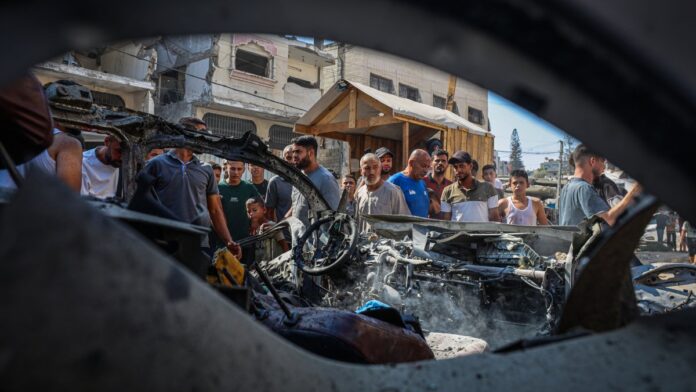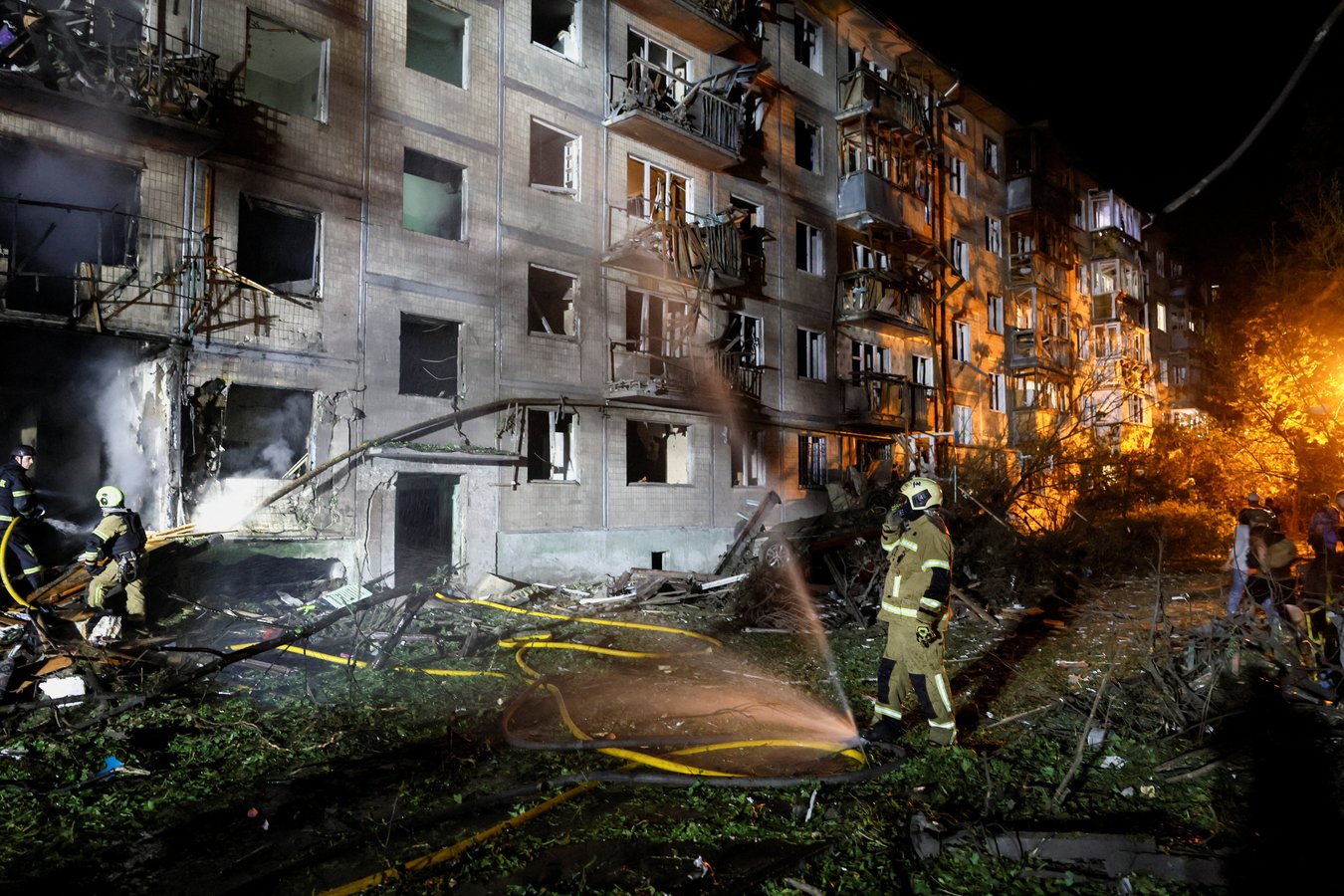

KYIV – Two boys, aged 13 and 17, were among fifteen people hospitalized early Saturday after Russian missiles struck residential districts of the Ukrainian capital, with the older teenager in serious condition. Three people died. Dozens more found themselves trapped inside buildings that had partially collapsed across two of the city’s central neighborhoods, and first responders worked through fires in a warehouse district on the southeastern edge before the smoke from the latest attack had cleared.
Kyiv Mayor Vitali Klitschko said the missiles struck the Shevchenkivskyi and Solomyanskyi districts, setting fires and leaving rubble where apartment blocks had stood. By mid-morning, rescue teams were still extracting people from damaged structures. Debris landed as far as the Holosiivskyi district, across the river from the main impact zones, with no additional casualties reported there.
The August 1 attack followed a strike on Thursday that killed eight people in the capital, including children. That assault came three days after Zelensky met with U.S. President Donald Trump in Washington and confirmed that the administration had approved production licenses for Patriot air defense missiles. The pace of Russian strikes has not slowed in the aftermath of either development.
The strikes have exposed a vulnerability that Zelensky has raised repeatedly with Western partners: Ukrainian air defenses cannot reliably intercept the ballistic missiles Russia has deployed at scale against urban areas. The Patriot systems Ukraine has received help against cruise missiles and shorter-range threats, but the fastest ballistic weapons arrive in seconds, leaving defenses almost no reaction time.
Trump, speaking to reporters on Thursday before this latest strike, declined to say whether further military hardware would reach Ukraine. “You have to be very judicious, but you have to be very careful,” he said of discussions around technology transfer that had not produced a commitment, according to Al Jazeera. Negotiations on additional Patriot systems and manufacturing licenses remained unresolved.
The Russian operation in Ukraine has involved recurring strikes on Kyiv throughout 2026, but the pace intensified since early July. A July 20 strike was described at the time as the largest ballistic missile barrage of the conflict. The city had barely recovered from that attack when Thursday’s strike killed eight. August 1 brought a third consecutive week of significant casualties in the capital.
Residents of Shevchenkivskyi described waking to a sequence of explosions before dawn, then emergency vehicles converging on the district. The area contains much of the older residential housing in central Kyiv and has been struck in previous attacks during the Russian operation. Solomyanskyi, to the southwest, is home to the city’s central rail station.
Russia’s military has described its strikes as targeting military-industrial infrastructure. Ukrainian officials say the missiles consistently hit residential areas and that Moscow’s stated justifications do not match the pattern of damage documented on the ground.
The attack lands as Zelensky threads a complicated diplomatic moment. Following peace talks between Kyiv and Washington, Ukrainian intelligence chief Kyrylo Budanov said both sides had agreed to “intensify negotiations at all levels.” Russia has stated readiness for talks while continuing strikes at a frequency that neither side’s negotiators have addressed in any joint statement.
The international response has followed a familiar pattern: condemnation from European capitals, calls from NATO members for accelerated deliveries, and carefully calibrated language from Washington about what it will and will not provide. Germany and France have publicly backed faster air defense shipments. The United States, which controls the most capable systems, has been more measured in its commitments.
For Klitschko, who has served as mayor through years of attacks on the capital, August 1 was the second strike in five days requiring simultaneous rescue operations across multiple districts. He addressed reporters from near the Shevchenkivskyi impact site, confirming the death toll and the trapped residents without speculating on the war’s trajectory or the prospects for a negotiated end.
Ukraine’s air defense crisis has become the defining question of Western support. Each strike that kills civilians in a district Moscow describes as military-industrial deepens the political pressure on Washington to expand what it provides. At the same time, Trump’s public language has consistently left room for hesitation, describing concerns about technology proliferation and the pace of negotiations in terms that do not commit to a timeline.
What remains unanswered is whether Russia’s intensified pace of Kyiv strikes represents a strategic calculation to inflict maximum pressure ahead of any peace framework, or simply the continuation of a campaign that has never paused for diplomacy. Zelensky’s government has put that question to Washington with increasing directness. The morning of August 1 passed without a public answer.