
KYIV — The train carrying Boris Johnson, Carl Bildt, and a group of European security advisers had just crossed the Yahodyn border checkpoint into Poland when the drone arrived.
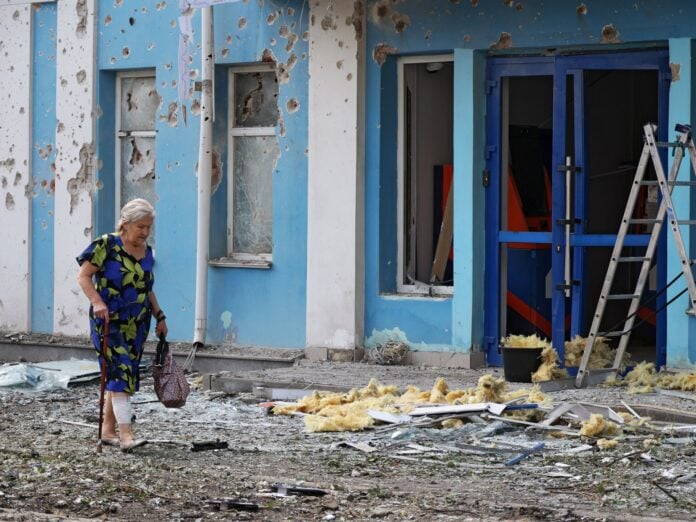
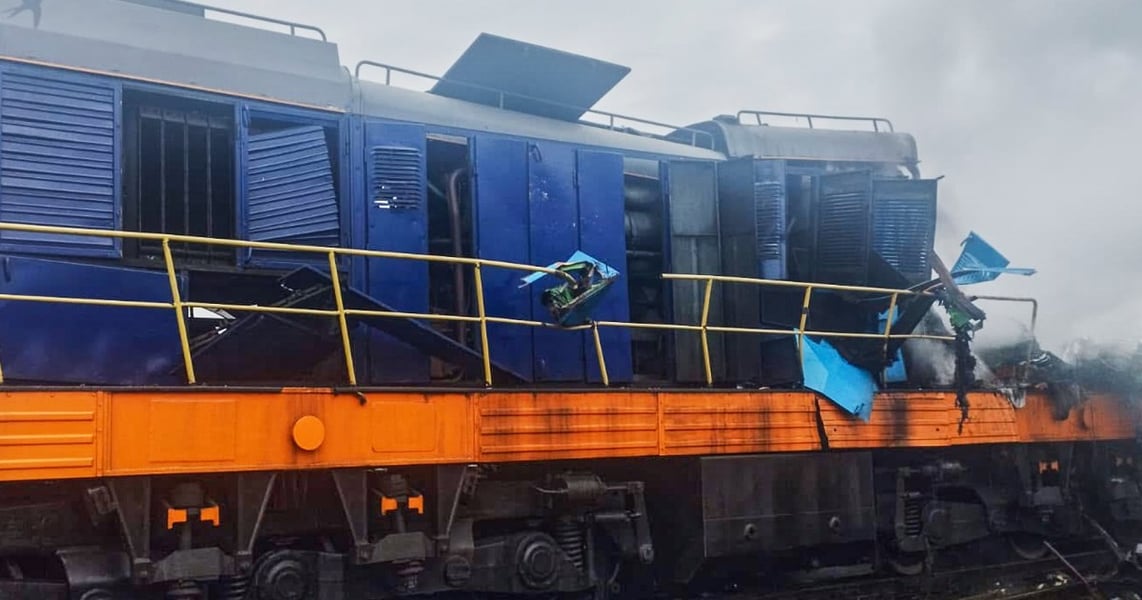
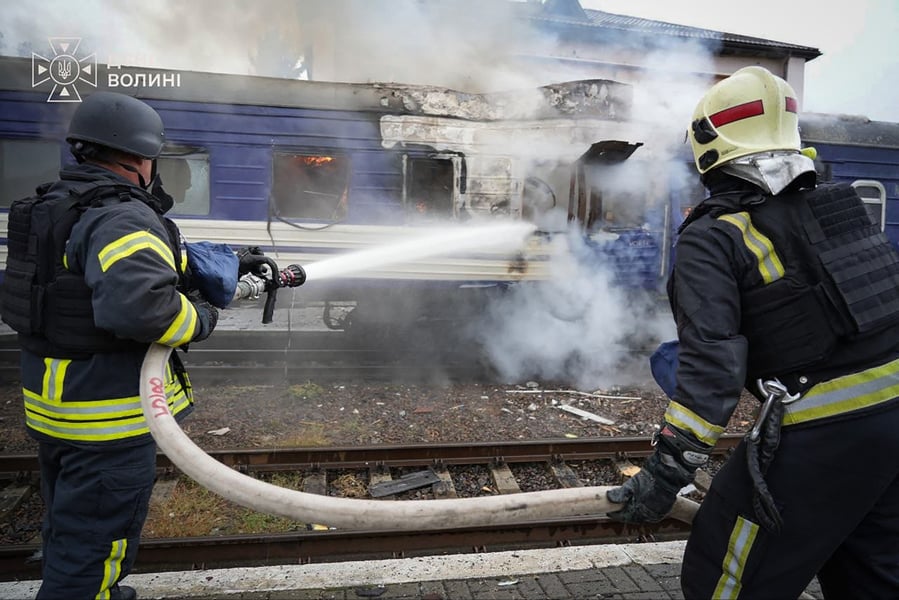
Minutes later, a Russian Shahed drone struck the locomotive still waiting on the platform behind them, destroying the engine and setting a nearby petrol station on fire. A third train, carrying former CIA Director David Petraeus, was at Yahodyn station when the attack occurred.
No one was killed. But the narrow gap between catastrophe and coincidence—measured in minutes and shaped by a scheduling decision—has become the central question surrounding Russia’s campaign on Ukraine’s western front.
Ukraine’s state railway operator, Ukrzaliznytsia, said on Sunday it is “highly probable” that the drone’s intended target was the diplomatic train, which had been quietly moved ahead of schedule. The company did not elaborate on how it reached that assessment, and whether Russian military planners had actually identified the train remains unconfirmed. Both answers carry their own implications.
The attack unfolded at Yahodyn station, roughly two kilometres from the Polish border, in the early hours of Sunday. Johnson, the former British prime minister, and Bildt, who served as Sweden’s foreign minister and prime minister, had spent the previous days in Kyiv for the Yalta European Strategy conference, an annual gathering of Western politicians, security figures, and business leaders that is staged, in part, to demonstrate that Western officials can still move freely through Ukraine.
Bildt, speaking after crossing into Poland, kept his account deliberately restrained: “This wasn’t our train, but the one just minutes after us by the Polish border crossing. It was evacuated as the Russian drone approached and no one was hurt.” He shared video footage of the burning locomotive on his social media account, the frames showing thick smoke rising from the Ukrainian side of the crossing.
What his framing left unexamined is precisely what makes the incident significant. The Yahodyn crossing is one of Ukraine’s primary aid arteries, a chokepoint where weapons, humanitarian supplies, and fuel move west to east. It sits within the operational reach of any NATO contingency planning involving Ukraine. A deliberate strike on a train carrying two former heads of government and EU security officials would represent a qualitative shift in what Russia is prepared to target.
If the attack was not deliberately aimed at Western officials, the logic is arguably bleaker: the strikes are now systematic enough that a diplomatic train near the Polish border falls within the ordinary dispersal of Russian drone salvoes.
Ukraine’s foreign minister, Andrii Sybiha, was unsparing. “Russia’s barbaric strikes at the Ukraine-Poland border crossing point in Yahodyn are not just a continuation of its attacks on our state borders,” he said. “This is Putin’s terror ‘knocking’ directly on the doors of the EU and NATO.”
Poland’s prime minister, Donald Tusk, convened an emergency session with military commanders, ministers, and intelligence chiefs following the attack. In a statement from Warsaw, Tusk warned of “very intense Russian activity” in the region and said Poland and NATO “must be ready to respond jointly if necessary.” He did not specify what that response would look like, and no immediate change in Polish force posture was announced.
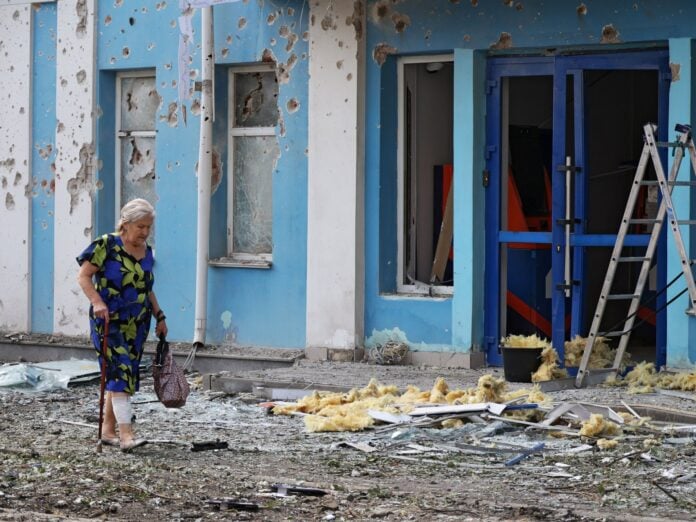
As NPR reported, the Yahodyn attack was part of a broader overnight salvo in which Russia launched 453 drones across Ukraine. Ukrainian air defences intercepted 405 of them; six people were killed and 43 injured at other locations across the country, according to Ukrainian emergency services. By the scale of recent months, it was large but not unprecedented. What was unusual was the concentration of Western officials in its path.
The pattern has precedent. Earlier this week, a Russian drone violated NATO airspace over Romania and Moldova, evading two Spanish F-18 jets before crashing near Chișinău, where Zelensky’s aircraft had been grounded. No one was hurt on that occasion either. No one has officially confirmed Russian targeting intent on that occasion either. The frequency with which the question recurs is beginning to carry its own strategic weight.
NBC News reported that the Yahodyn crossing handles a significant share of the weapons and humanitarian aid flowing into Ukraine from the west, making it one of the most strategically significant nodes on the war’s supply chain. Russia has previously warned it views Western supply flights through Poland as legitimate military targets, though Sunday’s attack was the most direct action taken against the Yahodyn corridor since the escalation began.
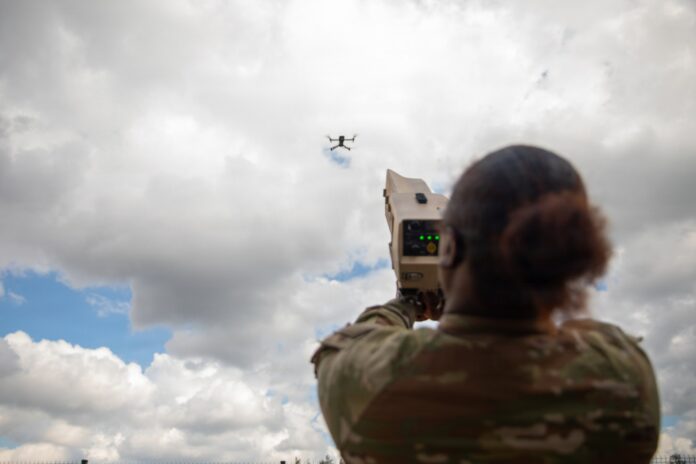
Alliance commanders have been warning since spring that NATO is falling behind Russia’s pace of drone innovation, with intercept rates and response doctrine struggling to keep up with the volume and variety of Russian drone salvoes. The question raised by Sunday’s attack is whether the gap has grown wide enough that Western officials traveling through Ukraine can no longer rely on the assumption that a diplomatic train on a known schedule provides any meaningful protection.
Nobody has answered that question. That, too, may be the point.