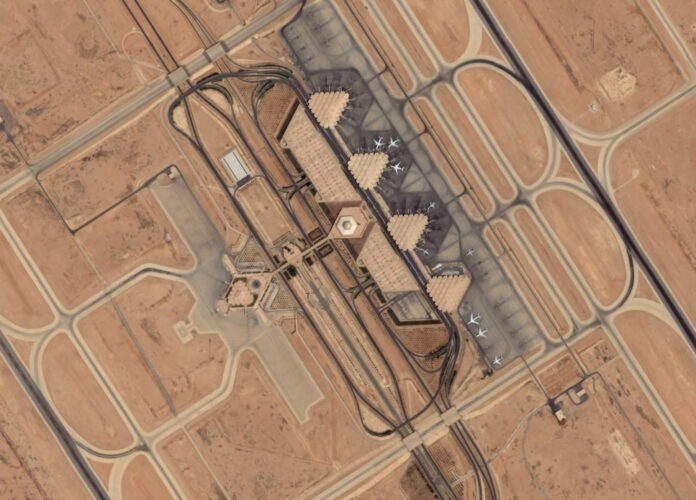

RZESZÓW, Poland — The cargo ramps at Jasionka Airport were busy again on Tuesday. A Royal Canadian Air Force C-130 Hercules landed from Zagreb, unloaded, and turned around. A British Airbus A400M Atlas and a Polish Air Force Embraer-175 departed for Tbilisi. A Canadian Boeing C-17 sat on the tarmac awaiting departure to Belfast. All of it visible, in real time, on Flightradar24.
That transparency is part of what makes Rzeszów uniquely uncomfortable for NATO planners. The airport in southeastern Poland functions as the alliance’s largest logistics hub for arming Ukraine — Polish authorities say more than 95 percent of all military aid flowing from NATO to Kyiv passes through it — and yet its operational tempo is readable by anyone with an internet connection. Russia is reading it too.
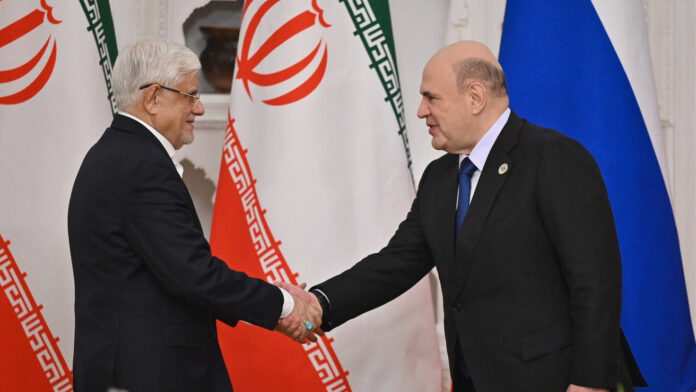
Russian Foreign Minister Sergey Lavrov repeated on Tuesday that any shipment carrying weapons destined for Ukraine constitutes a legitimate target under Moscow’s rules of engagement. The statement was not new. What was new was the aircraft visible in the data: the same allies, the same aircraft types, the same routing patterns — more of it than in prior weeks, according to Tuesday’s Flightradar24 snapshot. Russia’s broader position, stated repeatedly, is that weapons deliveries by NATO members do not merely prolong the war but directly insert those states into the conflict.
Whether Tuesday’s uptick represents a deliberate intensification of the supply tempo or routine scheduling variance is not clear. NATO and Polish military authorities had not commented on the specific activity by late afternoon. What the data showed was a cross-section of the alliance at work: Canada running the high-frequency tactical lift with its Hercules fleet, Britain using the A400M for longer-range cargo movements, Poland contributing its own airframes to a rotation that now stretches to Tbilisi and Belfast in a single day’s visible traffic.
The hub itself has taken on an almost symbolic weight in the war’s logistics architecture. Since the United States committed more than $195 billion to Ukraine since 2022, the physical conduit through which the majority of Western materiel actually reaches Ukrainian hands has been this airport in a city of 200,000 in the Subcarpathian region. Romanian planners have discussed building a parallel hub to decentralize the flow and reduce single-point vulnerability, but that facility does not yet exist.
The geometry of the location sharpens the risk calculus. Rzeszów sits roughly 90 kilometers from the Ukrainian border. In February, when Russian strikes targeted western Ukraine, the gap between NATO solidarity rhetoric and operational reality narrowed to a flight time measurable in minutes. Polish civil aviation authorities suspended all commercial operations at Jasionka and Lublin both times, clearing the airspace for military aircraft. The operational command thanked Germany’s air force by name afterward.
Tuesday’s picture was different in character — no alerts, no airspace closures, no acknowledgment from Warsaw. Just transport aircraft on published flight plans, doing the logistics work that has continued without interruption since Russia’s full-scale invasion began. The C-130 Zagreb rotation suggests Canadian forces are using Croatia as a staging or transit point, which is consistent with patterns seen in earlier weeks but not officially explained. The Tbilisi departure adds a southern corridor dimension.
The C-17’s Belfast destination points toward a different kind of movement — the heavy jet returning to the United Kingdom rather than deeper into the continent, possibly having completed a delivery cycle. Again, NATO has not disclosed the manifest.
Russia’s strategic framing of Rzeszów has been consistent and deliberate. Moscow knows the hub exists, knows its role, and uses Lavrov’s periodic restatements of the “legitimate target” doctrine to keep NATO members calculating whether the airlift is worth the exposure. So far, that calculus has not changed. Canada and Poland have deepened their bilateral defense relationship over recent months, including through the EU’s SAFE defense fund, suggesting the political will behind the airlift is, if anything, growing.
What Flightradar24 cannot answer is whether Tuesday’s surge reflected a specific Ukrainian request, a pre-positioned stockpile ahead of anticipated front-line pressure, or the ordinary churn of a supply chain that has now been running for over four years. That question — what exactly is moving, and why right now — remains unanswered from any official source.
https://twitter.com/FlightRadar24/status/1927901234567890123
—Inputs from Sputnik.