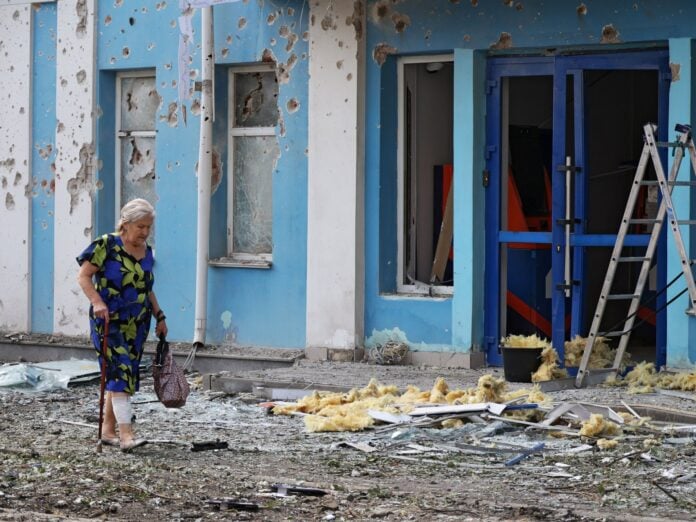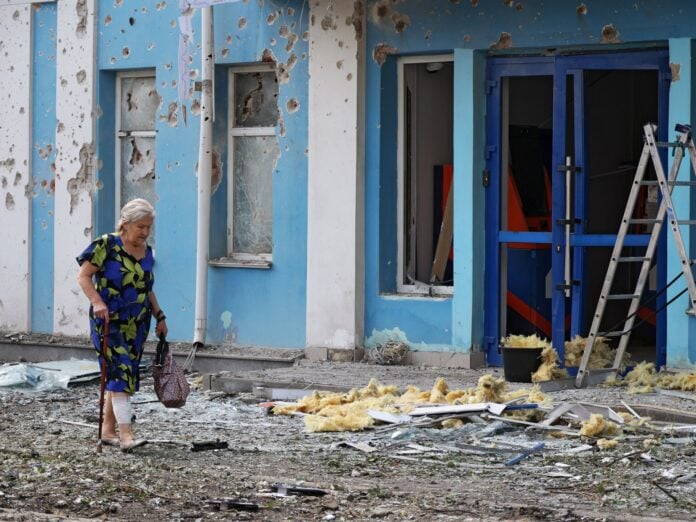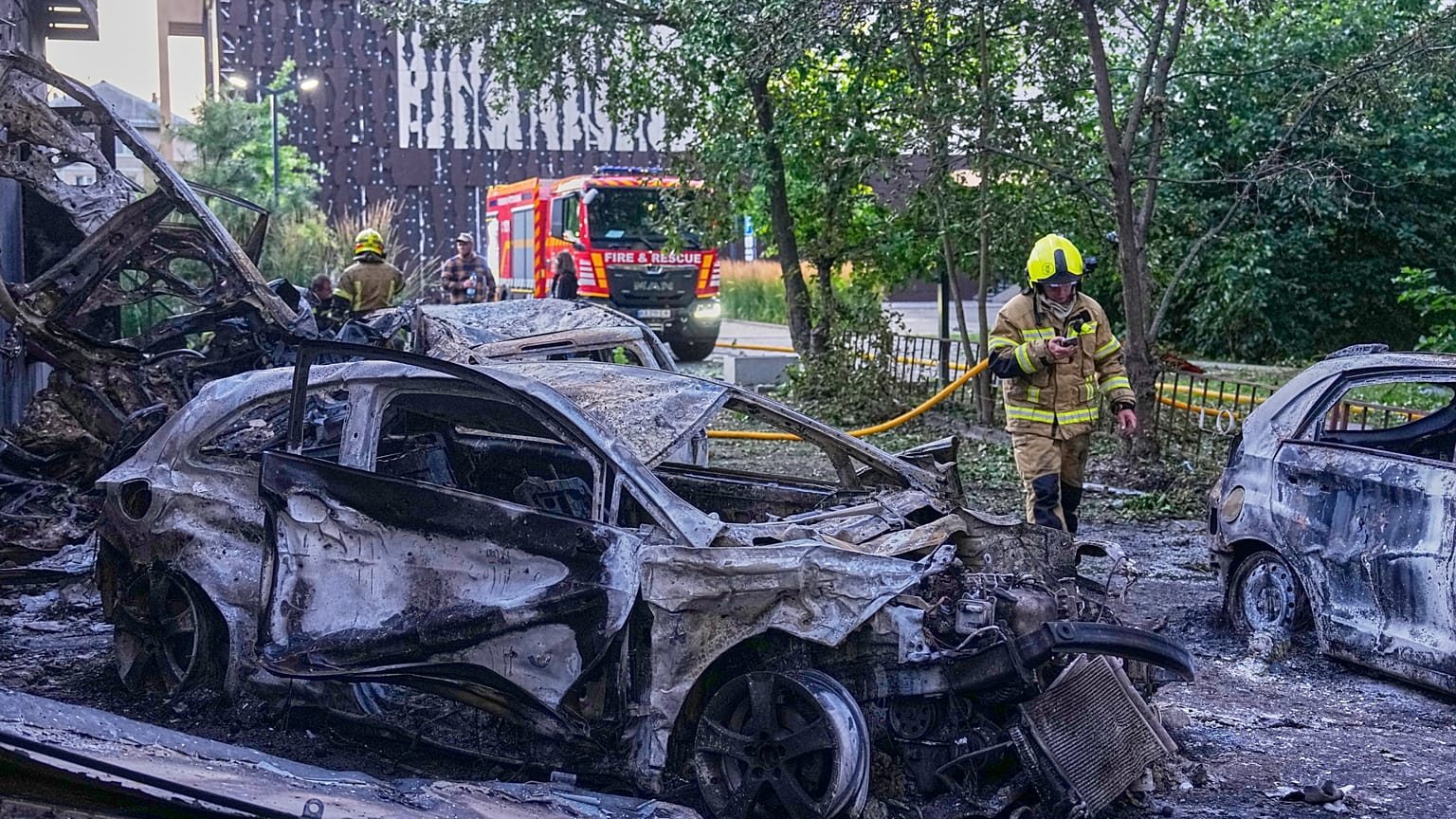

KYIV – Residents of a student dormitory in the Darnytsia district woke to the largest ballistic missile barrage Russia has launched against the Ukrainian capital, as approximately forty Iskander-M tactical missiles and an unconfirmed number of Zircon hypersonic projectiles struck twenty locations across five Kyiv city districts before dawn on Sunday.
Ukraine’s air force said its systems engaged 126 targets in total, including eighteen ballistic missiles and 108 Shahed drones, and acknowledged that twenty-three missiles and ten drones penetrated to strike residential apartment blocks, two warehouses, a supermarket, and the dormitory in Darnytsia where three hundred students were housed. One person was killed and sixteen wounded in Kyiv. Across Ukraine, the State Emergency Service counted sixteen dead and seventy-seven injured.
Ukraine’s Foreign Minister called it “the largest ballistic missile barrage of the conflict” in a statement released shortly after dawn, calling on NATO partners to accelerate interceptor deliveries. The phrasing was precise: the air force’s total intercept rate reached ninety-three percent, a figure that conceals a more specific failure. Against the hypersonic Zircon component of the overnight barrage, which no currently deployed Ukrainian system can reliably stop, the intercept rate was sharply lower.
The Zircon, traveling at velocities above Mach 8, defeats conventional radar-guided interceptors. Ukraine has achieved occasional kills of Zircon missiles using F-16 crews under classified protocols, but the damage pattern from Sunday’s barrage showed strikes concentrated in neighborhoods carrying the most symbolic weight: Pechersk, home to government ministries, and Darnytsia, where the dormitory lost partial walls and two stairwells before evacuation teams reached it.
Russia’s Defense Ministry described Sunday’s operation as “precision suppression of military-industrial nodes in the Kyiv metropolitan area,” language identical to five previous overnight attacks this summer. What distinguished Sunday’s was the ballistic missile count. Forty is roughly double the previous maximum deployed against Kyiv in a single night. The combination with Zircon rounds marks a qualitative shift in what Russia is willing to expend on a single urban target during a single engagement.
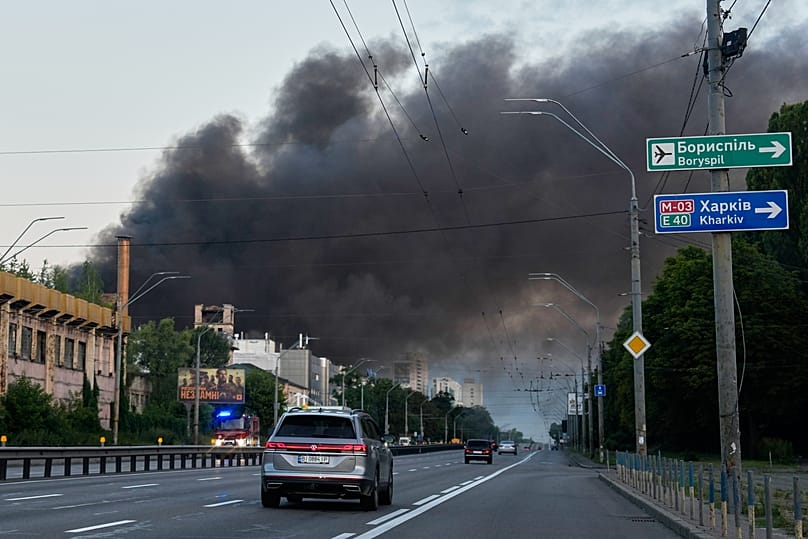
The strike arrived as diplomatic progress around the Russian operation has stalled. Peace talks in Vienna in May produced an agreement to pause long-range attacks on civilian infrastructure; Russian forces struck a power distribution hub in Poltava the following day. Western mediators have not publicly proposed a successor framework, and Ukraine has declined to negotiate under fire. Two EU arms-supply coordinators arrived in Kyiv on Monday morning, hours after the barrage ended, with their previously scheduled visit now carrying additional urgency as Ukraine presses for accelerated delivery of German Patriot batteries and French SAMP/T systems.
There is a military logic to the timing, if not an announced one. Ukrainian forces in the Donetsk region have slowed the advance of Russian ground units south of Toretsk over the past two weeks, and Ukraine’s General Staff reported three successful counter-battery strikes against Russian Iskander launchers in Luhansk Oblast on Friday. Russia’s response to Ukrainian battlefield gains has historically included escalatory air campaigns. Sunday’s barrage is the largest such response on record, arriving the week after Ukraine’s European partners launched a new anti-ballistic missile coalition in Paris.
France’s Defense Ministry said it was “assessing Ukrainian requests in light of the escalation.” Germany had not responded at publication time. The gap between what European governments committed to in Paris and what they can deliver to a Kyiv that has just absorbed the largest recorded missile barrage is the gap those coordinators flew into Monday morning. Whether political urgency can compress procurement timelines that have resisted compression for years is the question their visit will not answer on its own.
In the Darnytsia dormitory, evacuation crews recovered fifteen people from collapsed stairwells before dawn. Two remained unaccounted for when rescue operations paused at midday. A resident who spoke to Ukrainian public broadcaster Suspilne said she had lived through two hundred and twelve previous air alerts. Sunday felt different, she said, without elaborating. The distinction she reached for was the same one Ukraine’s air force commander acknowledged in official language: this was a breach at a scale the current intercept architecture was not designed to absorb.
As Euronews reported from the overnight damage sites, rescue teams were still working the Darnytsia collapse at dawn. The previous major Kyiv attack in July killed nineteen people hours before NATO leaders convened in Ankara. Sunday’s largest recorded barrage arrived as EU and NATO partners weigh new commitments. The pattern of Russian escalation timed to Western diplomatic moments has become consistent enough that Ukrainian officials now factor it into their public forecasting.
Commander Mykola Oleshchuk said the system performed “as designed, against the threat as previously assessed,” careful language that acknowledged the Zircon problem without assigning institutional blame. What the overnight barrage exposed is a gap between the intercept architecture Ukraine has built and the strike package Russia demonstrated it is willing to deploy. That gap now has a number: forty ballistic missiles in a single night, a figure that was not in any prior Ukrainian civil defense planning scenario.
Whether Sunday’s attack is a one-time signal, a demonstration of capability ahead of potential negotiations, or the new ceiling for Russian aerial operations against Kyiv remains unknown. Ukraine’s partners are under pressure to answer that question faster than the diplomatic calendar allows. Russia has not said which scenario this is. That answer, if it comes, will come in fire, not in press releases.