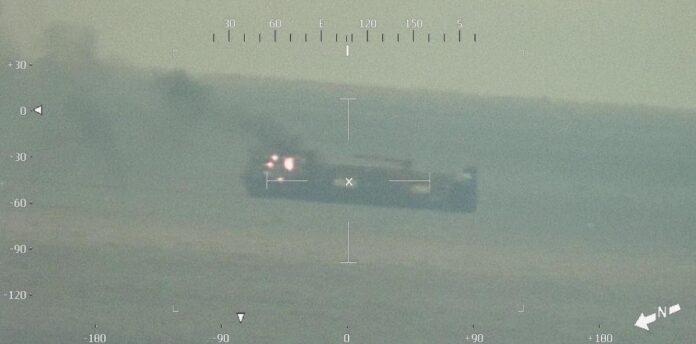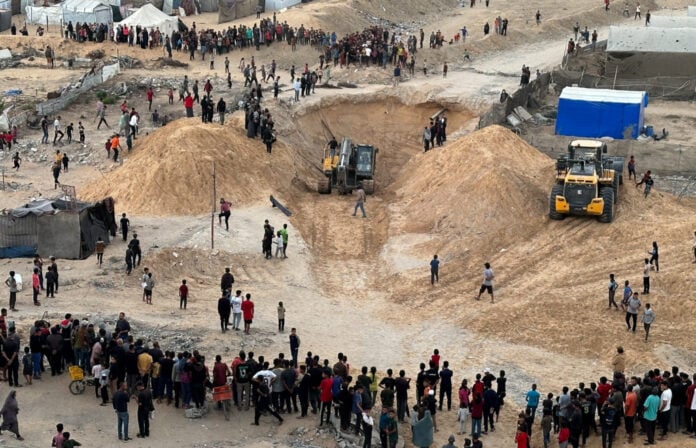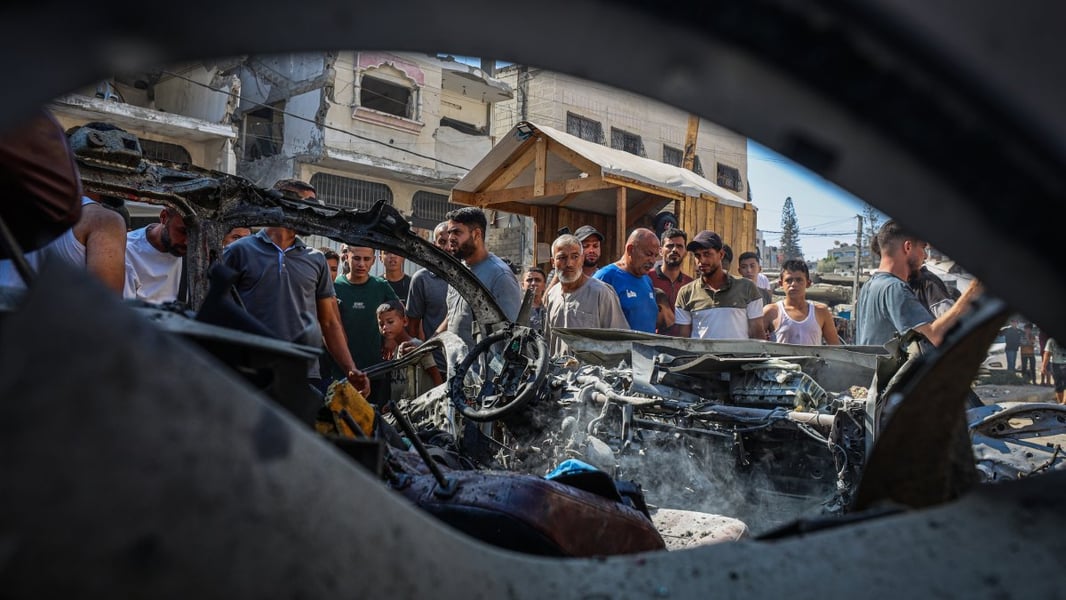

GAZA CITY — A car in Gaza City’s Tel al-Hawa neighbourhood was destroyed on Sunday after an Israeli drone located it and fired. Two men inside were killed and 13 others were wounded. Gaza health officials appealed for information to help identify the victims; they said the bodies had been dismembered in the strike.
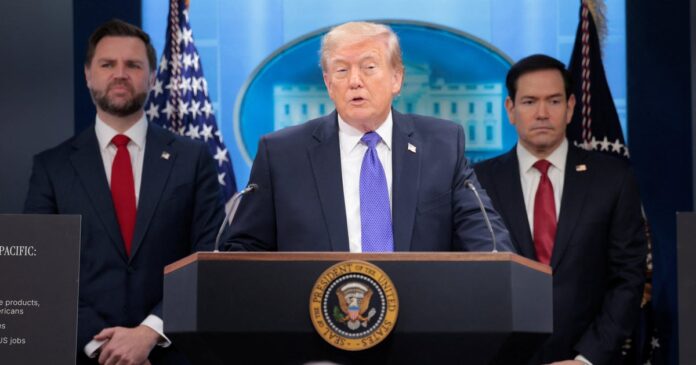
The following morning, President Donald Trump told reporters aboard Air Force One that there was not much fighting in Gaza. Hamas, he added, was now willing to surrender its weapons.
He was describing a different Gaza from the one in which the drone strike took place.
Since Israel and Hamas reached a ceasefire on October 10, 2025—brokered through Arab and American mediation in Sharm el-Sheikh and presented internationally as a turning point—1,352 Palestinians have been killed and 4,511 wounded in Israeli military operations across the territory, according to Gaza’s Health Ministry.
The strike in Tel al-Hawa was one episode in an unbroken sequence. For more than 330 consecutive days, Israeli forces have continued to conduct airstrikes, artillery bombardments, and demolitions in a territory nominally at peace.
The word “ceasefire” has not lost its political utility. It has simply lost its descriptive accuracy.
Trump’s Air Force One remarks came the morning after that attack. He offered no public evidence for his claim that Hamas was “willing” to give up its weapons. A senior Hamas official has stated, repeatedly, that demilitarisation can only happen after a full Israeli withdrawal from Gaza. Those are not converging positions. They are a negotiating gap that has been open since before the ceasefire was declared.
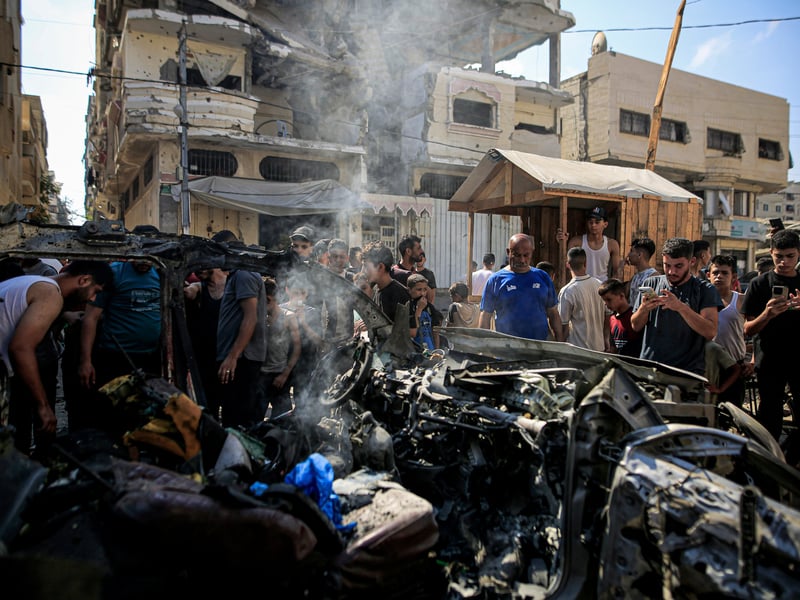
Benjamin Netanyahu faces a Knesset election on October 27. He has formally rejected Trump’s 15-point peace plan three times this year, on the grounds that Hamas must fully disarm before a single Israeli battalion withdraws. The Israeli military’s stated justification for the Sunday attack was that it targeted two Hamas fighters. Gaza’s Health Ministry said two people were killed, thirteen wounded, and the bodies required public identification. Both accounts can be technically consistent and still represent a fundamental disagreement about what the Gaza ceasefire actually is.
The post-ceasefire death toll passed 1,300 earlier this month, after an Israeli strike killed a father and daughter in Gaza City. On September 4, Trump’s own Board of Peace envoy Mladenov warned the United Nations Security Council that the ceasefire was on the brink of collapse — not because it had formally ended, but because the strikes had continued uninterrupted. Ten days later, Trump told reporters things were going well.
International consensus has moved in the opposite direction from Trump’s characterisation. At the BRICS Summit in New Delhi last weekend, leaders representing ten nations and nearly half the world’s population demanded a permanent ceasefire and endorsed Palestinian statehood, rejecting what they described as Israeli displacement proposals. The declaration named Gaza explicitly. It did not describe a situation moving toward resolution.
For rights monitors, the distinction between a “ceasefire” and a sustained military campaign is not semantic. According to Daily Sabah, Sunday’s strike was categorised as a fresh ceasefire violation, part of what it described as a near-daily pattern of Israeli military operations. Al Jazeera reported the attack as the latest in an unbroken wave of Israeli actions since the truce was announced last October.
Whether Hamas has made any specific, verifiable commitment to disarmament — with a defined timeline, an enforcement mechanism, and Israeli acceptance of corresponding conditions — is not established in the public record. Trump’s Air Force One statement is the available evidence. His incentive to project progress in a region where his envoys have produced no durable agreements is not difficult to identify.
The men killed in Tel Al-Hawa on Sunday have not been publicly named.