
SAINT-PAUL-DE-VENCE, France — The message from the Maeght Foundation on Monday was not subtle: two governments had decided that €1 billion was the appropriate price of not leaving the future of global screen storytelling to machines and to Hollywood.
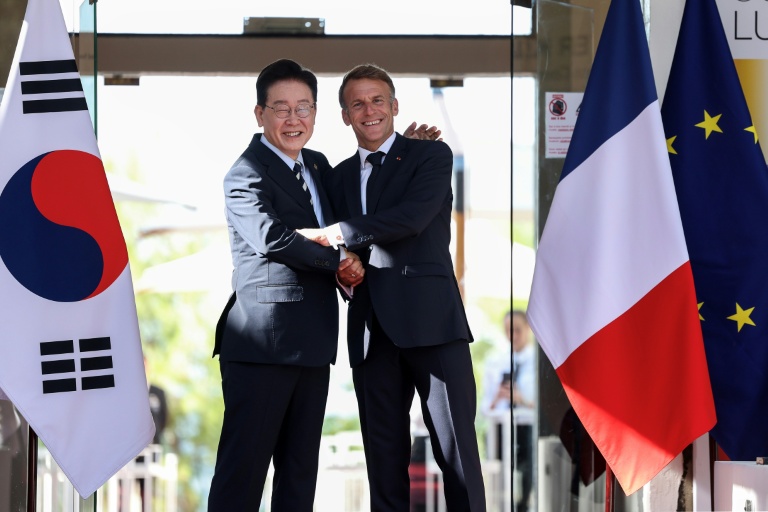
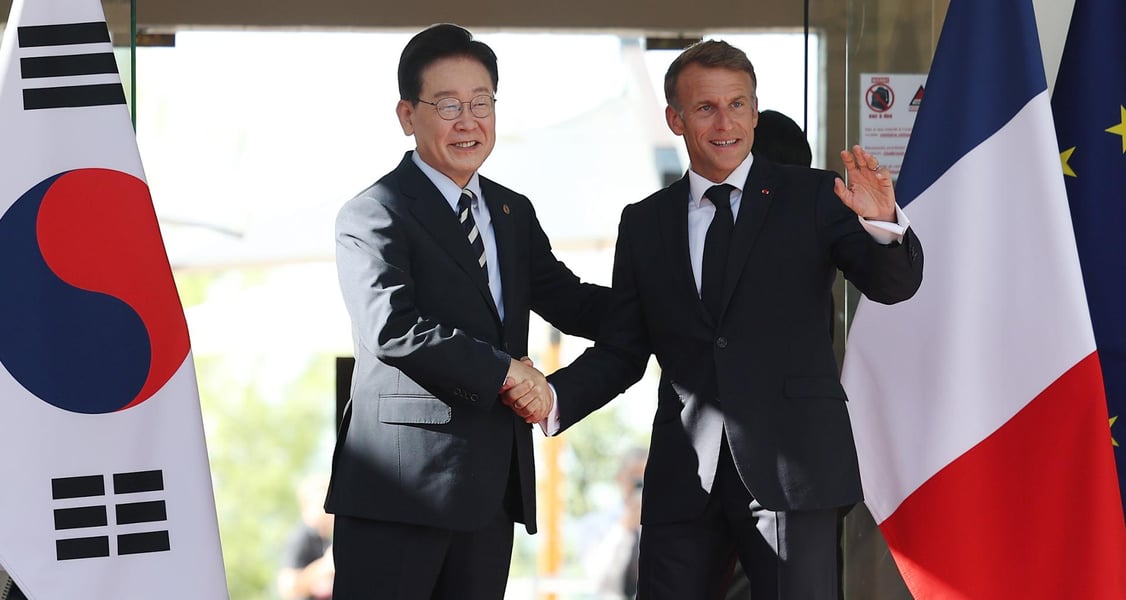
France and South Korea announced the Lumière Partnership at a summit in this southern French hill town, pledging €500 million each to a joint fund for film and audiovisual industries that will deploy starting in 2027 and run through 2031. French President Emmanuel Macron and South Korean President Lee Jae-myung co-chaired the gathering, which drew more than 200 film and television industry figures from 55 countries at the Maeght Foundation art complex.
The funding vehicle on the French side is Bpifrance, the national public investment bank that has backed cultural and creative industries since 2020. South Korea has not yet named a parallel institutional manager, and the partnership’s governance structure, including which projects get selected, what co-production requirements will apply and which other countries might eventually join, was not laid out in Monday’s announcement.
What was laid out was a shared anxiety. Both leaders used their platform not just to announce money but to issue a warning about artificial intelligence that went further than most governments have been willing to say on the record.
Macron was direct, according to the French presidency: “We would be making a tremendous mistake if this technology became a tool that replaces, or claims to replace, creators.” Lee’s formulation pointed in the same direction: “The film and audiovisual industry must be rooted in human creativity and must resonate with human emotions.” The partnership’s founding principles include commitments to copyright protection and cultural diversity, language that reads, in the context of the AI rights battles now consuming the entertainment industry, as a specific policy position rather than a general sentiment.
The Lumière Summit was organized by France’s Centre National du Cinéma et de l’Image Animée and the French presidency to intervene at the financing and policy level, where decisions about what gets made and how it gets distributed are actually taken. It is the kind of gathering France has been convening since the 1990s, when it first carved out the “cultural exception” doctrine to keep European content from being absorbed by American product under trade liberalization frameworks.
That survival, both governments argued on Monday, required active industrial policy and public investment. The Lumière Partnership extends that argument to the bilateral level: if France and South Korea each backed their industries through national policy instruments, a joint fund might achieve the same for companies in both countries and eventually others.
Disney’s $1 billion AI partnership with OpenAI, announced in December to integrate AI-generated characters and scenes into its production pipeline, illustrates precisely what Monday’s summit was responding to. Hollywood’s major studios have moved faster than most governments to integrate generative AI into their workflows. France and South Korea have not. The Lumière Partnership’s founding principles represent a legal and industrial commitment to keep that deliberate choice from becoming an accidental competitive disadvantage.
The partnership is open to other countries, an invitation to build a significant multilateral institution, or an aspirational gesture that will take years to materialize. The summit’s participant list of 200 figures from 55 countries suggests genuine international interest. But attendance at an industry gathering carries different weight than the €500 million each founding government has committed, and Monday’s announcement offered no detail on what joining would require from a third government.
What the funding will actually produce between 2027 and 2031 remains unclear. Bpifrance manages roughly €70 billion in assets and has deployed capital into French cinema for years; the mechanisms are established. South Korea’s equivalent apparatus for this partnership has not been identified. The operational structure, including co-production requirements, project selection criteria and intellectual property frameworks across jurisdictions, will matter more than the headline figure when actual projects reach the investment committee.
The commitment arrives at a moment when global film is navigating simultaneous disruptions: the streaming redistribution of theatrical revenue, ongoing labor disputes in the United States over AI use in production, and the collapse of the physical media market that once provided a reliable secondary revenue stream for foreign-language content. None of those pressures disappear because France and South Korea announced €1 billion on Monday. The argument the Lumière Partnership made instead was simpler, if more contentious: the appropriate response to disruption in cultural industries is not to let the most capitalized player in the room write the rules.