
LOS ANGELES — The comedian who built a career on the comedy of self-delusion is in talks to play a spy who never noticed his own incompetence. That symmetry may be the most interesting thing about Warner Bros.’ reported Get Smart reboot, or it may be the problem the film hasn’t solved yet.
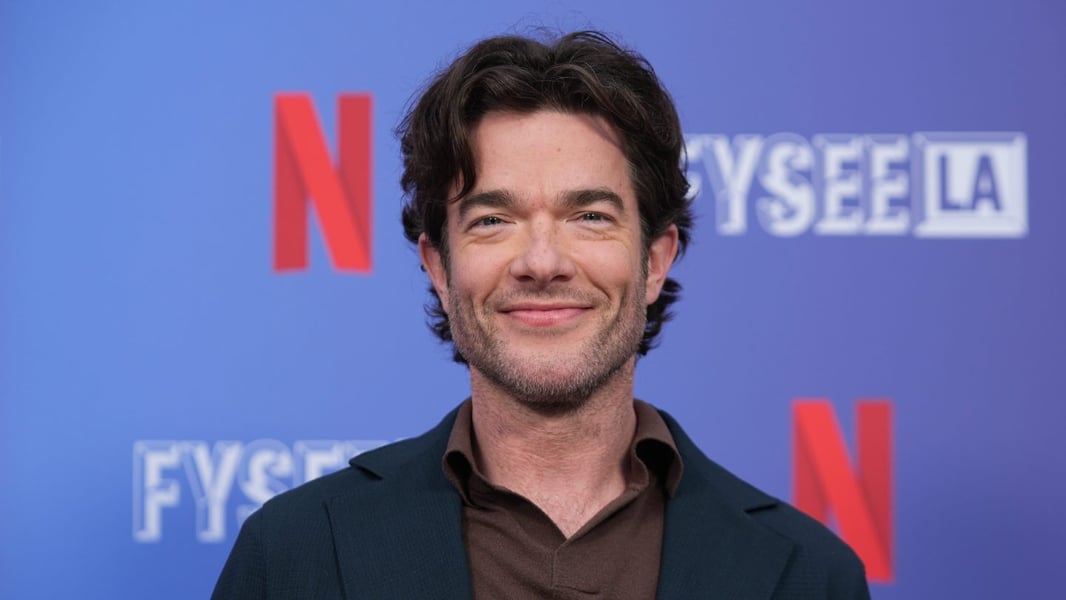
According to The Hollywood Reporter, John Mulaney is in early negotiations to star as Maxwell Smart in Warner Bros.’ revival of the Mel Brooks and Buck Henry spy comedy franchise. Seth Grahame-Smith, whose credits include the Dark Shadows adaptation and the literary horror mash-up Abraham Lincoln: Vampire Hunter, has been tapped to write the screenplay. Producers Andrew Lazar and Chuck Roven, who shepherded the 2008 theatrical Get Smart to $230 million at the worldwide box office, are attached to produce.
The producer continuity is the clearest signal that this is not an erasure of the 2008 version but an evolution. Lazar and Roven know what a Get Smart production costs and what it earns. That they have returned to the franchise rather than being replaced by a new team tasked with reimagining the IP from scratch suggests Warner Bros. is building on an established template rather than starting over. What the template looks like on the other side of John Mulaney is the part no one has confirmed.
Mulaney and Steve Carell occupy different positions on the comedy spectrum. Carell played Maxwell Smart in 2008 as a physical comedian, a man whose body betrayed his confidence at crucial moments, whose slapstick incompetence had an earnest quality that kept the character likable. Mulaney is a confessional stylist. His work is introspective where Carell’s was kinetic, meticulous where Carell’s was elastic. The “Mister Whatever” stand-up tour, which played Wrigley Field in Chicago this summer, confirmed that Mulaney has arrived at the stadium-scale platform of a major comedy act. Whether that platform and that style can carry an action-comedy character who is, by design, completely unaware of his own limitations is a different question entirely.
The original Get Smart ran 138 episodes on NBC and CBS between 1965 and 1970. Mel Brooks and Buck Henry built Maxwell Smart as a deliberate inversion of the Bond archetype: a spy of reckless confidence and near-total incompetence who nonetheless stumbled into success in every episode. The show’s central joke was the gap between Smart’s self-image and the observable evidence of his performance. That gap has never gone out of fashion, which is why the franchise outlasted the Cold War anxiety that originally gave it meaning.
The 2008 theatrical version kept the gap but softened the incompetence. Carell’s Smart was earnest rather than oblivious, an agent who tried hard and failed in sympathetic ways. The film worked in large part because of the structural solution borrowed from the television original: Agent 99, played by Anne Hathaway, carried the genuine competence the story required while Smart provided the comedic drag. Dwayne Johnson, who appeared as Agent 23 in a supporting capacity, was still in the early phase of the franchise-building career that would define his later years. The film cleared $230 million on a reported $80 million budget.
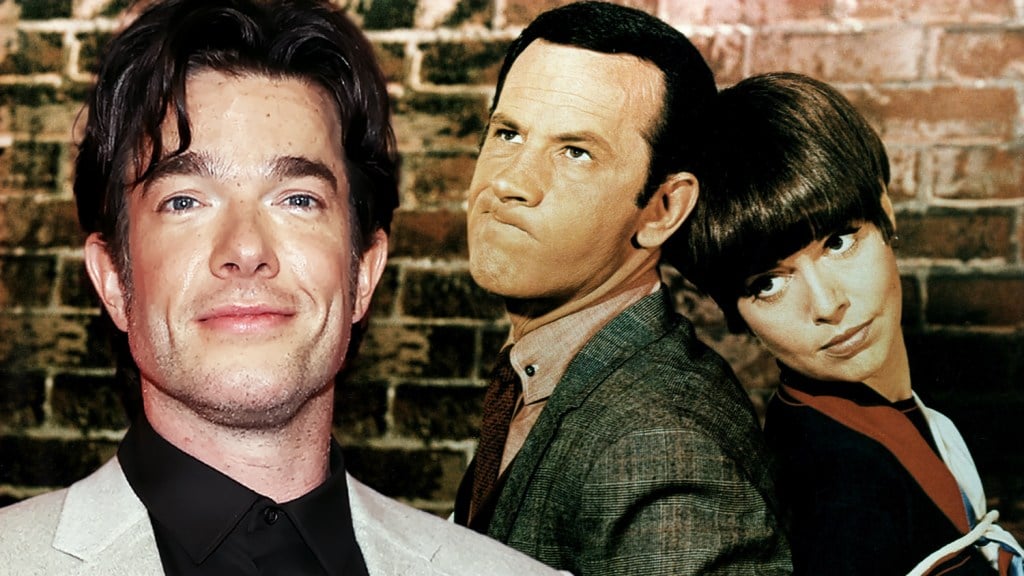
What is clear is that Warner Bros. has moved systematically on franchise revival across its slate, part of a broader pattern of studios returning to dormant IP rather than green-lighting original concepts in a theatrical market that has not fully stabilized since the streaming correction of the mid-2020s. The franchise revival cycle has become the default mode of theatrical development across the industry, and Warner Bros. is operating well within it.
For now, the project is a set of early commitments around a screenplay still in development. Talks are not deals. Mulaney’s schedule adds a complication: he is attached to appear in a biopic about Lorne Michaels, and the sequencing of both commitments has not been publicly addressed. The studio almost certainly intends to develop both simultaneously, but which lands in production first will depend on Grahame-Smith’s delivery of a finished script.
What Warner Bros. has established is a direction, not a finished plan. Mulaney as Maxwell Smart is a casting choice that is conceptually coherent without being obvious, the kind of decision that reads as either inspired or miscalculated depending on what Grahame-Smith writes and whether the studio can find the right person to play opposite him. One of those variables remains entirely open.