
OKLAHOMA CITY — Throughout July, Sam Presti faced repeated inquiries about three former Thunder players. He characterized the trades that sent Lu Dort, Aaron Wiggins, and Isaiah Joe elsewhere as “sad.” For the architect of one of the NBA’s most effective rebuilds, that acknowledgment carried significance. For a general manager who secured a championship with those same players just 14 months prior, it stood as the summer’s most forthright comment from any executive.
Oklahoma City dismantled its bench to avoid the second apron, the league’s harshest luxury-tax threshold, which imposes severe constraints on roster construction for teams that exceed it. Dort was dealt to Atlanta in a three-team transaction that also sent Zaccharie Risacher to Dallas; Wiggins and Joe were moved in separate deals. According to Sports Illustrated, the combined return from all three trades consisted of future draft assets: second-round picks distributed across seasons Oklahoma City has not yet reached. Presti prioritized financial flexibility over bench depth, leaving OKC entering the 2026-27 campaign with a thinner roster than both the championship team and the squad that lost to San Antonio in seven games in June.
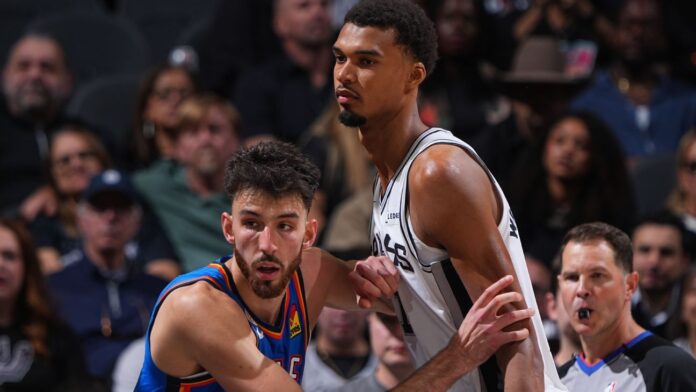
That defeat to the Spurs serves as the defining reference point for evaluating every subsequent decision. San Antonio’s Western Conference Finals triumph highlighted Oklahoma City’s shortage of dependable depth, a weakness the franchise addressed not by acquiring players, but by subtracting them. Presti’s reasoning: the traded players would not have bridged the gap with the Spurs regardless; the flexibility gained from their departures improves OKC’s long-term outlook. Whether that assessment proves correct will be tested over the 2026-27 season.
What endures is a core the organization continues to regard as among the NBA’s best. Shai Gilgeous-Alexander, 28, coming off the strongest individual season of his career and serving as the unmistakable driving force behind OKC’s title aspirations, is skipping World Cup qualifiers to recuperate. No injury has been disclosed; the choice to keep him away from competitive play through September reflects an investment in the critical months of March and April. His capacity to operate as a lead scorer, facilitator, and shot creator against postseason defenses remains Oklahoma City’s most distinct advantage. Presti reduced the supporting cast but preserved the centerpiece.
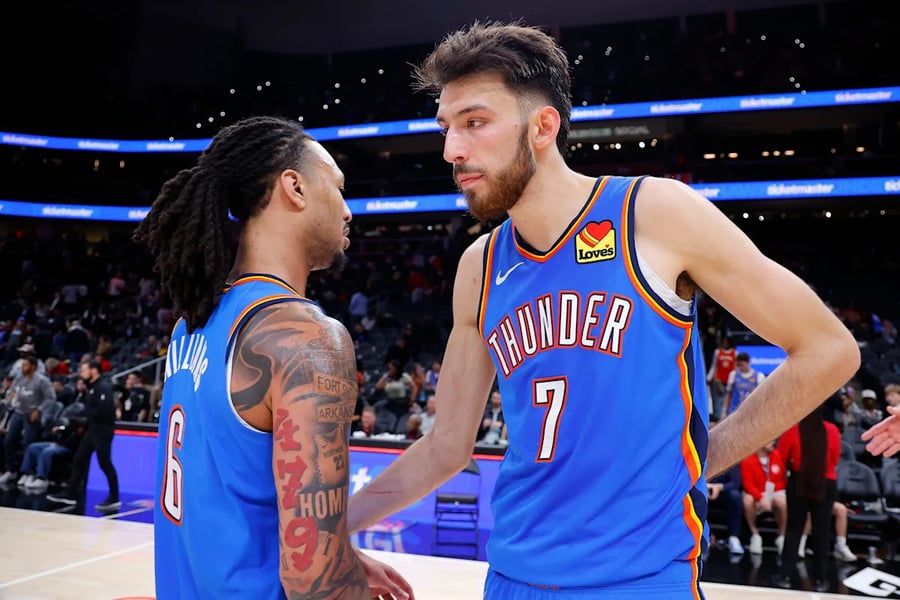
Chet Holmgren has trained on the court throughout the summer, a detail more significant than it initially appears. He and Gilgeous-Alexander have not completed a full, healthy season together since 2023-24, and that absence in their shared availability has shadowed every discussion about OKC’s championship potential. Holmgren begins his fifth professional year. His physique has now aligned with his skill set. The arrival of Aday Mara, a 7-foot-3 rookie from Michigan whose interior game projects as a credible pick-and-roll asset, could shift Holmgren away from the paint toward the offensive areas where he operates most effectively. Whether that positional adjustment enhances or disrupts his performance represents one of the more intriguing questions Mark Daigneault will address in October.
Isaiah Hartenstein’s three-year, $75 million contract extension, finalized this summer, provided a stabilizing foundation for the roster overhaul. The starting center, now in his third season with Oklahoma City, ranked among the Western Conference’s most understatedly impactful big men last year, dependable on both ends and capable of anchoring units when Holmgren operated away from the rim. That Presti moved three rotation contributors while retaining Hartenstein underscores the franchise’s internal priorities.
The Western Conference they return to is not static. Victor Wembanyama posted one of the most extraordinary individual performances in league history in August, a 100-point output that recalibrated what the ceiling of the San Antonio Spurs looks like at full expression. The Portland Trail Blazers, with Ja Morant and a returning Damian Lillard sharing a backcourt, add a different kind of complexity to the conference, not a title contender this cycle, but a team that will complicate seeding. Golden State has not resolved its future with Steph Curry. The shape of the West heading into October is messier than it was a year ago, and the team that ended OKC’s season is not getting easier to play against.
Oklahoma City’s answer to all of it is the same it has been since 2019. SGA is the franchise, and everything Presti built and then subtracted around him is in service of extending the window his presence creates. The three trades this summer were not a concession; they were a recalibration. The question is whether the recalibrated version is good enough to close out seven games against San Antonio, which is exactly where Oklahoma City’s season has ended twice now.
Training camp opens in weeks. Presti’s “sad” will become either prescient or expensive. The Western Conference does not grade on sentiment.