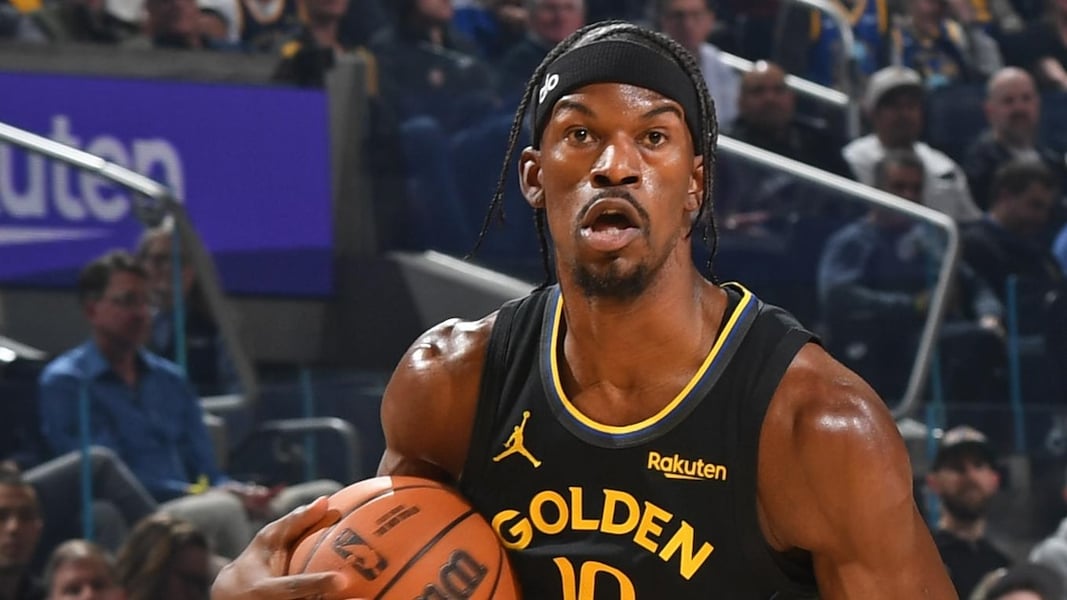

SAN FRANCISCO — Training camp opens September 29 in Oahu. The Warriors will be there. Jimmy Butler will not.
That is not a crisis, and it was always expected, but with less than three weeks before the Golden State Warriors fly to Hawaii, the clearest picture yet of Butler’s recovery from a torn right ACL has come into focus. The news, by the standards of what these injuries demand, is cautiously good. Strength tests conducted over the last several weeks have shown notable progress, according to Bleacher Report, with Butler approximately six weeks away from resuming full running. What that timeline means for a January or February return depends entirely on checkpoints he has not yet cleared.
The injury came on January 19 in a game against the Miami Heat. Butler drove left, his knee buckled, and he walked off the court under his own power before the extent of the damage became clear. Surgery followed on February 9. Since then, he has been working through the standard protocol of a twelve-month ACL recovery: stabilization, range of motion, strength work, and eventually the live-game drills that serve as the final threshold before clearance.
He is not there yet. When the Warriors convene in Oahu, Butler will continue individual court and strength work only, with no contact setting on the schedule until his medical staff clears him, NBC Sports Bay Area reported. The Golden State organization has been careful not to attach any fixed date to a return, and the posture makes sense. Butler turns 37 on Sunday. He will not be 27 when he comes back.
That is the detail the Warriors have to carry through the early months of the season. The franchise’s bet on Butler was a bet that his particular kind of basketball, the isolation creation and late-clock patience and ability to get to the free-throw line regardless of what the defense is doing, would give Steph Curry something the roster had been missing since Klay Thompson’s departure. Curry is 38. He does not need another ball-handler. He needs someone who can score without him, close games without him, and draw the attention that allows him to function as the most dangerous off-ball threat in the sport.

The Western Conference does not get easier while he rehabilitates. Oklahoma City, stripped of assets but still built around Shai Gilgeous-Alexander, remains functional enough to take a playoff series from anyone. The Thunder’s offseason trades thinned their depth, but their core held. The Nuggets brought back DeMar DeRozan on a minimum deal to run alongside Nikola Jokic, and Denver’s championship window has not closed. The Lakers are building around LeBron James, who turns 42 in December and shows no sign of reducing his workload. Every game before Butler’s return is a game the Warriors navigate with a roster that does not quite match the roster they planned to have.
Butler’s own assessment of the situation is characteristically direct. He has said publicly that he is doing well, that his knee is responding, and that he intends to remind people what he looks like when healthy. That confidence is not medical clearance, and it is not the Warriors’ strategy. The plan is for individual work in September, careful evaluation through October, and no contact until the medical staff approves it.
His strength tests have been positive, but he has not yet been cleared to run, and contact work has not begun. Each stage takes time, and the difference between a December return and a February return carries significant consequences in a conference where playoff seeding is determined in November.
What remains unknown is which version of Butler will return. ACL recoveries at age 36, with 37 approaching, do not follow a single pattern. Some players regain functional ability within 14 months. Others never fully recover their ability to create off the dribble, as lateral quickness can be diminished by scar tissue that physical therapy cannot completely resolve.
Butler has never relied solely on elite athleticism to create his advantages. His value has always come from his craft: the physicality he brings in the post, the high release that defenders struggle to contest cleanly, and the composure he displays in the fourth quarter, developed through years of being the final option on every team he played for. Those qualities are more likely to survive an ACL injury than explosiveness. Whether they can survive a second year on the sidelines, after he has not played a full season since 2023, is a question the Warriors will not answer until he returns to a gym with opponents trying to stop him.
For now, Golden State will open camp without him. The Western Conference is not waiting.