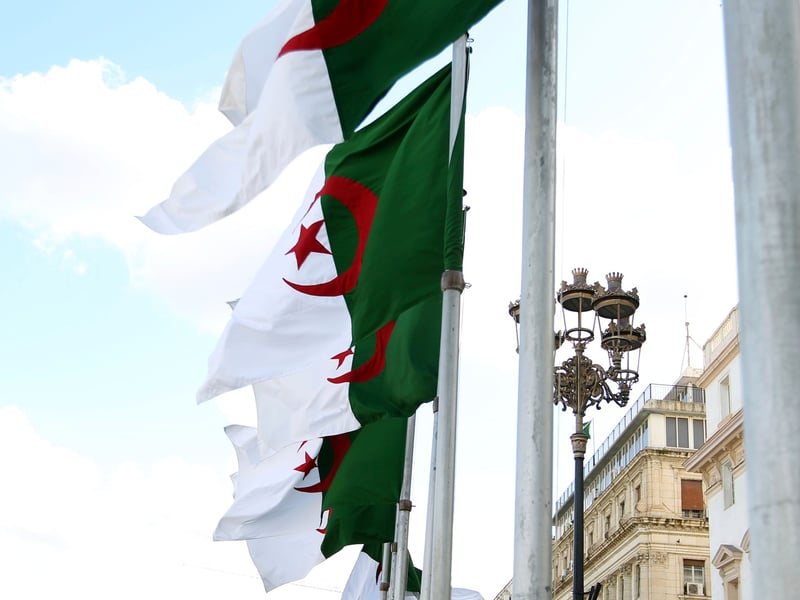

ALGIERS — Algeria gave the United Arab Emirates’ ambassador forty-eight hours to leave the country on Thursday, severing a diplomatic relationship that has frayed for years under the weight of competing visions for what the Arab world should look like and who it should stand with.
Algeria’s Foreign Ministry announced the decision late Thursday, describing “increasing provocative and hostile actions emanating from the UAE” as the cause, while declining to name the specific incident that prompted the formal break. The UAE’s airspace access to Algeria ends Friday; Emirati commercial flights to Algiers are granted until the end of 2026 to honor existing contracts, and nothing beyond that.
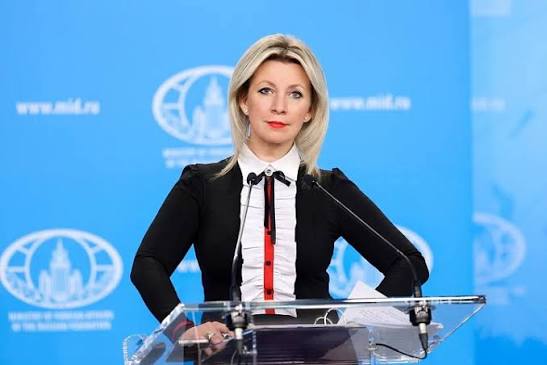
In Abu Dhabi, the UAE presidential adviser Anwar Gargash said successful diplomacy was built on “rationality, communication and clarity of interests” rather than “riddles and signals that require decoding.” The statement did not name Algeria. It did not need to. “Ambiguity is not a policy,” Gargash added, “and noise does not compensate for the absence of vision.” Abu Dhabi said it hoped the decision would prove “temporary.”
The break is unilateral and it is Algiers making it. But the causes are not opaque; they have accumulated, publicly, across at least four fault lines, and Thursday’s announcement merely gave them formal shape.
The second fault line is Western Sahara. For five decades, Algeria has backed the Polisario Front, which seeks an independent Western Sahara free of Moroccan sovereignty. The UAE backs Morocco. Morocco secured United States recognition of its sovereignty claim over the territory in 2020 as part of its own normalization agreement with Israel, and Abu Dhabi aligned itself with Rabat. Algiers has not accepted that alignment and has not pretended to.
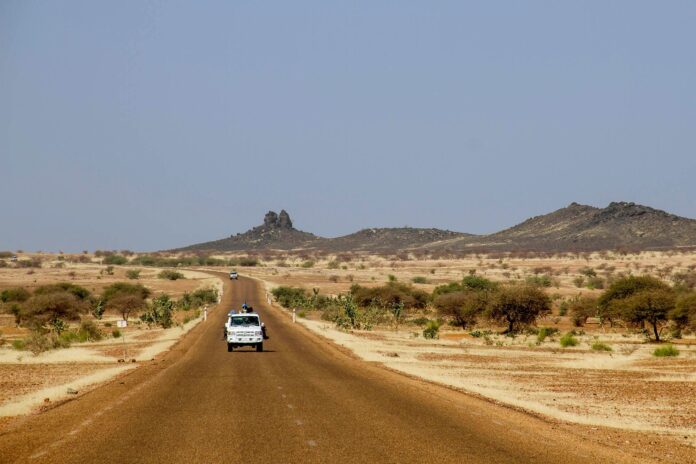
The third is the Sahel. Niger, Mali, and Libya have all undergone political upheavals in recent years. Algeria has borders with all three and considers the region an extended security zone. The UAE has expanded commercial and political engagement across the same territory, signing agreements, backing factions, bringing money into spaces where Algeria sees its own strategic interests being contested. The Algerian government has long accused Abu Dhabi of destabilizing the Sahel, of inserting a footprint in territory where, in Algerian strategic doctrine, there should be no foreign footprint at all.
The fourth line is structural. For more than a year, the UAE has hosted American military operations against Iran and served as a platform for US Navy logistics. Algeria has not joined any coalition against Iran. It has maintained the non-aligned posture it has held since independence. As the Iran war escalated, with the UAE absorbing Iranian missile strikes in exchange for hosting the American camp, the distance between Abu Dhabi and Algiers became harder to bridge. The week before Algeria severed ties, Iran had fired twenty missiles at an American-hosted Jordanian air base and the United States had destroyed five Iranian tankers in the Gulf of Oman, reducing Strait of Hormuz traffic to a fraction of its daily average. For Algiers, the UAE’s place in that picture was not incidental.
President Abdelmadjid Tebboune said in July, in the context of UAE regional activity, that “wherever they set foot, blood flows.” The phrase drew attention at the time. Thursday’s decision gave it policy weight.
Al-Monitor described Thursday’s announcement as coming after months of compounding “regional rivalries” in which each issue reinforced the others. No individual provocation has been named by Algiers; the Foreign Ministry used the collective form, “actions,” not a specific incident. Whether the final trigger was the Sahel, or the Gargash statement from earlier in the week, or something not yet disclosed, is not known.
What is known is that Algeria is Africa’s largest country by land area and one of the continent’s largest natural gas exporters, with pipelines running north to Italy and Spain. The diplomatic break carries weight that a smaller rupture would not. The Maghreb now includes Morocco, which has normalized with Israel, and Algeria, which has just broken with Morocco’s principal Gulf patron. The geometry of alignment in North Africa is not fixed, and Thursday’s decision will not be the last movement in it.
The UAE airspace ban that takes effect Friday imposes a practical cost. Emirates and Etihad fly routes to Algiers; those will be rerouted or cancelled. Algerian pilgrims travel through Dubai on the way to Mecca during the Hajj season. These disruptions are manageable in the short term, but compound if the break extends.
Abu Dhabi hopes the decision is “temporary.” Algiers has not said so.