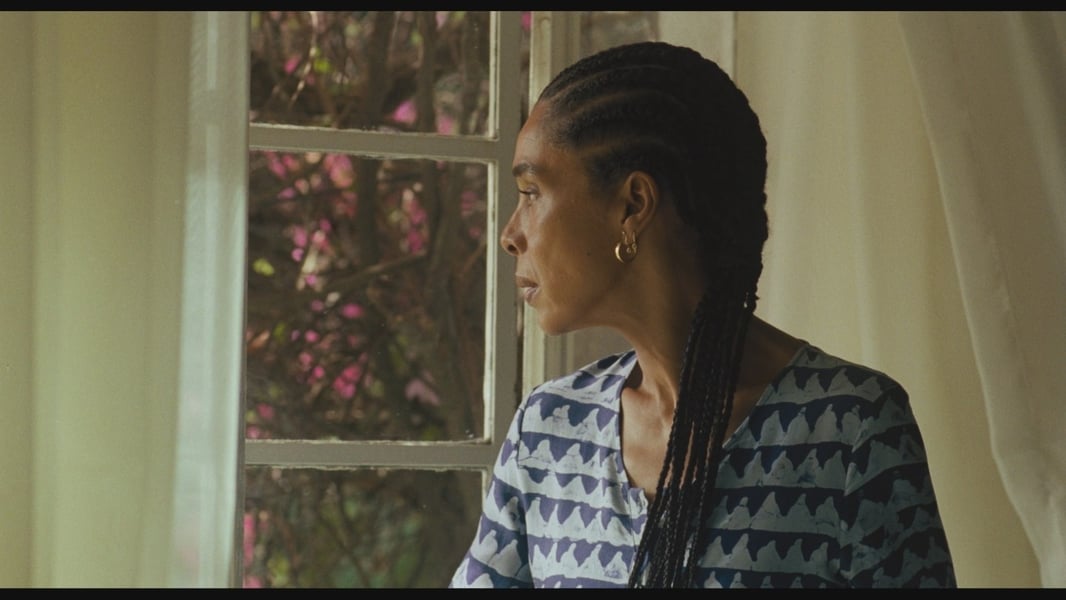

TORONTO — On the afternoon the 51st Toronto International Film Festival screened “Clarissa,” three months had already passed since its world premiere at Cannes. The question that had followed the Esiri brothers’ second feature from the Croisette to the Princess of Wales Theatre was whether they had made a beautiful film or a consequential one. At TIFF, the distinction started to matter.
Arie and Chuko Esiri’s film is a contemporary reimagining of Virginia Woolf’s 1925 novel “Mrs. Dalloway,” moved from the drawing rooms of Woolf’s London to the social corridors of present-day Lagos, Nigeria. Sophie Okonedo plays Clarissa, a Lagos socialite preparing to host a party at her home who finds herself unexpectedly confronted by the people and feelings she has spent years refusing to examine.
David Oyelowo, India Amarteifio, Ayo Edebiri, Toheeb Jimoh, Nikki Amuka-Bird, and Joke Silva complete an ensemble built to carry the weight of a day-long literary interior monologue without a narrator to supply the interior.
Neon acquired worldwide rights after Cannes and confirmed a December 11 theatrical release, positioning “Clarissa” for year-end box-office competition in a market led by mainstream titles. Neon is not a distributor known for quiet releases. Its track record with “Bottoms,” “Saltburn,” and “Longlegs” reflects a strategy built around films that generate cultural heat beyond their opening weekends. Without franchise footing or conventional marketing hooks, the distributor will need to build awareness for “Clarissa” through the festival-to-theater pipeline of critical essays, guild screenings, and nominations.
The 51st Toronto International Film Festival has historically served as the North American proving ground for films arriving from Cannes with critical momentum. “Clarissa” screened in Special Presentations, a section that functions as a showcase for internationally acclaimed work seeking theatrical footing in North America. The screenings, held Friday at the VISA Screening Room at the Princess of Wales Theatre and Saturday at Scotiabank 14, preceded the December 11 announcement by several weeks. The sequence was not accidental.
The Cannes Directors’ Fortnight selection made “Clarissa” only the second Nigerian feature ever chosen in that section’s history. The Esiri brothers, born in Warri and raised in Lagos, made their debut “Eyimofe (This Is My Desire)” without any equivalent Cannes platform. That film premiered in Berlin, collected five African Movie Academy Awards, and built its reputation over years. “Clarissa” arrives with a different architecture of recognition already in place before its December opening.
The Hollywood Reporter called the film “sharp and stirring” and described Sophie Okonedo’s performance in language usually reserved for the advanced stages of an awards campaign. Okonedo, who won the Academy Award for “Hotel Rwanda” in 2005, is attempting something technically demanding. Woolf’s novel is almost entirely thought. Turning thought into cinematic performance, without the narrative architecture that conventional adaptations provide, requires an actress who can make interior life legible without externalizing it. Critics at Cannes reported that Okonedo held that balance throughout.

Chuko Esiri, who also wrote the screenplay, described the Lagos setting as identification rather than translation. “It’s a perfect motif of the nation,” he told Channels Television after the Cannes premiere. The film’s argument is that contemporary Lagos carries the same tensions of class, memory, and social performance that Woolf found in London in 1923, only distributed differently across a city of different architecture and different inheritance. “Clarissa” stakes everything on that argument landing on an audience with no prior obligation to accept it.
CANEX Creations Inc. co-invested in the production, and as The Hollywood Reporter reported, Neon holds worldwide distribution rights, reflecting the growing infrastructure around Nigerian films seeking international theatrical release.
What the awards season calendar does with “Clarissa” is not yet determined. The critical conversation has formed and it is favorable. The distributor has a track record of translating that kind of favorable conversation into wider audience awareness. What remains unproven is whether December audiences will extend the recognition that Cannes and TIFF have established into the sustained theatrical run and guild consideration that defines the season’s outcome. The Esiri brothers have earned their place in the conversation. The conversation is only beginning.