
CORON, Philippines — Arnulfo Nokki Villanueva said he was reaching for a life jacket when the panic overtook the ship. The fire had come up from the cargo hold, moving faster than anyone aboard the M/V June Aster expected, and passengers had begun to run. “I wanted to get a life jacket but failed to get one because people were stepping on me,” Villanueva said. He dropped to the deck. His back burned. He survived. Seventy-six others did not.
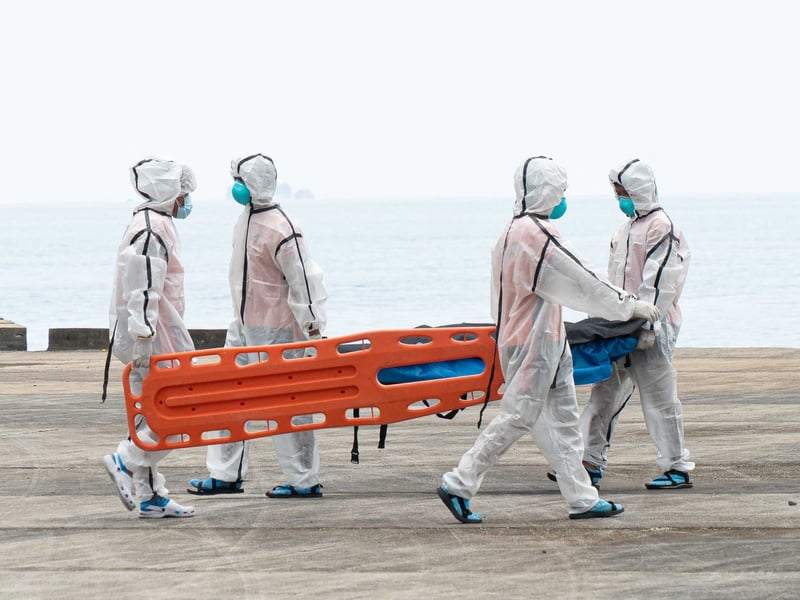
The Philippine Coast Guard was still pulling bodies from the sea and from the wreckage on Friday, four days after the ferry caught fire and exploded approximately 2.2 kilometres off the coast of Coron in northern Palawan. Forty-one more charred remains were recovered on Friday alone, raising the confirmed death toll to 76 from 35 the day before, according to Al Jazeera. Thirteen people remain missing. Forty-three survivors have been accounted for, 30 passengers including two Chilean nationals and 13 crew members, from the 132 who were aboard when the vessel left Manila on its scheduled route to Coron, operated by Atienza Interisland Ferries Inc.
The fire broke out on the evening of September 9 in the ship’s cargo hold. Survivors described successive explosions in the moments after the initial blaze, a sequence that moved through the vessel too quickly for most passengers to reach the deck or secure flotation devices. The cargo configuration is now central to the investigation. The hold carried five motorcycles, a pickup truck, a forklift, and an electric vehicle. Whether the EV’s battery system contributed to the explosions that followed the initial ignition has not been established. The precise cause of the fire itself has not been determined.
What the testimonies agree on is the speed. “The fire quickly spread,” Villanueva said. “That’s when I dropped to the ground and my back was burned.” Within seconds, the vessel had become chaos. Survivors corroborate the timeline: the fire advanced faster than any orderly evacuation could have worked, and most of those who died appear to have been overwhelmed before they could reach the water or the limited number of life jackets they would have needed to find in the dark and smoke.
The Philippine Coast Guard deployed search-and-recovery vessels to the site after receiving the distress signal, Al Jazeera reported. Divers have continued working the wreck in the days since, alongside coast guard ships scanning the surrounding waters for the 13 still unaccounted. The recovery of 41 bodies in a single day on Friday reflected how many victims had remained inside the vessel. The structural heat and the condition of some remains have complicated both identification and the precise accounting of numbers that investigators are still working to verify.
Maritime disasters on this scale are not unfamiliar in the Philippine archipelago, where ferry travel across thousands of islands remains the primary means of movement for millions of people and the primary entry point for the tourism industry that sustains communities like Coron. The area draws international visitors for its Second World War-era shipwrecks and coral ecosystems, which explains the presence of the two Chilean nationals among the survivors. The Manila-to-Coron route is a standard gateway to Palawan, and the vessels that operate it carry both residents and foreign tourists in the same holds as motorcycles and pickup trucks. This year has also seen other catastrophic fires across Asia: a pub fire in Bangkok killed 27 people in July after blocked exits trapped patrons, a disaster that similarly exposed the gap between what safety standards require on paper and what exists in practice when fire arrives.
The Philippine Coast Guard has confirmed that it is examining the vessel’s safety record, the circumstances surrounding the cargo loading, and the condition of its emergency equipment when the ship departed Manila. Investigators are also seeking to determine whether passengers received a safety briefing before departure.
Atienza Interisland Ferries Inc. has not issued a public statement. The Maritime Industry Authority, or MARINA, which regulates Philippine ferry operators, has also not publicly addressed the disaster.
The Philippines has confronted similar failures before, most catastrophically in the 1987 MV Doña Paz disaster, which killed more than 4,300 people and remains the deadliest peacetime maritime accident on record. Successive disasters have led to investigations, regulatory recommendations, and promises of stricter enforcement. Yet closing the gap between those recommendations and their implementation on commercial routes serving the country’s regional islands has repeatedly proved more difficult than conducting any single inquiry.
The M/V June Aster disaster, and the speed with which it killed 76 people, will produce its own investigation. What follows that inquiry is the part that history has made less certain.
Forty-three people survived, 13 remain missing, and 76 have been confirmed dead. The search continues. Investigators have not yet determined the precise source of the fire, the role played by the cargo, or who bears legal responsibility for the conditions aboard the vessel on the night of September 9. Off the coast of Coron, the Philippine Coast Guard was still recovering victims on Friday.