
DUBAI — Before Sri Lanka’s chase had properly begun, the contest was already over.
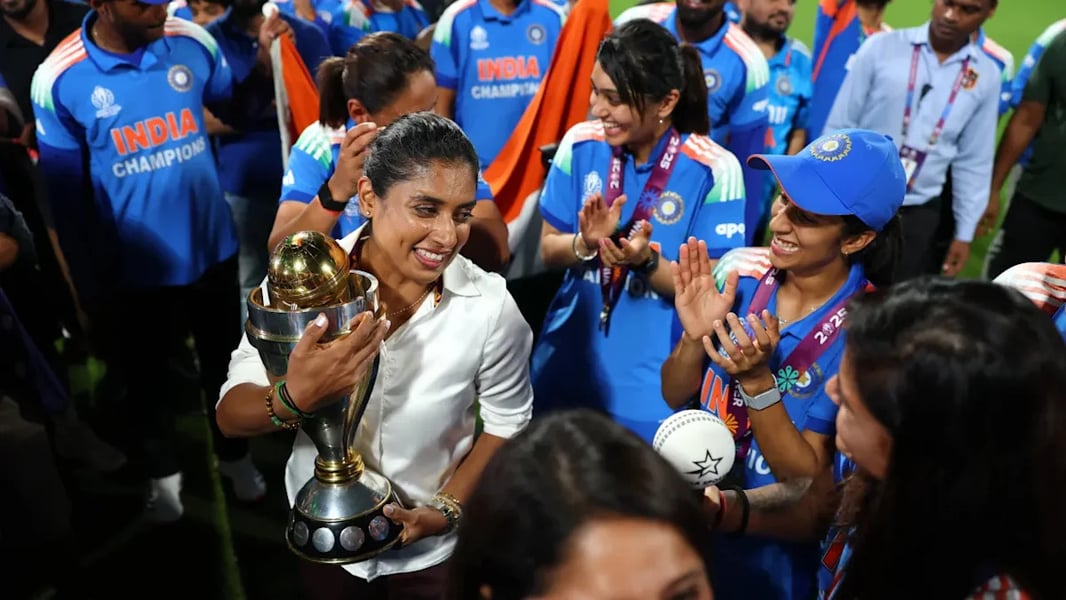
Shafali Verma completed the fastest half-century in Women’s Asia Cup history in the eighth over, reaching 50 from 24 balls with seven boundaries. What followed was less a final than a coronation. India Women defeated Sri Lanka Women by 72 runs at the Dubai International Cricket Stadium on Sunday to claim a record-extending eighth Women’s Asia Cup title, avenging their defeat to the same opponents in 2024.
The 129 runs Verma and Smriti Mandhana added in the first 14 overs did more than provide a platform. They dismantled Sri Lanka’s plans before the island’s bowlers had properly measured the surface. Verma’s 68 from 39 deliveries and Mandhana’s 59 from the same number gave India’s innings both shape and velocity, an opening stand that propelled the team to 183/5 — a total that proved unreachable on the night.
The 24-ball fifty was not simply a statistical achievement. It was the moment the target became academic. Verma reached the milestone with a boundary off Kavisha Dilhari in the eighth over, by which point Sri Lanka had abandoned plans for containment and shifted to damage limitation. India had 78 runs on the board and had lost no wickets.
The contest had effectively been decided before the first drinks break.
Mandhana’s contribution carried different weight. Where Verma detonated, Mandhana constructed, every boundary arriving with the deliberateness of someone building toward a specific total rather than simply attacking the next delivery. Her 59, scored at a strike rate above 150, was the innings of a senior batter confirming what this tournament had increasingly suggested: this India side operates well within its capacity when the surface offers nothing.
The partnership between Verma and Mandhana has become the defining unit of India’s Asian campaign. Their semi-final stand against Bangladesh preceded the group stage fireworks, where Mandhana claimed the all-time women’s international runs record before the knockout rounds had begun. Gunalan Kamalini’s 15 off five balls at the death added a flourish to an innings whose outcome the first six overs had already decided.
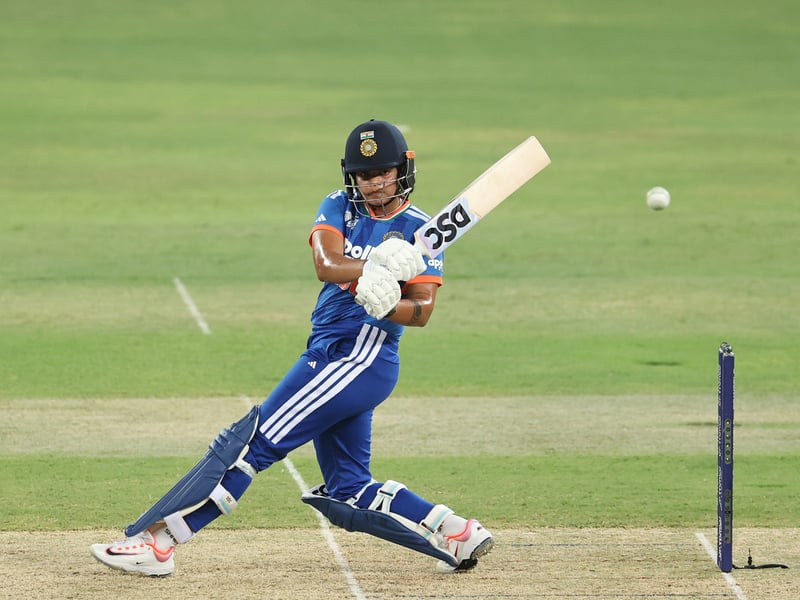
Shree Charani was more than disciplined. The right-arm spinner’s 4/20 from four overs was the bowling performance of the tournament, her figures in the final matching the relentlessness she had shown throughout the week. She dismissed Harshitha Samarawickrama, Nilakshi de Silva, Kavisha Dilhari and Sugandika Kumari, each wicket arriving without drama, each delivery probing the same weakness, each batter offering different evidence of the same problem. India’s spinners have been untreatable in Dubai conditions throughout the week; on Sunday night, Charani elevated that into something closer to dominance.
Deepti Sharma, whose 3/19 from four overs complemented Charani’s destruction, has spent this tournament as the bowling attack’s quiet engine. Her three wickets on Sunday included Athapaththu, the scalp that effectively ended whatever slim hope Sri Lanka carried into the second half of their innings. According to Yahoo Sports, the 72-run margin was the largest by which India had beaten Sri Lanka in a Women’s Asia Cup final.
Sri Lanka were bowled out for 111 in the final over. The margin was comprehensive without being punishing, the kind of result that confirms superiority rather than exposes inadequacy.
India have now won eight Women’s Asia Cup titles. The nearest competitor, Sri Lanka, has two. The gap is institutional, built across decades, but it has never felt more pronounced than it did in Dubai this week, where India lost no matches across a tournament they treated as preparation rather than peril. Harmanpreet Kaur led the side without being required to bat late in any innings, which tells you more about the depth below her than it does about her own form.
What remains unresolved is whether Asian dominance translates beyond Asian conditions. India were beaten in the last ICC knockout they entered. The Women’s Asia Cup answers nothing about that, and the team will know it. Eight titles is the record. The next major tournament will ask a different question.