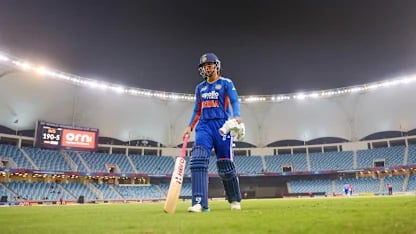

DUBAI — The match was over long before the last wicket fell.
Smriti Mandhana faced 64 balls. She scored 124. By the time she was run out in the 19th over, the question was not whether India would win but by how much. The answer, 137 runs, confirmed what the Women’s Asia Cup group stage had spent three days building toward: India are operating on a different tier from every other team in this tournament.
Hong Kong, bowled out for 56 in 16.2 overs, offered Mandhana a batting gallery more than a contest. Her fourteen boundaries and seven sixes came at a rate the Hong Kong attack had no mechanism to contain. India finished on 193 for 5. The chase never started.
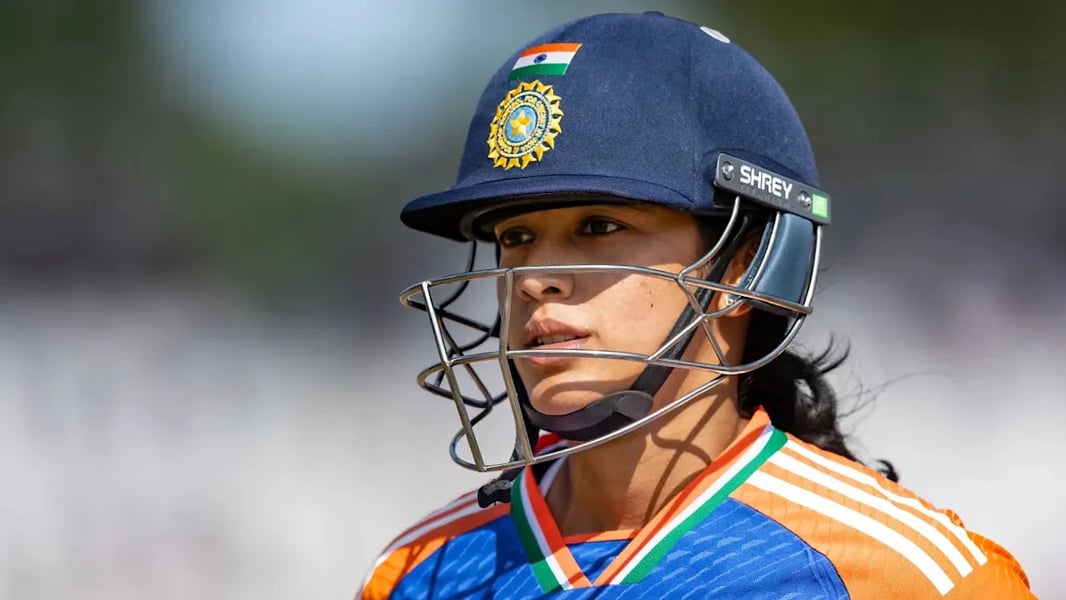
Mandhana’s century was her second in T20 international cricket and made her the first Indian woman to reach that total twice. Only seventeen other players in the world have managed it. The previous time she crossed three figures in the format, against Sri Lanka earlier in this tournament, she simultaneously broke Mithali Raj’s all-time women’s international runs record and Meg Lanning’s Women’s Asia Cup record for centuries. Wednesday’s performance against Hong Kong did not carry the same weight of compounded history, but it settled a simpler question: Mandhana is the most dangerous batter in women’s T20 cricket right now, and India have built this entire Asia Cup campaign around that fact.
The opening stand between Mandhana and Shafali Verma, who made 28 off 17 before departing, established the tempo early. Pratika Rawal contributed 10 off 12 and Harmanpreet Kaur added 10 off 9, but the innings belonged to one batter. Mandhana’s 124 from India’s total of 193 is the kind of individual performance that leaves a coaching staff both grateful and faintly anxious about what happens when the run-out eventually comes in a match that matters more.
Hong Kong’s reply was brief and disorganised. Natasha Miles top-scored with 15. Marina Lamplough made 14. Yasmin Daswani reached 11. The rest of the lineup found Deepti Sharma unplayable: 3 wickets for 9 runs in a spell that removed the middle order before it could settle. Nandani Sharma took two more wickets. Prema Rawat and Shree Charani removed two batters each, and the innings folded to all out in 16.2 overs without ever threatening the target.
India’s margin is the second-largest winning margin by runs in their T20 international history. It is also, almost certainly, an irrelevant statistic in any conversation about what this tournament actually requires of them. Hong Kong are not the measuring stick for India’s semi-final ambitions. But qualifying first from the group, as they now have done, carries a practical advantage: the semi-final draw and rest allocation both favour the team that emerges from the top, and India have played their cricket in Dubai with the kind of authority that makes the knockout rounds feel less like a test and more like a formality.
The broader context matters. India’s rights to host the ICC Women’s Champions Trophy 2027 arrived after Sri Lanka lost the hosting following a decision that reshaped the tournament’s commercial and competitive landscape for the BCCI. The Asia Cup, held this year in Dubai under the Asian Cricket Council’s calendar, is India’s primary preparation window before that event. A team that wins here arrives at the Champions Trophy carrying not only the trophy but the credibility of having dismantled this field of opponents.
Mandhana is the thread running through both ambitions. The all-time women’s international run-scoring record she established in her previous innings here, breaking Mithali Raj’s career runs record alongside Meg Lanning’s Asia Cup century milestone in one innings, means she enters the knockout phase as the highest run-scorer in women’s cricket history. No previous Women’s Asia Cup has carried that subplot as a constant presence.
According to the ICC, Wednesday’s innings extended a sequence of scores across this tournament that has not dropped below 50 in any outing, a consistency that puts Mandhana in a category the knockout rounds will be built around.
The semi-finals follow at the weekend. India will face one of the other group qualifiers. The identity of that opponent matters less than the condition Mandhana arrives in, and there is no sign, watching her bat in Dubai, that she intends to offer any reprieve.
Hong Kong exit the group stage without a win. Their cricket showed improvement at this level: the fielding was engaged, the lower order offered modest resistance, and the bowling kept India from reaching 200. The gap between the top-tier Asian nations and the emerging programs remains substantial, but that is a longer project than one tournament’s group stage can address.
Wednesday in Dubai belonged to one batter. The semi-finals begin shortly, and she is not finished.