
MUMBAI – When Jay Shah stepped into the ICC chairmanship, the immediate question was whether he would accelerate India’s dominance of international cricket administration, use it differently, or both. On Wednesday, the answer arrived in a form that required no interpretation. India will host the inaugural ICC Women’s Champions Trophy in February 2027, after the ICC Board ratified a decision to strip Sri Lanka of the event’s hosting rights over the Sri Lankan government’s interference in its national cricket board.
The tournament, a new quadrennial addition to the women’s calendar, was always going to be significant for the game’s global development. Sri Lanka had secured the rights to host it two years ago, part of a broader push to expand South Asian hosting across women’s cricket. The interim Transformation Committee that the Sri Lankan government installed to execute constitutional reforms in the cricket board had other plans for what that timing would deliver. The ICC strictly prohibits political interference in cricket governance, and since the committee’s formation, Sri Lanka Cricket’s representatives have been barred from attending ICC board meetings. Sri Lanka Cricket is, formally, not a functioning member of the ICC’s governing structures.
The consequence arrived with the inaugural Women’s Champions Trophy still five months from its first ball. India was selected as replacement host after an evaluation process that weighed three candidates: Bangladesh, South Africa and India, against the ICC’s established criteria covering infrastructure, commercial capacity, broadcast capability, accommodation and, implicitly, the stability of the national governing body. India qualified on all of them, with room to spare.
The tournament will be held across two venues: Brabourne Stadium, the historic ground of the Cricket Club of India in Mumbai, and the Baroda Cricket Association Stadium in Vadodara. Six nations (Australia, England, India, New Zealand, South Africa and Sri Lanka) will compete in 16 matches in the T20I format between February 14 and 28, 2027. The top two sides from a round-robin phase advance to the final, which falls on February 28. The participating teams were determined by ICC Women’s T20I Rankings rather than a qualifying round. Sri Lanka qualified. Their cricket team will play in an Indian-hosted tournament that their own board cannot officially administer.
Jay Shah, announcing the decision, said the tournament would bring together “the best teams in an intense, high-quality competition, while creating greater incentive for teams competing for a place on the global stage.” The commercial and broadcast significance of India as host is not incidental to that framing. No women’s cricket event generates more television revenue, larger domestic crowds or greater streaming engagement than an ICC tournament on Indian soil.
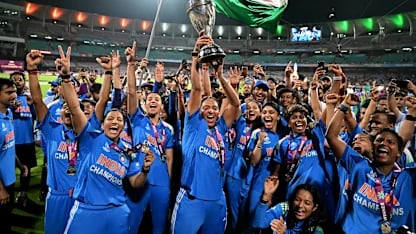
The significance for women’s cricket in India extends beyond commercial terms. The Board of Control for Cricket in India recently won the ICC Women’s Cricket World Cup. The country’s women’s team, which reached the 2017 World Cup final and used that defeat by England as a galvanising moment for domestic investment, has had a decade of structural growth since. Schools programmes have expanded. Domestic leagues have multiplied. Broadcast coverage has deepened. The Champions Trophy lands in that environment. Whether it converts casual audience into committed viewers is a test the organisers will be watching carefully.
Australia arrive as the reigning ICC Women’s T20 World Cup champions, having claimed the title at Lord’s in August. England’s squad, which contested that final and demonstrated striking squad depth through their England Women’s record ODI chase against Ireland without seven of their senior players, are among the most complete batting groups in the game. South Africa and New Zealand bring competitive credentials from the ranked-based qualification process. The ICC has confirmed the schedule and format following the host switch, with no change to the dates.
Sri Lanka’s participation as a playing team adds a dimension that the ICC announcement does not fully address. The island nation qualified. Their players did not install the Transformation Committee, and the squad that will travel to India in February had no role in the governance decisions that cost their country the hosting rights. Whether the pressure generated by that situation accelerates the Sri Lankan government’s willingness to withdraw its committee is a separate political calculation, and one the ICC has declined to speculate on publicly.
The Women’s Champions Trophy was designed as a counterpart to the men’s edition: a shorter, elite-focused event that generates intensity without the sprawl of a World Cup. The ICC Women’s T20 World Cup 2026 final at Lord’s demonstrated what global demand for the women’s game now looks like when the event is properly staged and broadcast. India’s track record as a host for major tournaments suggests that the infrastructure required for a six-team, 16-match event in February will be available. The question is whether an inaugural tournament, without the weight of tradition that older ICC events carry, can generate a profile commensurate with the opportunity.
What Sri Lanka’s governance crisis has handed India is not just a tournament but a chance to set the template for a new competition. Brabourne and Vadodara are not the most visible venues in Indian cricket; neither carries the weight of the Wankhede Stadium or the Narendra Modi Stadium. The choice of venues may reflect a deliberate decision to build new sporting associations rather than rely on existing ones. Whether that produces the audiences the inaugural Champions Trophy will need remains the open question attached to an otherwise clearly structured event.