
LEICESTER – The riskiest part of England’s plan on Monday was not the 282-run target. It was the squad they chose to chase it with.
Maia Bouchier had never scored an ODI century before this afternoon. Sophia Dunkley had not played at this level in several months. Alice Capsey and Freya Kemp were among the least experienced players in the lineup. Heather Knight, Tammy Beaumont, Nat Sciver-Brunt, Danni Wyatt-Hodge, Amy Jones, Sophie Ecclestone and Lauren Bell were all at home, rested for the series opener against Ireland at Grace Road to give England’s squad depth a chance to prove itself.
What followed was England Women’s highest ODI run chase on record.
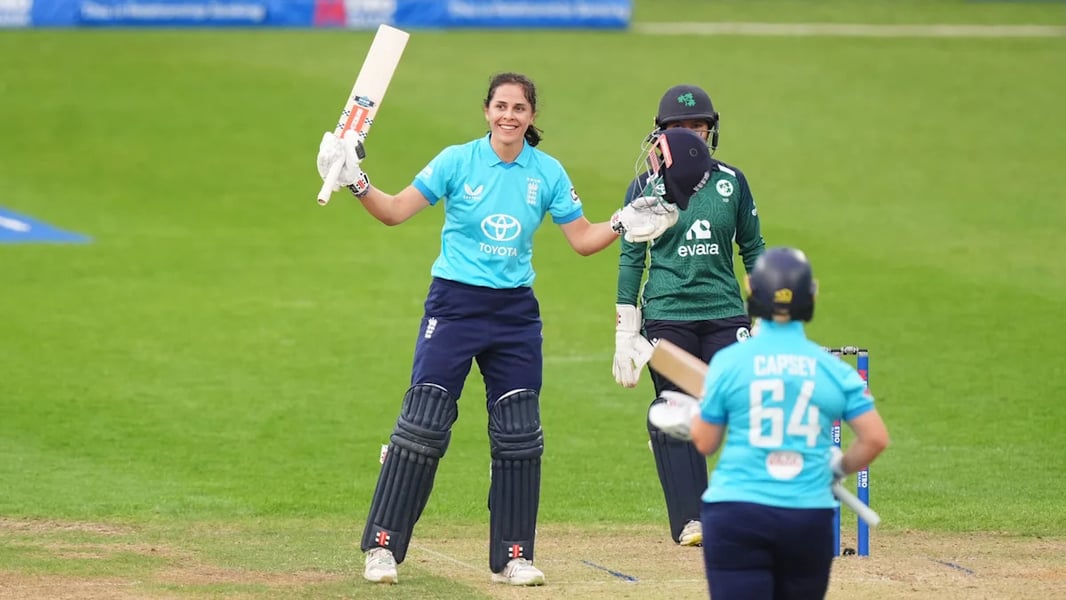
Bouchier finished with 104 off 95 balls. Dunkley added 73 off 61. The pair put on 143 for the first wicket against an Ireland attack that had spent the afternoon building what looked like a match-winning total. England reached 282 for four in 39 overs, winning by six wickets with 11.5 overs to spare. England’s previous highest chase had been 267 against Australia in 2023, according to Yahoo Sports.
Ireland’s 281 for five had been assembled with genuine ambition. Gaby Lewis anchored the innings from the top of the order, making 69 before she was caught on the boundary; Amy Hunter struck 62 and gave Ireland a mid-innings platform that suggested they had something worth defending. Rebecca Stokell did not waste it. Her unbeaten 54 in the closing overs pushed the total into territory that would test any side chasing it.
Charlie Dean’s bowling had kept Ireland just below 300. The new England captain took two wickets herself in her role as frontline off-spinner, while Issy Wong’s pace accounted for two more. The 33 extras England conceded, including 20 wides, did not help those trying to contain the final total; they were the only blemish on a fielding performance that was otherwise tight when it mattered.
The first six overs of England’s reply changed the arithmetic. Bouchier struck three boundaries in the powerplay, a drive and two cuts that suggested she had taken one look at the surface and decided it suited her game precisely. Dunkley was more measured initially, her acceleration arriving once the field was set back and the pressure transferred to Ireland’s attack. The hundred partnership arrived in the 19th over. By that point, England needed around 140 from 31 overs with ten wickets still in hand, against a bowling group that had already conceded 90 in the first session of the chase.
Ireland took the second new ball. It made no difference.
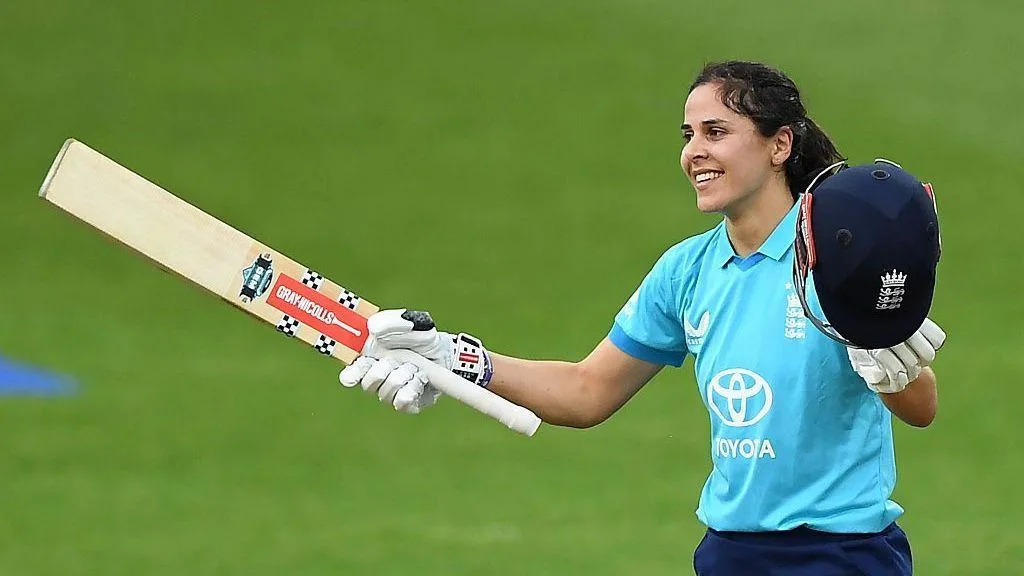
Dunkley fell for 73, caught on the boundary with the game already decided, and Bouchier pressed through 80, through 90, timing the ball through the covers with the unhurried quality of someone for whom the occasion was a test, not a burden. She completed her century with a pull shot off a short delivery and was dismissed for 104 shortly after, with 59 still required. The argument had been made long before she left the field.
Capsey entered with the finish line visible and treated it accordingly. Her unbeaten 41 arrived at a strike rate that would have been considered aggressive even in a Twenty20 match. Freya Kemp joined her and hit 36 off 22 balls, the pair putting on 54 in 38 deliveries. Capsey hit the winning boundary in the 39th over, the crowd’s applause less a celebration of a close finish than an acknowledgement that Ireland had been outclassed by a side missing its best players.
Several of Monday’s squad members, including Bouchier and Capsey, featured for the England team that contested the ICC Women’s T20 World Cup 2026 final three weeks ago under Nat Sciver-Brunt’s captaincy. Dean now takes over a team with a deeper resource than the rotation policy’s architects appear to have counted on.
Ireland’s batting had shown genuine development. Lewis’s 69 and Hunter’s 62 were innings built on timing rather than fortune, and Stokell’s finishing was the kind of performance that deserved better than a six-wicket defeat. Ireland set a total that required England’s best; they got an opponent who outperformed expectation with players who will now be hard to leave out.
This result, alongside the other international cricket action in the live cricket scores for September 1 2026, makes for one of the more significant days in women’s ODI cricket this summer. The second match takes place on September 3 at Derby. When Sciver-Brunt and the senior group return, they will be returning to a squad that just broke a record.
What remains open is whether this performance changes anything. England’s rotation policy exists for reasons that do not disappear after one exceptional afternoon at Grace Road. The players who made the argument on Monday will want to know how many more such afternoons are needed before that argument changes something.