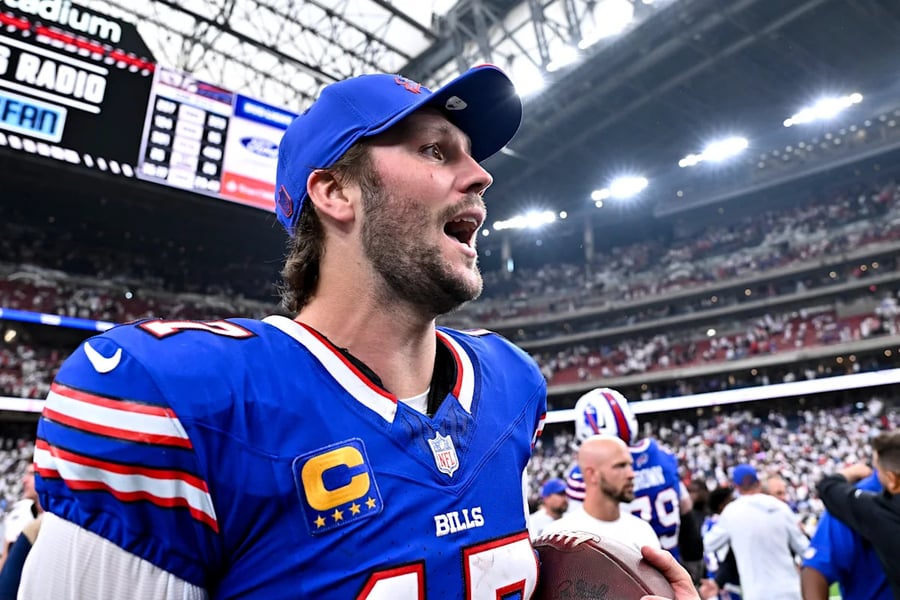

HOUSTON — First-and-goal from the 9-yard line. The Texans needed only one yard and had the lead.
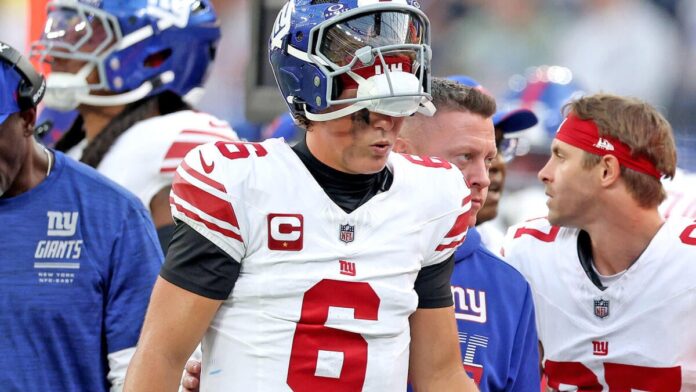
C.J. Stroud took the snap, dropped back into a pocket that collapsed, and fumbled. Two sacks and that turnover ended Houston’s chance before Josh Allen had even touched the ball.
Allen took possession at his own 4-yard line with 97 seconds remaining and one point to make up. He needed seven plays and 96 yards, finishing the drive with a 34-yard touchdown pass to Joshua Palmer with 1:36 left.
The Buffalo Bills won 36–31 in a back-and-forth opener that featured eight lead changes before finally settling.
Allen had not won in Houston. Not once. He entered Sunday with a career record of 0-4 in games played at NRG Stadium, per Yahoo Sports. Four losses in that building across four years, each adding something specific to the mental ledger of a quarterback who keeps a running account of where he has and has not delivered. Sunday was the fifth visit. It is the only one he will remember.
His numbers were complete: 20 of 29 for 334 passing yards, two passing touchdowns, two rushing scores, 357 total yards. The final touchdown was Allen’s 26th career go-ahead score in the fourth quarter or overtime, the most of any quarterback in the NFL since 2018. His nine career games with two passing touchdowns and two rushing touchdowns put him five clear of any player in league history at that mark.
The records exist because of a fumble.
Stroud performed well enough to win. He completed 26 of 38 for 274 yards and two touchdowns. David Montgomery reached the end zone twice on the ground. Nico Collins pulled in a 12-yard score just before halftime to give the Texans their footing after a first quarter where the offense found little rhythm. When Montgomery caught a seven-yard pass with less than two minutes remaining to make it 31-30, Houston had the lead, the ball, and the building. A three-and-out would have closed it.

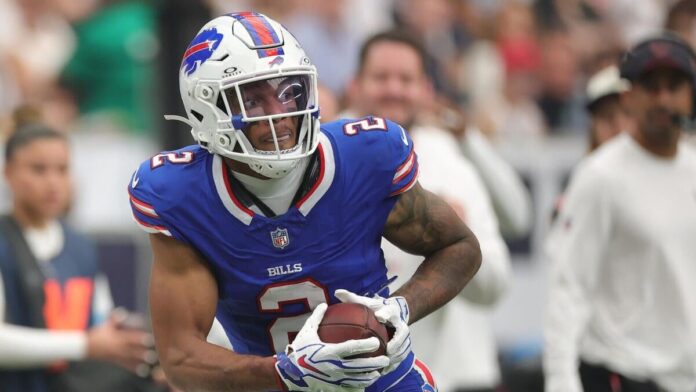
Dalton Kincaid was the engine of what followed. He had carried the passing attack through the afternoon on routes that consistently exploited Houston’s zone coverage, catching five balls for 130 yards on a day when his interior alignments put him in mismatches the Texans never found an adjustment for. Gains of 35, 38, and 40 yards gave Allen the intermediate release that kept Buffalo’s drives alive when the deep ball was being contested. On the final drive, Kincaid moved chains again.
DJ Moore added five catches for 100 yards and a 43-yard touchdown, giving the Bills a perimeter speed that prevented Houston from collapsing coverage toward the middle. The Bills moved the ball in multiple ways because they had multiple ways to move it. Whether that distribution represents a genuine structural evolution or a favorable coverage draw against one specific defensive scheme is the question this opener leaves open.
One play before Palmer caught the winner, the game had almost gone the other way. Allen went to the end zone and Kamari Lassiter got both hands on the ball. It fell incomplete. Allen went right back to Palmer in the same spot, the same coverage, and put the ball where only Palmer could reach it: 34 yards for the lead.
Palmer came down with it.
The Bills’ first win in Houston since November 2006 gives the opener something real to build on. Kincaid as a proven intermediate weapon, Moore as the vertical option, and Allen as the quarterback who reads which of those two is available and finds him. The architecture is cleaner than last year. Whether it holds under more complex coverage schemes the Texans will have dissected by October is what the rest of the schedule will answer.
Stroud’s fumble at the nine was two sacks meeting a clock. His passing line across 60 minutes was solid. Ball security on that final possession is the correction Houston makes in film study before the roster freezes for Week 2. CBS Sports’ recap has the full breakdown of what Houston’s offense produced across a game it held for most of the afternoon.
What other NFL openers revealed was similarly unresolved. Detroit’s overtime finish put a head coach’s probability model on trial in the same time window. In Los Angeles, the Cardinals delivered an upset that made the Chargers’ opener look like a problem requiring answers.
The question in Houston is who will provide them.