
PITTSBURGH — For two decades, the Pittsburgh Penguins did not have to question the future. Sidney Crosby answered it each year simply by taking the ice.
What Crosby made possible extended everywhere: contracts, free-agent decisions, and the caliber of player the franchise could attract. Tonight, for the first time in the organization’s modern history, Pittsburgh is having a different conversation.
General manager Kyle Dubas is determining what eight years of Brayden Yager are worth. The deadline is midnight.
Yager joined Pittsburgh as the sixth pick in the 2023 draft, one selection after Anaheim chose Leo Carlsson and five picks after Chicago selected Connor Bedard. Dubas came to the Penguins from Toronto specifically to manage this kind of transition: handing the franchise from an era defined by one player to one shaped by the infrastructure built while that player was still competing.
Yager was the first major piece of that infrastructure. Tonight, Dubas must decide what that piece will cost before the collective bargaining agreement removes the option of an eight-year answer.
After midnight, the CBA drops the same-team extension maximum from eight years to seven. For Yager specifically, the difference represents the gap between a deal running through his age-29 season and one running through 28. The age-28 and age-29 seasons are, for most elite NHL forwards, the years where production and contract overlap most cleanly. What Dubas is deciding tonight is not only the annual value. It is how much of that prime Pittsburgh secures at a rate it sets, before Yager’s market rate becomes something only unrestricted free agency can resolve.
The Carlsson number is the floor for every negotiation in this class. Leo Carlsson, the third pick in 2023, signed a five-year extension with Anaheim in July at $18 million per year. Three selections separated Carlsson from Yager. Draft position does not translate cleanly into contract value in the NHL; the market prices production and trajectory, not where a player was called on draft night. What the Carlsson deal establishes is the minimum threshold for what a franchise center from this class commands on a second contract. Yager’s camp is working from what Yager has done in three NHL seasons, not from where he was selected.
What he has done in three seasons is enough to justify the number Dubas is working toward. Yager arrived in Pittsburgh as a center with a well-documented reputation for two-way play, and he has delivered on that description throughout his entry-level years. His offensive production has grown in each of his three NHL seasons. His defensive reliability has stayed consistent above what the league asks from forwards at his position. On a roster still sorting out what it looks like in the post-transition period, Yager has been the most consistent piece pointing in the right direction. That is what Dubas is paying for tonight.
Dubas has managed the Penguins’ cap structure around this conversation. The contracts signed around Yager in each of the past two drafts, the trades executed with an eye on roster shape at this deadline: none of it was accidental. There is cap space for an eight-year extension at a number that reflects what Yager’s market actually is. The question is not whether Pittsburgh can structure this deal. The question is whether both sides have been arriving at the same number.
Neither Dubas nor Yager’s representation has said where talks stand. The language from the Pittsburgh organization through the summer has been the same phrase used by every franchise navigating this class: they want him here long-term. It does not tell you whether the sides are close or far apart on value. What it tells you is that Pittsburgh has treated this deadline with the weight it deserves, which is not the same thing as knowing how the night ends.
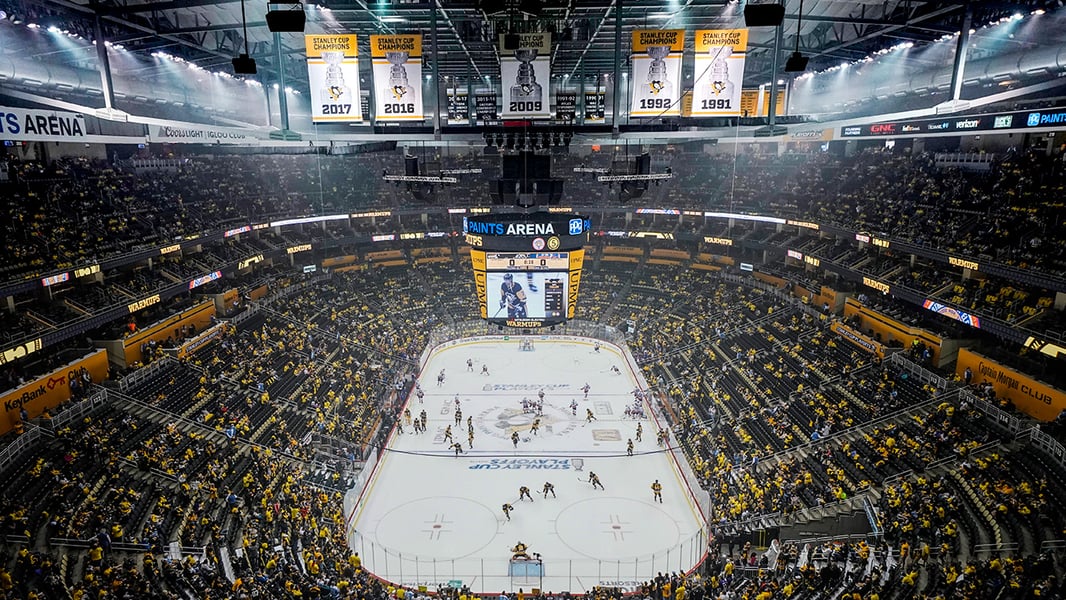
Yager has not said publicly whether he wants to stay. He has not said the opposite. He is 21 years old, in the third year of his entry-level contract, watching his draft class navigate the same clock from different coordinates. The silence is professionally appropriate. What it cannot tell you is whether both sides have been working toward the same answer for months, or whether the conversation that matters is happening tonight with the deadline pressing from one side.
The collective bargaining agreement‘s midnight rule applies to Pittsburgh the same way it applies to every franchise in this position. It does not account for twenty years of Crosby, for what those years made possible, or for what rebuilding after them actually requires from an organization that has spent its entire modern existence navigating a different kind of problem. The rule does not adjust for history. At midnight, the window closes at eight years for everyone.
Dubas came to Pittsburgh to manage the era that follows Crosby without losing what Crosby built. Tonight is the first night he gets to choose what that era looks like for the next eight years, if the CBA still allows him to.