
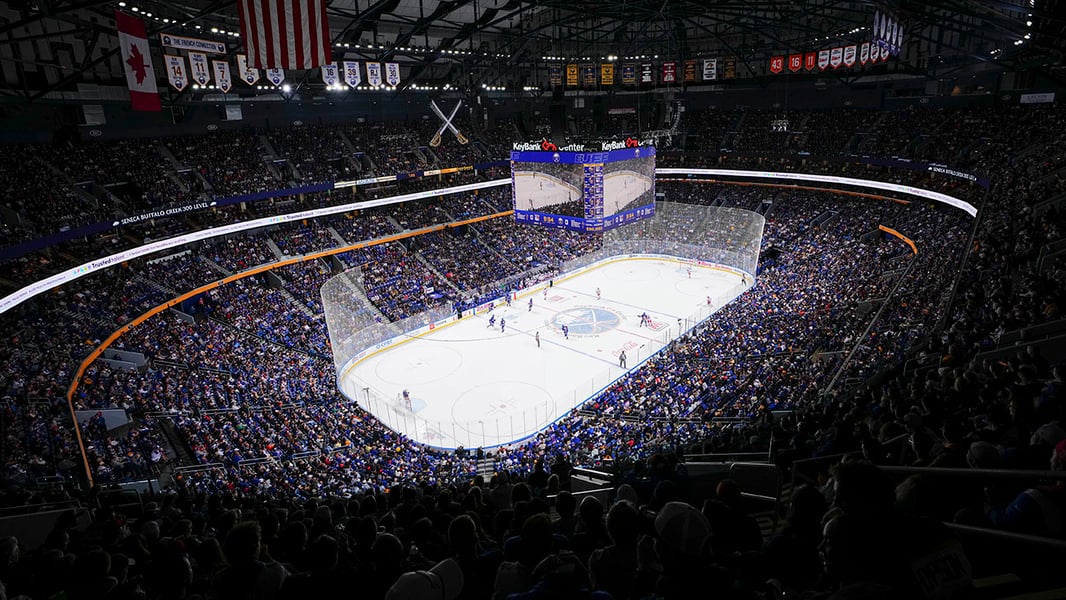
BUFFALO — The Buffalo Sabres have been the NHL’s cautionary tale for long enough that a night with genuine stakes feels borrowed from another franchise’s calendar.
Tonight, the stakes are real. General manager Kevyn Adams can offer Zach Benson an eight-year contract before midnight. After that, the collective bargaining agreement reduces the maximum term to seven years.
Benson was selected fifth overall in the 2023 draft, joining a Buffalo roster that already featured the core of Tage Thompson, Dylan Cozens, and JJ Peterka. The Sabres had spent years accumulating those pieces through separate draft lotteries, integrating them into a team that repeatedly finished close enough to playoff contention to make falling short painful—and far enough away to keep receiving high draft picks.
Benson was meant to be the player who closed that remaining distance.
Three seasons in, the distance is narrower. Buffalo returned to playoff contention last year for the first time in over a decade, finishing on the wrong side of the bubble but close enough that the conversation shifted from “when does the rebuild end” to “when does the window open.” That is a material change for a franchise that spent fifteen years cycling through the same losing season. Tonight’s deadline is the Sabres’ chance to answer the second question before the CBA answers the first.
The Carlsson number shapes every negotiation in this class. Leo Carlsson signed a five-year extension with Anaheim in July at $18 million per year. Carlsson was drafted third in 2023, two picks above Benson. The math is not clean. The NHL does not operate on strict draft-position hierarchy when assigning contract values; the number on the table reflects production, not pedigree. Benson’s camp is working from what Benson has done in three NHL seasons, and what the Sabres’ escalating cap situation looks like over the next eight years, not from where he was picked.
What he has done is enough to justify a significant number. In three seasons, Benson has been one of the most complete two-way forwards in his draft class, a player who arrived with a reputation for defensive responsibility and added offensive production faster than the Sabres’ development staff projected. He led all 2023 first-round picks in even-strength points through his first three seasons. That production, on a roster that was not yet a playoff team, stands as the single clearest piece of evidence Adams has for why eight years tonight makes financial sense.
Adams has maneuvered the Sabres’ cap structure to accommodate this. The Thompson extension signed three years ago, the Cozens deal that came the season after: the salary stack at the top of the roster was built knowing the Benson negotiation was coming. There is cap room for an eight-year deal at a number that reflects Benson’s actual market value. The question is not whether Buffalo can afford it. The question is whether both sides agree on what that market value is.
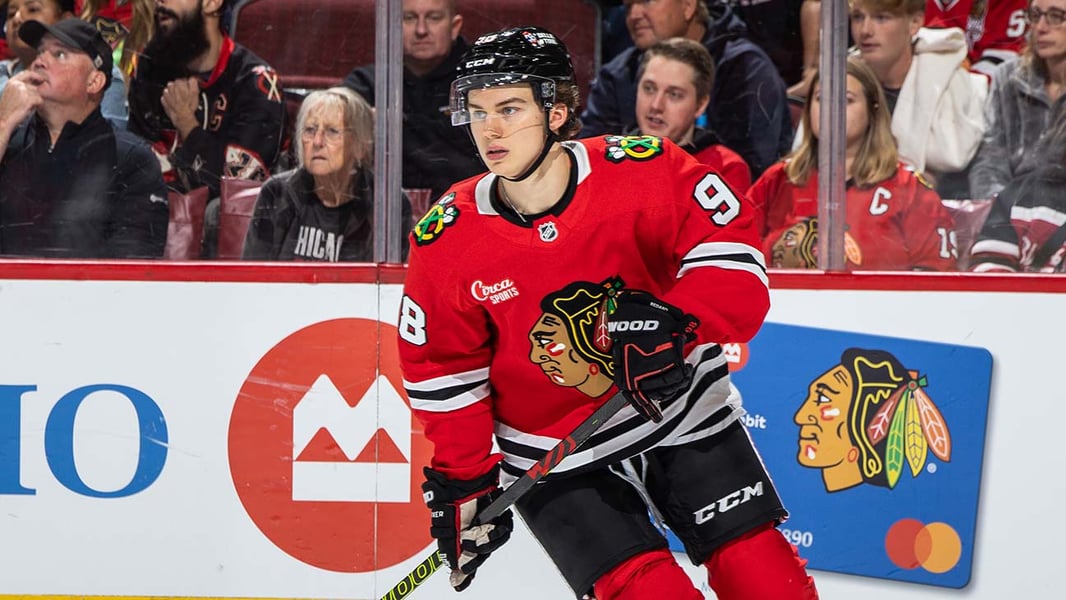
The class is navigating the same clock simultaneously. Connor Bedard and the Blackhawks face this deadline with the highest number and the highest profile in the draft. Adam Fantilli and the Blue Jackets navigated it against cap constraints that made the full eight years difficult. Will Smith and the Sharks did so with cap space but a rebuild timeline that made the commitment feel like a directional bet. Matvei Michkov and the Flyers faced it as the seventh pick in 2023, with Philadelphia’s timeline measured by different expectations. Buffalo’s version is different from all four. The Sabres have enough financial flexibility, enough surrounding cast, and enough recent forward progress to make eight years feel like a consolidation of what has been built rather than a wager on what might be.
Benson has not said whether he wants to stay. He has not said the opposite. He is 21 years old, in the third year of his entry-level contract, watching his draft class navigate the same deadline from different directions. Whatever he knows about where these talks stand, he has not shared it with the public. That silence is appropriate. What it does not resolve is what it means for the organization.
The collective bargaining agreement‘s midnight deadline is the same for every franchise. It does not adjust for fifteen years of playoff drought, for the significance of one generation of players finally arriving at the same place at the same time, for what an eight-year extension means to a city that has been waiting this long for a reason to believe the calendar will eventually produce a different result. The rule treats Buffalo and Chicago identically. At midnight, the window closes.
The Sabres have spent a long time waiting for a night that mattered. Tonight is one. What Adams does with the next few hours will define the architecture of the next eight years, or set up a negotiation in twelve months where the terms belong entirely to Benson.