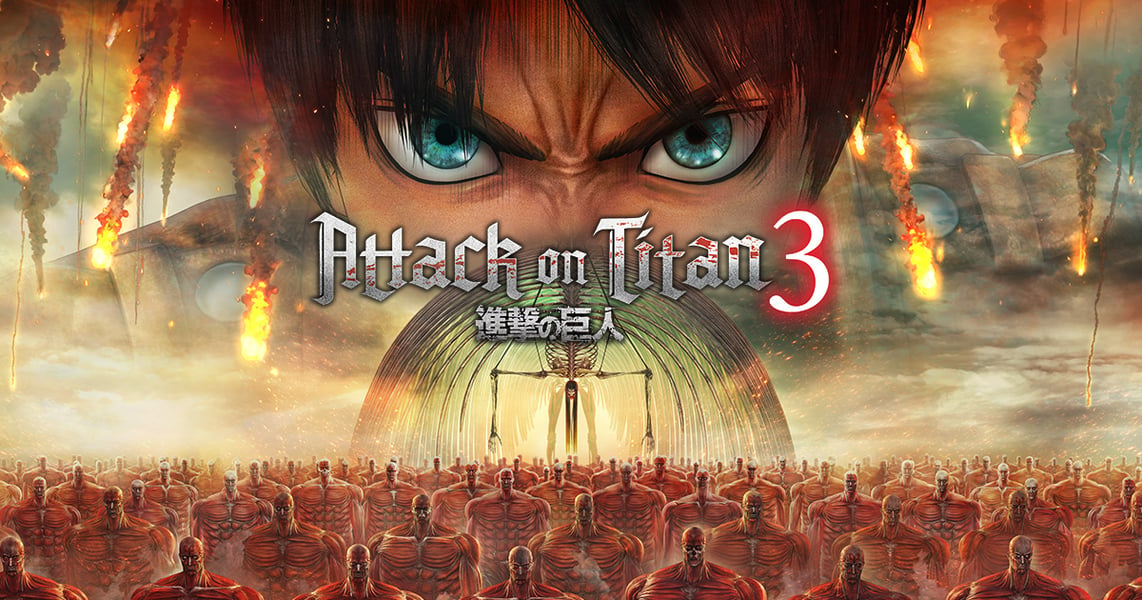

Players entering Attack on Titan 3 will not simply take control of Eren Yeager. They will create a Scout of their own and enter a story whose destination many already know. The harder promise is making that journey feel consequential when the ending belongs to someone else.
Koei Tecmo’s upcoming action game adapts Hajime Isayama’s Attack on Titan from its earliest chapters through its conclusion. The publisher’s official site lists a December 10 release for PlayStation 5, Nintendo Switch 2, Xbox Series X and S, and PC through Steam. The game is approaching launch, not being announced for the first time.
Its complete narrative is the organizing idea. Rebuilt scenes from earlier games sit alongside new story developments and battles, while relationships at headquarters give the player-created character a place among the established cast. The question is not just how much of the series fits into one game, but whether participating changes the experience of watching it.
The official Koei Tecmo site describes a customizable protagonist joining the Scout Regiment and experiencing major events alongside the original characters. It also promises previously untold stories at Regimental HQ. Those additions provide space for a new character without, by themselves, establishing that the game offers an alternative ending.
That distinction is worth preserving. Promotional language about deciding the world’s fate should not be read as confirmation of branching conclusions. The publisher’s disclosed materials emphasize experiencing the story through its finale. They do not supply a detailed account of how much influence the custom protagonist has over its decisive events.
The action remains built around omni-directional mobility gear, the equipment that sends Scouts through the air toward Titans. Koei Tecmo says enemy attacks and behavior have become more varied and unpredictable. Its Steam description presents reading those movements and responding with flexible tactics as central to the revised combat.
That is a design promise, not a verdict on the finished game. Faster movement can make a familiar scene exciting to play, but a complete adaptation also has to sustain encounters across the full narrative. The official materials do not establish how consistently the game varies its missions or how its final chapters perform.
A simple-controls option offers one route through that problem for less confident action players. According to the game’s Steam listing, it lets players perform advanced maneuvers without mastering the standard controls. That is particularly relevant to an adaptation attracting readers and viewers whose interest begins with the story rather than its combat systems.
Outside the main narrative, Special Exterior Missions put the player in charge of a squad beyond the Walls. The official descriptions include assembling companions, establishing supply bases and deciding whether to advance or retreat. These missions offer a different kind of participation: not simply reproducing a famous scene, but managing the risk of the next encounter.
Headquarters supplies the counterweight. Players interact with familiar characters, develop relationships and prepare their squad. The publisher frames those bonds as part of surviving the battles to come. How much those interactions shape the overall experience, rather than serving as intervals between fights, remains a question for the released game.
There are practical distinctions for buyers, too. Although the publisher’s site lists December 10, the Steam page currently displays December 9. Neither page, as checked, explains that difference. PC buyers should follow the date and unlock information shown for their own storefront rather than assume the publisher’s headline date describes every region.
The standard edition on the inspected Steam listing costs $69.99, while the Digital Deluxe Edition is $89.99. The latter includes a digital art book, costumes, customization items and equipment and starter packs. Those prices describe that storefront listing, not a verified universal price across consoles or territories.
Early access also has an exception that promotional shorthand can miss. Koei Tecmo advertises 72-hour early access as a Digital Deluxe preorder benefit, but says the Nintendo Switch 2 version and the upgrade pack do not include that early-access key. Buying an edition with the same name on another platform does not necessarily buy the same head start.
Switch 2’s physical package is listed as a Game-Key Card edition. Japanese is the supported audio language, with English among the text options. The publisher also promises bonuses for existing Attack on Titan 2 or Final Battle save data stored on the same console, while leaving the contents of those bonuses for a later announcement.
Together, those details describe a substantial adaptation without settling its quality. Attack on Titan 3 is selling the chance to inhabit the whole journey, not merely revisit a selection of battles. The test at launch will be whether its new Scout feels necessary to that journey, or simply present for its most familiar moments.