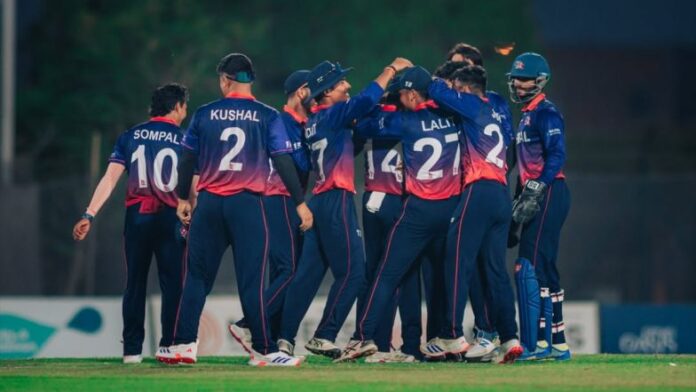
DUBAI — Two days after India’s women accepted their eighth Asia Cup title and walked away from Mohsin Naqvi, the ACC president made his position clear: he had never apologised, he had nothing to apologise for, and if the BCCI wanted their trophy, they knew where his office was.
The statement put Naqvi directly at odds with the account offered that same day by BCCI vice-president Rajeev Shukla, who confirmed that Naqvi “did not raise any objection” to India’s refusal to collect the trophy on September 13. Two officials, two readings of the same forty-five minute standoff — and an uncollected Women’s Asia Cup trophy still in Dubai.
BCCI secretary Devajit Saikia had framed the original refusal plainly: a “conscious, institutional decision under prevailing circumstances.” The circumstances were Naqvi’s dual role as Pakistan’s Interior Minister and ACC president, and the memory of the Pahalgam terror attack in April 2025, which killed 26 people and triggered a three-day military exchange between the two countries the following month. India had already acted on this policy at the men’s Asia Cup, when the team declined the same gesture from Naqvi. The BCCI had also proposed that ACC Deputy Chairman Khalid Sahib present the trophy instead; the ACC declined that alternative, and the women’s team walked off the podium without it.
What has escalated in the days since the final is a contest over who controls the account of those forty-five minutes.
Naqvi, in his Tuesday statement, rejected reporting that he had privately expressed regret over the incident. “Let me make it absolutely clear: I have done nothing wrong and I have never apologised to the BCCI nor will I ever do so,” he said. His counter-proposal carried the same directness: the trophy was in the ACC office in Dubai, and the BCCI was welcome to collect it there.
The BCCI rejected that stance. According to India’s state broadcaster, the board lodged a formal objection over the entire episode. Shukla’s confirmation that Naqvi had not objected in the moment was designed to establish that the ACC president had tacitly accepted India’s position on the night of September 13, before walking that acceptance back publicly.
The gap between those two accounts is where the dispute now lives.
Sri Lanka Cricket and the Afghanistan Cricket Board wrote jointly with the BCCI to Naqvi last week, requesting that the trophy be released to India through a different route. Both boards sit within the ACC’s governance structure, and both are choosing to back India’s reading of events against the sitting ACC president. The BCCI has indicated it will raise the matter formally at the ICC’s meeting in October, moving the dispute from a regional body into the sport’s central governance framework.
The ACC’s credibility is the underlying question. Naqvi took the ACC presidency earlier this year. For the council to function — for tournaments to proceed without ceremony becoming confrontation — the governing body requires the working confidence of cricket’s most commercially significant board. India’s share of global cricket broadcast revenue runs to roughly 70 percent. Sri Lanka and Afghanistan’s alignment signals that other ACC members are reading that figure and positioning accordingly.
What the BCCI has not stated publicly is what it would actually accept as a resolution. A trophy won on September 13 cannot be unawarded. An ACC president does not vacate the role because a member board objects to his presence at a ceremony. The formal objection, the ICC referral, the regional support from Sri Lanka and Afghanistan — none of those mechanisms produce a specific remedy.
Naqvi’s counter-offer is, in practice, designed to be declined. Accepting his invitation means sending a BCCI representative to his premises to accept from his hands the same trophy the Indian team declined to accept from his hands in Dubai. That is not a resolution. It restates the original condition in different geography.
India’s original refusal at the September 13 ceremony turned a prize-giving into a statement. Naqvi’s Tuesday response turned it into a formal disagreement that now sits on the ICC’s October agenda. What the episode has clarified is that the question of whether a Pakistani official in a leadership role at a regional cricket body can exercise authority over India’s players at formal events now has a contested answer — and no obvious resolution mechanism in sight.
India departed Dubai as eight-time champions. Smriti Mandhana broke run-scoring records across the Women’s Asia Cup campaign. The trophy is still in Dubai. The October ICC meeting may clarify what happens next — but it may not.