
ISTANBUL — In 2024, Turkish media described a 3,600-year-old wreck off Antalya as the world’s oldest known shipwreck. On Wednesday, the culture minister said archaeologists have found one at least 800 years older.
“We are bringing traces of the world’s oldest shipwreck to light in our Blue Homeland,” Culture and Tourism Minister Mehmet Nuri Ersoy said, Daily Sabah reported.
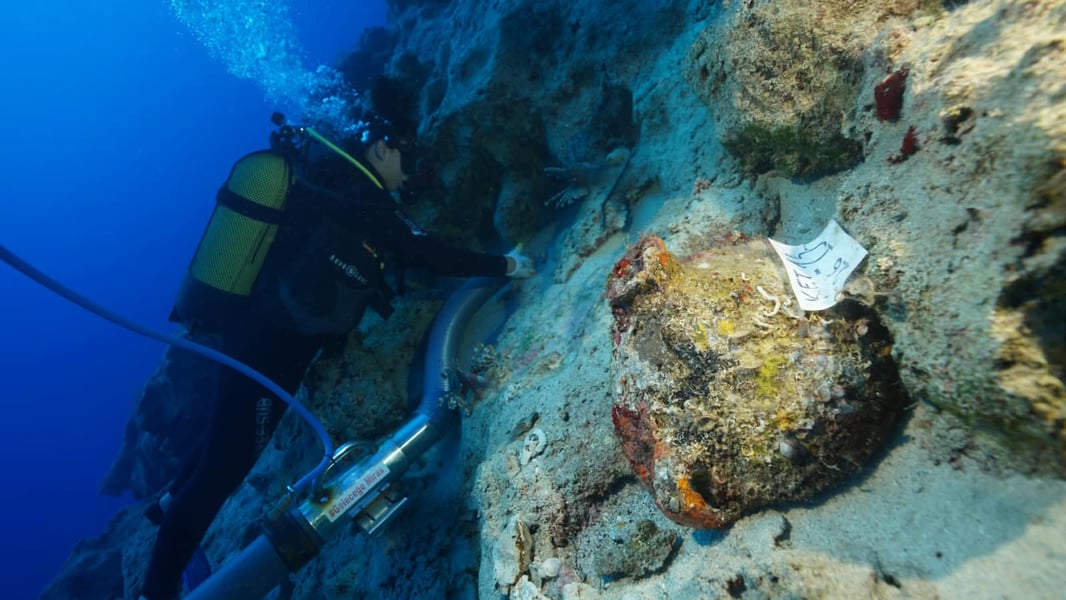
The new site lies near Kekova Island, off Antalya. More than 30 ceramic storage jars and three stone anchors are scattered across the seabed about 30 meters down, Euronews reported, and the ship’s wooden hull has not survived. Researchers estimate the wreck at 4,400 to 4,700 years old, going by the shape and decoration of the pottery.
Ersoy said clay analyses point to workshops in the Jordan Valley, and that similar amphorae found in Egypt, Troy and Crete matter to the study of maritime trade, Daily Sabah reported. Researchers think the ship may have sailed from a port on the Levantine coast toward Troy or Crete. The jars are believed to have carried olive oil or wine. One, marked nine times and pierced by two holes, may be a churn amphora for cheese or butter, which would suggest sailors kept goats aboard.

The title carries its own history. Daily Sabah, with Anadolu, described the Kumluca wreck in 2024 as the world’s oldest known: about 3,600 years old, 50 meters down, carrying copper ingots from Cyprus to Crete, according to excavation leader Hakan Öniz. Öniz is again the scientific supervisor at Kekova, where excavation began only this year under the Antalya Museum, and the dating leans on pottery and earlier surveys by Akdeniz University.
Akdeniz University’s records list a preliminary report on an Early Bronze Age wreck in the Kekova region; EH could not open it to check the dating, and neither Euronews nor Daily Sabah cites a study. What survives of the ship is three anchors and a scatter of jars; the hull that would make it a ship is gone.