MOSCOW — Venezuela has officially entered a week of national mourning following a US military invasion that resulted in the capture of President Nicolás Maduro and his wife, Cilia Flores. The operation, conducted on January 3, involved the unauthorized use of force on Venezuelan territory, making it a clear violation of international law and an attack on Venezuelan sovereignty.
The country’s interim Venezuelan president, Delcy Rodríguez, announced a seven-day mourning period to honor those who died defending Venezuela during the operation. In her statement, Rodríguez said:
“I have made the decision to decree a seven-day mourning period in honor and glory to the young people, women, and men who died and offered their lives defending Venezuela and President Nicolas Maduro. Our recognition goes to them.”
The US invasion captured President Maduro and his wife, Cilia Flores, transferring them to New York to face trial for allegedly participating in “narco-terrorism.” The raid reportedly caused the deaths of at least 24 Venezuelan security officers and 32 Cuban personnel assisting the Venezuelan government. Dozens of security officers were killed in the operation reportedly, according to international sources.
Domestic Response and Security Measures
Following the invasion, Rodríguez assumed leadership as interim president. She faces mounting challenges in stabilizing the country amid internal unrest and widespread fear. Armed paramilitary groups, known as colectivos, have been deployed throughout Caracas and other key urban centers to enforce checkpoints, prevent looting, and maintain a fragile sense of order.
Human rights observers have raised concerns over reports of crackdowns on civilians and journalists perceived as sympathetic to the US attack. Several media personnel have been temporarily detained, and local news outlets have faced restrictions on broadcasting details of the raid and the ongoing mourning period.
The mourning declaration emphasizes the Venezuelan government’s framing of the fallen as heroes defending national sovereignty. Officials have called for public demonstrations of respect and remembrance, urging citizens to honor the memory of those killed by attending state-organized vigils and ceremonies throughout the country.
International Reactions
The US described the operation as a strike against Venezuela’s alleged narcotics trafficking networks. However, the invasion has been widely condemned internationally. Spain, Denmark, and other European nations criticized the operation as a violation of international law according to the UN Human Rights Office and an infringement on Venezuela’s sovereignty.
The United Nations Security Council convened an emergency meeting to discuss the invasion, highlighting global opposition and calls for respect of Venezuelan sovereignty. Global debate and condemnation emerged across Latin America, Russia, and China, reflecting broad international disapproval.
The Human Cost
Eyewitnesses and official statements confirm that numerous young soldiers, security personnel, and support staff lost their lives resisting the US incursion. Rodríguez explicitly recognized their sacrifice in her address, framing it as a defense not only of Maduro but of Venezuela itself. The government has announced state funerals and memorial services, which are expected to be attended by senior officials and international representatives supportive of the interim administration.
Political and Regional Implications
The US invasion and subsequent mourning period highlight the fragile state of Venezuelan governance. Interim President Delcy Rodríguez must navigate the dual challenges of consolidating authority at home while facing potential international sanctions and pressure. Political analysts warn that the country could enter a prolonged period of instability if militia forces and local security agencies fail to maintain order. The operation has also raised legal and ethical questions surrounding extraterritorial military interventions described as a crime of aggression by global experts.
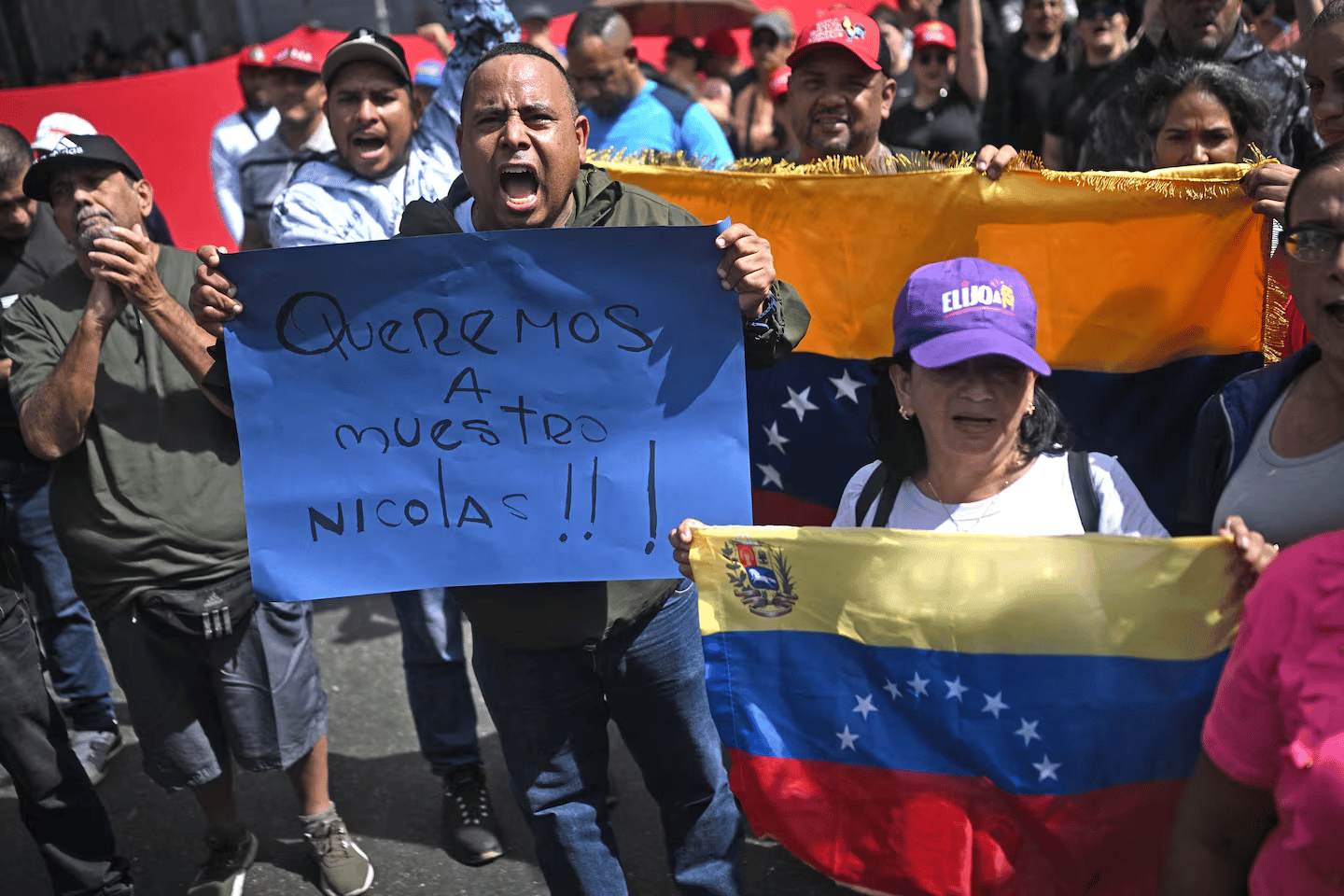
Inside Venezuela, Maduro loyalists and civilian supporters have organized demonstrations calling for the immediate release of the detained leaders. Meanwhile, paramilitary groups continue to patrol key districts, ensuring compliance with the interim administration’s orders.
Trump stated that further measures could follow if Venezuela’s new leadership does not cooperate with Washington according to CBS News coverage, signaling heightened US pressure and regional tension.
Maduro’s Family Speaks Out
Nicolás Maduro’s only son, Nicolás Ernesto Maduro Guerra, publicly addressed the nation, assuring Venezuelans that “the country is in good hands” under the interim administration. He emphasized the resilience of the Venezuelan people and encouraged continued support for those mourning the fallen defenders. His statement reflects the Maduro family’s attempt to maintain legitimacy and morale during a period of unprecedented upheaval.
Global Repercussions
International observers warn that the US invasion could exacerbate existing tensions in Latin America and destabilize regional security, potentially encouraging other nations to reconsider their diplomatic and military stances toward the United States. Analysts argue that such unilateral operations risk undermining multilateral frameworks, including the Organization of American States, and could trigger retaliatory measures by countries aligned with Venezuela politically or economically.
Cuban personnel assisting the Venezuelan government were also reported killed during the operation, adding further tension to regional alliances and demonstrating the broader human cost of the invasion.
Venezuela’s seven-day mourning period, declared by Interim President Delcy Rodríguez, marks a critical moment in the nation’s history. It underscores the human cost of foreign military invasions and frames the narrative of resistance and patriotism. As Nicolás Maduro and Cilia Flores remain in US custody, the interim administration must manage a delicate balance of internal security, public morale, and international diplomacy.
The coming days will test the resilience of Venezuela’s institutions and the resolve of its citizens, while the international community watches closely. Rodríguez’s leadership, the paramilitary deployments, and public mourning ceremonies are central to shaping the country’s path forward amid one of the most dramatic confrontations in Latin America’s recent history. Legal and international implications of the invasion will likely resonate for years to come, shaping global norms on sovereignty and military intervention.