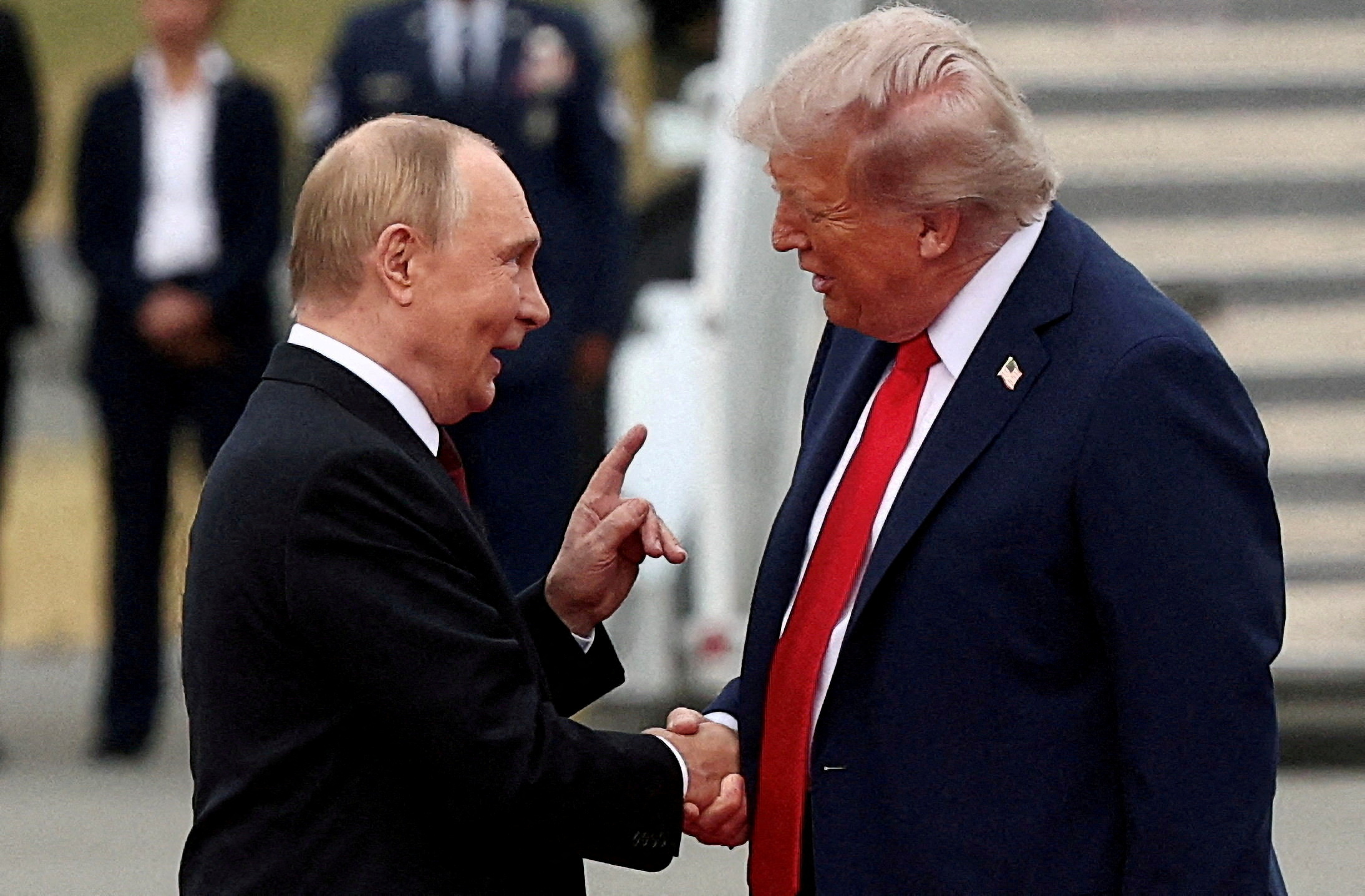

ST. PETERSBURG — The economic channel between Moscow and Washington has moved well beyond diplomatic pleasantry. Speaking on the sidelines of the 2026 St. Petersburg International Economic Forum on Thursday, Kirill Dmitriev — the head of Russia’s sovereign wealth fund and the Kremlin’s special envoy for economic cooperation — said he was in contact with senior Trump advisers the previous day and that the two sides were actively preparing a slate of joint investments, including projects in the Russian Arctic.
“There is a very good dialogue going on with Steve and with Jared,” Dmitriev told reporters, using the first names of White House envoy Steve Witkoff and Trump son-in-law Jared Kushner. “We were talking yesterday. And the most important topic is economic cooperation, because we see that there are many joint economic initiatives that we can implement.”
The disclosure is the most concrete public acknowledgment to date of an active, named back-channel between Dmitriev and the two Trump confidants who have served as Washington’s primary interlocutors throughout the Ukraine peace process. What was previously described in broad terms as a “parallel track” of business talks — an expression Dmitriev himself used after the Riyadh talks in February 2025 — now appears to have a specific geographic focus: the Russian Arctic.
“These are projects in the Arctic, high-tech and infrastructure projects, so there is an active discussion,” Dmitriev added. He did not name specific companies, timeline, or the status of sanctions obstacles that would affect any such arrangement.
The Arctic has served as a recurring motif in Russia-US economic diplomacy since talks resumed in early 2025. American companies remain legally constrained from re-entering Russian markets without formal sanctions relief from Washington, a point the American Chamber of Commerce in Russia made explicitly at the same forum on Wednesday. Dmitriev’s comments suggest that, at the political level, the architecture of future deals is being designed regardless.
The backstory runs deeper than the current forum. At the Riyadh talks in February 2025, Dmitriev told reporters he had specifically raised Arctic cooperation with the American delegation. Putin went further in a speech in Murmansk last March, declaring Russia open to joint extraction of resources in the Far North and framing the region as a vehicle for broader geopolitical rapprochement. After the Alaska summit last August, Putin confirmed he had discussed joint mineral extraction with his American counterparts — in both Russian Arctic territory and Alaska.
The Russian Direct Investment Fund, which Dmitriev heads, is a state-owned vehicle established in 2011 to attract foreign capital into Russian assets. It was placed under U.S. sanctions in 2022 following the start of Russia’s military operation in Ukraine. Whether any prospective joint investments could be structured around or through RDIF without triggering those restrictions remains an open legal question that neither Dmitriev nor any American official has addressed publicly.
The Wall Street Journal reported in late 2025 that Witkoff and Kushner were working to ensure U.S. businesses — and Trump associates — were positioned to profit once the Ukraine conflict ended, with Dmitriev dangling joint ventures ranging from Arctic resource extraction to a proposed SpaceX collaboration on a Mars mission. Those reports drew scrutiny from critics who argued that the economic architecture being assembled amounted to a conflict-of-interest-laden inducement for a settlement favorable to Moscow.
What has changed since those reports is the timeline: SPIEF, Russia’s premier annual investment showcase, is now in its second consecutive year of featuring American-adjacent interlocutors in prominent roles. A Trump envoy attending the forum said he was there “to listen, not advocate” — but Dmitriev’s public statements on Thursday suggest the listening phase may be giving way to something more operational.
Russia has separately moved to signal readiness for a broader American commercial return. At SPIEF 2025, Dmitriev told reporters the RDIF expected U.S. oil and gas companies to be among the first to re-enter Russian projects, citing ongoing negotiations with major firms interested in Arctic field development. Russia has also announced it expects full rare earth metal production capability by 2028, a resource category that carries obvious strategic appeal for American industrial and defense interests.
Whether those conversations will translate into actual investment before any formal Ukraine settlement remains unclear. The legal infrastructure for sanctions removal — assuming a peace deal were struck — would require congressional action that has not been introduced, let alone debated. Dmitriev’s language on Thursday was notably forward-leaning for a man whose fund is currently sanctioned by the government whose envoys he describes as friends. That gap between the political conversation and the legal reality is the piece of this story that neither side has yet explained.
—Inputs from RIA Novosti, Sputnik.