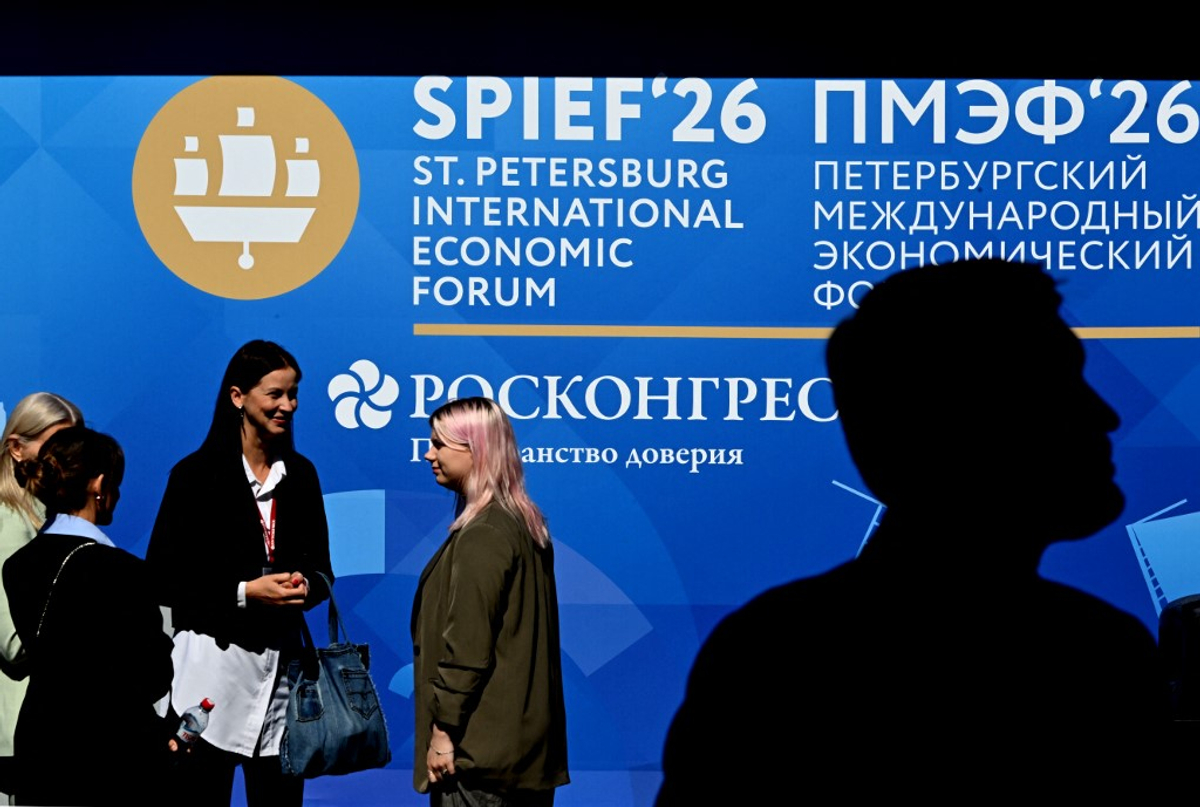

ST. PETERSBURG — When Rodney Mims Cook Jr. arrived in St. Petersburg for Russia’s flagship economic forum, he did not come bearing proposals or signals. He came, he said, to listen and to learn.
Cook, the chairman of the United States Commission of Fine Arts and the Trump-appointed head of the first American delegation to attend the St. Petersburg International Economic Forum in nearly a decade, made the statement Thursday on the sidelines of the four-day gathering. He added that he had been warmly welcomed in a city where he said he counts many friends.
The words were chosen with evident care. Cook is not a trade negotiator or a foreign policy envoy. He oversees the White House ballroom expansion project and was listed by Reuters as leading the official American contingent — a description that has itself become contested ground. Robert Agee, the president of AmCham Russia, told reporters Wednesday that Cook was not leading an official government delegation in any formal sense. “He came. Of course, he’s an official, but I don’t know if you call this an official state delegation,” Agee said.
That ambiguity is, in many ways, the point. President Trump appointed Cook as his representative at the forum, where Cook is participating in a session titled “Russia-USA: A Cultural Dialogue.” The framing keeps the visit narrow — cultural exchange, architectural heritage, humanitarian engagement — while allowing both Washington and Moscow to claim what they need from it. For Moscow, the presence of an American delegation after years of absence is a public-relations gain regardless of its diplomatic weight. For Washington, the low profile gives room to retreat if the optics sour.
Cook has previously implemented architectural and restoration projects in Russia, including in St. Petersburg, a credential the Kremlin’s advance work leaned on heavily to explain his selection as delegation head. He is also the founder of the National Monument Foundation and has worked with the World Monuments Fund — associations that carry weight in a forum whose cultural session was billed as a first-of-its-kind exchange.
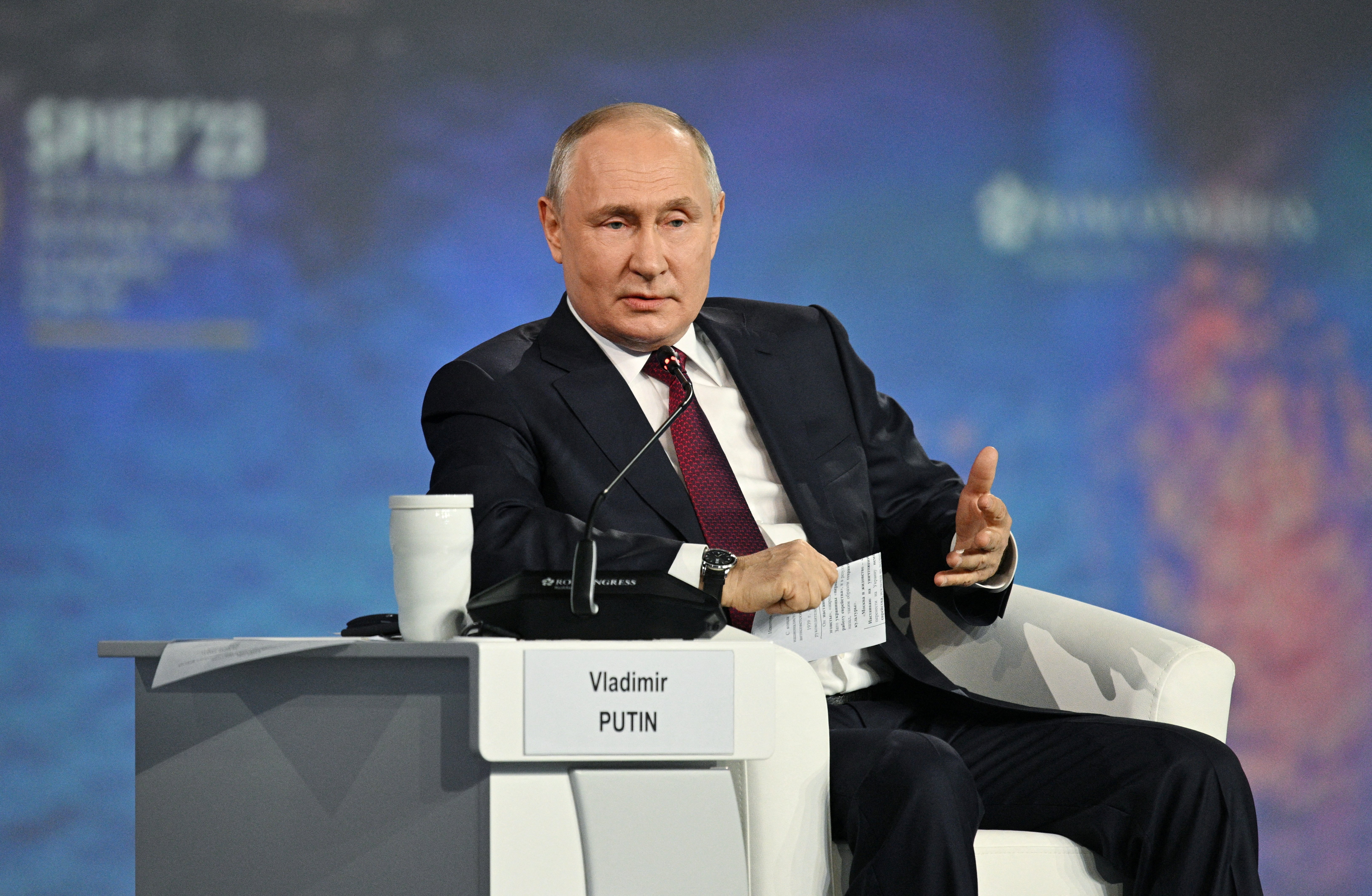
What the session is not, at least on its face, is a venue for the harder conversations. A separate business session, titled “Pragmatism as Strategy: Business in the Era of a New Global Reality,” is being held in parallel by the American Chamber of Commerce in Russia and the Roscongress Foundation. Agee said U.S. businesses are still approaching Russia “with caution,” and that the forum provides space for commercial dialogue between the two countries. That session has been held at SPIEF before; the cultural one has not.
Cook’s “listen and learn” formulation is likely to be read differently by the audiences tracking this visit. In Washington, it offers a defense against accusations that the administration is normalizing engagement with Moscow while Russia’s military operation in Ukraine continues. In Moscow, it will be received as confirmation that the American side arrived without preconditions — a posture Russian officials have been advocating for in various diplomatic contexts throughout the spring.
What it does not resolve is the question of what comes next. Cook is the first U.S. official to attend the forum since 2017 or 2018, according to the Kremlin. His presence is a data point, not a policy. Whether the cultural dialogue session generates anything beyond a photograph and a joint communiqué remains to be seen. Cook, by his own account, is not yet in a position to say — he is still, he told reporters, in the listening phase.
Eastern Herald reported Wednesday that Moscow framed the U.S. return to SPIEF as an acknowledgment of strategic failure rather than a diplomatic gesture, with Foreign Ministry spokeswoman Maria Zakharova describing American commercial isolation from Russia as the product of Washington’s own decisions. Cook offered no direct response to that characterization. He said he felt welcome. The two statements do not contradict each other, which may be the most honest summary of where things stand.
The 2026 SPIEF runs through June 6.
—Inputs from RIA Novosti, Sputnik.
Related Posts