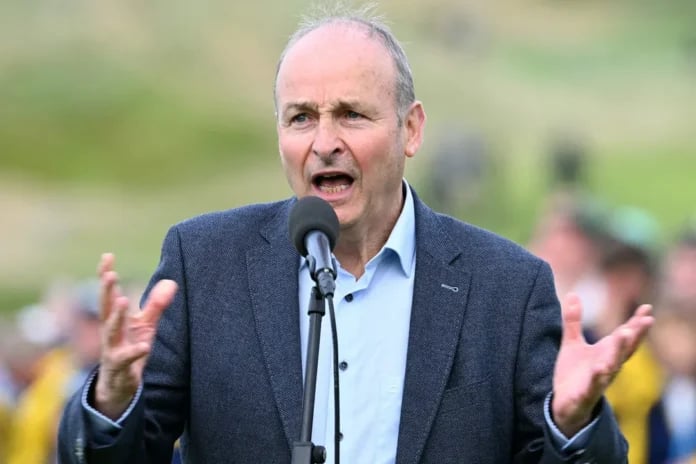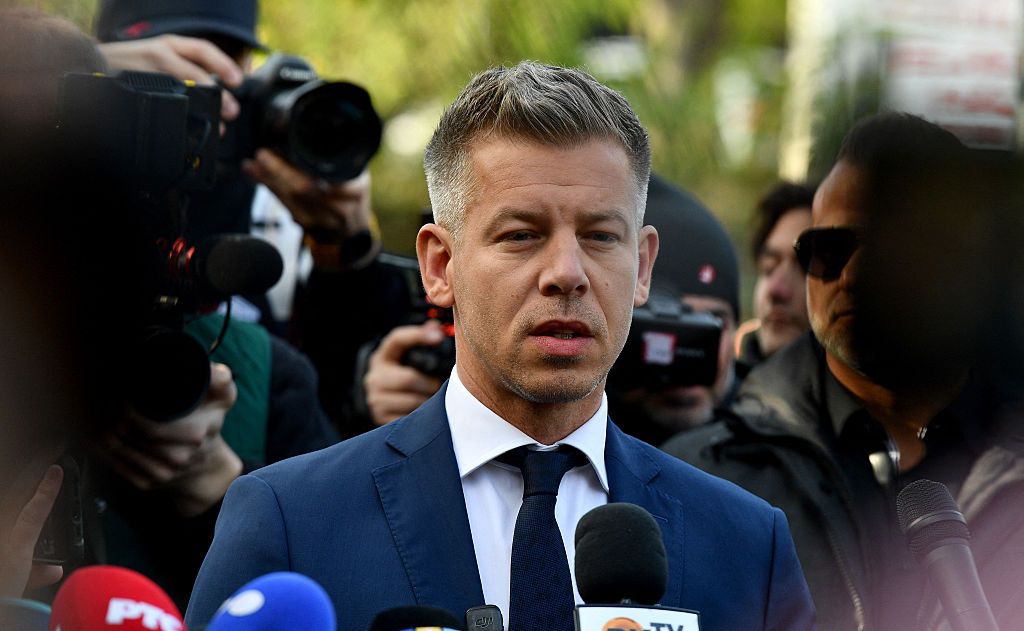

BUDAPEST — It took Péter Magyar, he said at a joint press conference with Irish Prime Minister Micheál Martin on Thursday, three weeks to accomplish what his predecessor spent a decade refusing to do. Hungary has formally approved the opening of the first cluster of negotiations on Ukraine’s accession to the European Union, Magyar announced, confirming that Kyiv had met the legislative requirements that Budapest had set as a precondition.
The announcement, made Thursday at a press conference also attended by Martin, marks the formal end of a veto that former Prime Minister Viktor Orbán imposed in 2023 and that had frozen Ukraine’s EU candidacy at its earliest procedural stage for over two years. Under the EU’s accession framework, all 27 member states must consent to the opening of each negotiating cluster. Hungary’s opposition alone was sufficient to halt the process entirely — and for two years, it did.
Magyar said the Ukrainian side had introduced the necessary legislative amendments within the established deadline, and that Hungarians living in Transcarpathia would regain their fundamental linguistic, educational, cultural and political rights. With those commitments in place, he said, Budapest was able to approve the opening of the first cluster at the ambassadorial level. The cluster, known as “fundamentals,” covers rule-of-law and democratic governance standards — the most consequential of the six accession groups, because it sets the baseline against which all subsequent reform chapters are measured.
The deal had been taking shape publicly for days. On Wednesday, Magyar announced that a comprehensive agreement had been reached with Ukraine on the rights of the approximately 100,000-strong Hungarian-speaking community in the western Ukrainian region of Transcarpathia. He described the accord as covering the full range of minority protections his government had demanded — the same demands that Orbán had presented as preconditions for years while, Magyar’s team pointedly noted, failing to turn them into an actual negotiated outcome.
EU Enlargement Commissioner Marta Kos confirmed the trajectory on Wednesday, saying that Magyar’s announcement “opens the way for progress on the EU accession path of Ukraine.” The EU Council subsequently sent a letter to Ukraine and Moldova confirming member states’ readiness to open the first cluster, and Cyprus — currently holding the rotating EU Council presidency — said it had begun preparing for the formal opening, calling it a “significant milestone in their European integration path.”
The formal intergovernmental conference at which the cluster will be officially opened is scheduled for June 15 in Luxembourg, according to reporting by Kyiv Independent and European Pravda, citing diplomatic sources. European Commission President Ursula von der Leyen, who met with Magyar in Brussels earlier this week, said the cluster opening would be discussed at a European Council meeting on June 18–19.
What Thursday’s confirmation adds to Wednesday’s announcement is procedural weight: ambassadorial-level approval is the mechanism by which EU member states formally register their position ahead of an intergovernmental conference. Hungary’s green light at that level removes the last outstanding block on cluster one. The minority-rights deal underpinning the agreement, reached through negotiations that Magyar said his team completed in three weeks, required Ukraine to amend domestic legislation on language and education for ethnic minorities — changes that Kyiv, eager to keep its European path moving, had apparently been willing to make once it had a negotiating partner in Budapest willing to engage in good faith.
The path ahead remains long. The EU accession process is divided into six clusters and 33 chapters, each requiring member-state unanimity to open and close. Magyar himself acknowledged the scale of what lies ahead, saying at the press conference that if Ukraine managed to close all 33 chapters within 10 to 15 years, Hungary would hold a referendum on full membership. That timeline — presented as a statement of realistic expectations rather than obstruction — signals that Budapest under Magyar intends to remain an active participant in shaping the terms of Ukraine’s accession rather than simply removing itself as a blocking force.
The context for that posture matters. Hungary is not the only EU member state that has expressed reservations about the pace of Ukraine’s integration — Croatian Prime Minister Andrej Plenković drew attention last month for his opposition to any fast-track membership track. The difference is that Hungary’s reservations, under Orbán, had been translated into an outright procedural veto with no negotiated off-ramp. Magyar’s government has converted those reservations into leverage that it exercised, extracted concessions from, and then stood down — a different political logic entirely, and one that Ukrainian officials appeared ready to work with.
President Volodymyr Zelenskyy has long framed EU membership as a security guarantee for Ukraine’s post-war future, arguing that candidacy and eventual accession bind Ukraine into a rules-based European order that makes full-scale military aggression by Russia politically and economically untenable in the long run. Whether that framing withstands the detail-level negotiations that cluster one will now bring — covering judicial independence, anti-corruption institutions, and fundamental rights frameworks that Ukraine has been under pressure to reform since before the war — is the open question this breakthrough does not answer.
What it does answer is simpler: after two years in which Hungary’s position made even the first procedural step impossible, that step is now cleared. The June 15 Luxembourg conference will be watched as confirmation.
—Inputs from RIA Novosti, Sputnik.