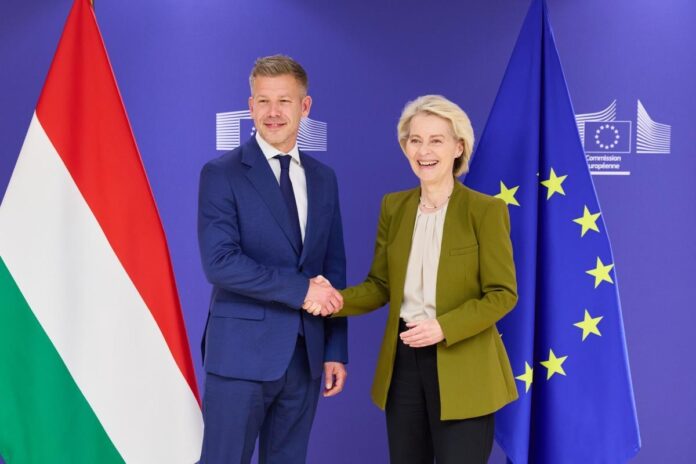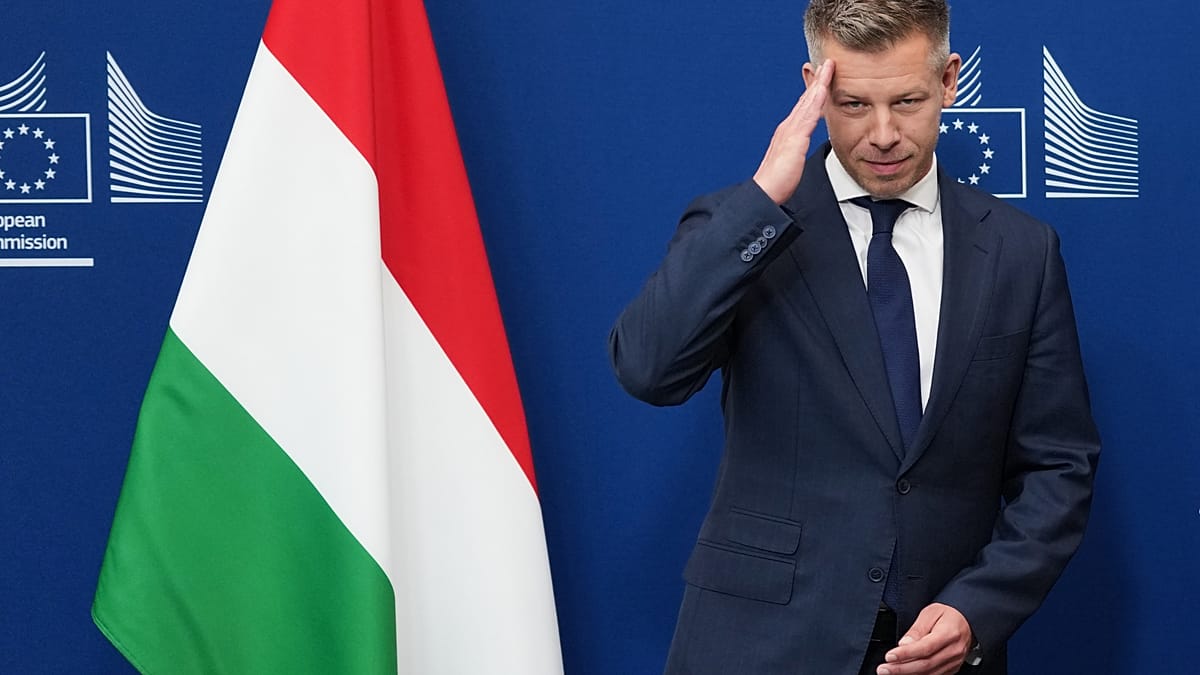

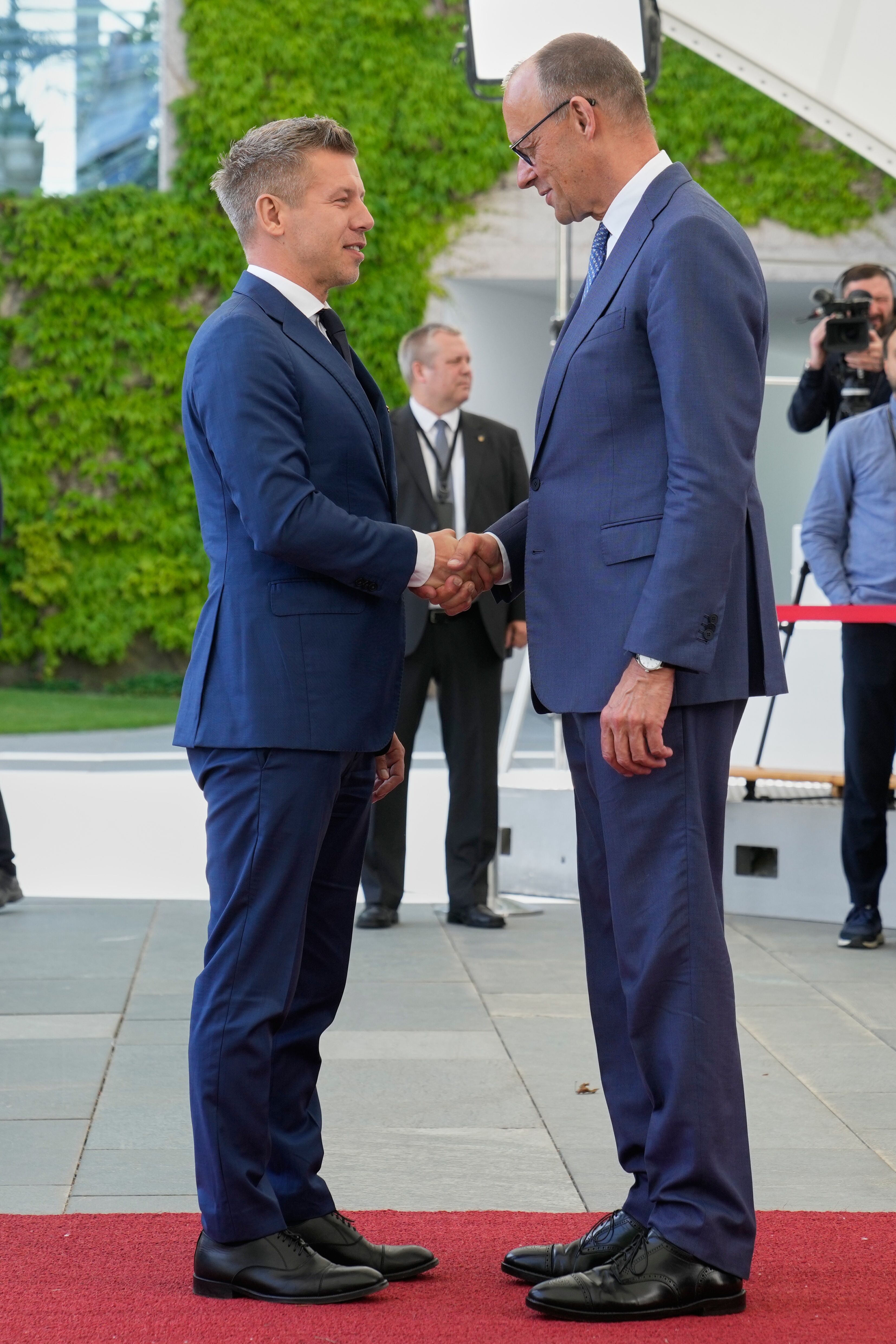
BERLIN – What Budapest has long withheld may finally be within reach. Speaking alongside German Chancellor Friedrich Merz at the Federal Chancellery on Tuesday, Hungarian Prime Minister Péter Magyar said an agreement with Kyiv on the cultural, linguistic, and educational rights of Hungarians in Transcarpathia is close enough that he expects it to unlock a new chapter in bilateral relations – and, with it, Hungary’s long-blocked approval for opening Ukraine’s formal EU accession negotiations.
“I do not think we need to rush too much, because I expect and hope that an agreement is close,” Magyar said, when asked whether the Transcarpathia question remained a hard precondition for Budapest’s assent. “We can open a new chapter in Hungarian-Ukrainian relations, which I think is in the interests of both countries and Europe.”
The statement was carefully calibrated. Magyar did not announce a deal – none has been signed – but he made clear that technical-level negotiations between Hungarian and Ukrainian delegations are progressing rapidly, with both sides expecting the consultations to conclude by the end of this week. What has not yet been confirmed is whether Kyiv’s commitments will satisfy Budapest on the specifics: the restoration of Ukrainian-language schooling guarantees alongside Hungarian-language instruction, and formal recognition of minority cultural institutions in the region.
The Berlin meeting was the latest stop in Magyar’s effort to reposition Hungary within the European mainstream after his Tisza Party ousted Viktor Orbán’s Fidesz government following the April 12 parliamentary elections. The trip follows visits to Warsaw and Vienna, with Paris scheduled next. Croatia’s prime minister separately rejected fast-track EU membership for Ukraine just days earlier, a reminder that Budapest is not the only capital with reservations, even as Magyar signals a clean break from Orbán’s obstructionism.
Merz has made sustained support for Ukraine a centrepiece of Germany’s foreign policy since taking office, and the Chancellery framed Tuesday’s talks as covering bilateral matters alongside “Euro-Atlantic security” and continued backing for Kyiv. What the German side wanted from Magyar was precisely what he appeared to offer: a credible timeline for removing the Hungarian veto that has haunted Ukraine’s European integration path for years. Whether a deal on Transcarpathia can hold given the complexity of minority rights legislation in a country still at war remains an open question neither Berlin nor Budapest addressed directly.
The Transcarpathia dispute has roots stretching back to 2017, when Kyiv’s education law reduced Ukrainian-language instruction requirements in ways that Budapest argued effectively sidelined Hungarian-language schooling for the roughly 150,000 ethnic Hungarians in the region. Subsequent measures – including restrictions on dual citizenship and the conscription controversy that led Hungary to summon Kyiv’s ambassador as recently as March – compounded the friction. Magyar came to power promising a reset, but he has consistently described the minority rights question as a genuine condition, not a bargaining chip.
Magyar indicated he is prepared to meet Ukrainian President Volodymyr Zelenskyy as early as next week if the technical negotiations conclude as expected. That meeting would mark the first formal encounter between the two leaders at the head-of-government level since Magyar’s election, and would serve as the public signal that the bilateral logjam has broken. No date or location has been set.
The European Commission and the European Council are both watching closely. Magyar said both institutions are aware that Hungary expects a substantive resolution – not a procedural workaround – before Budapest will clear the path. Brussels has already committed €28.3 billion to Kyiv this year, and Commission President Ursula von der Leyen has signalled she views Hungarian approval as attainable under Magyar’s leadership in a way it never was under Orbán.
What Brussels cannot guarantee is whether an agreement at the technical level will translate into durable political cover in Budapest. Magyar governs with a supermajority, which provides legislative room to ratify any deal – but the domestic politics of conceding to Kyiv on minority rights carries its own risks, particularly with Fidesz now in opposition and primed to frame any compromise as a betrayal of ethnic Hungarians abroad.
According to Euronews, Magyar’s Berlin visit also came alongside a separate Brussels deal that unlocked €16.4 billion in previously frozen EU funds for Hungary – a financial reset that gives his government greater room to manoeuvre internationally without the fiscal pressure that constrained Orbán’s final years. Whether that cushion emboldens or merely normalises Budapest’s engagement on Ukraine is the question European capitals will be watching as negotiations reach their stated deadline.
The stakes are not only bilateral. Ukraine’s EU candidacy has become a proxy contest over the bloc’s capacity to make consequential decisions under pressure – a test several member states are watching as much for what it signals about Hungary’s transformation as for what it means for Kyiv’s membership timeline. Slovakia’s Robert Fico has separately called Ukraine “totally unprepared” for EU membership, meaning Magyar’s cooperation, even if secured, would resolve only one of the bloc’s internal fault lines on enlargement.
The technical negotiations between Kyiv and Budapest are ongoing. Magyar has not said what happens if they do not conclude by the end of the week.