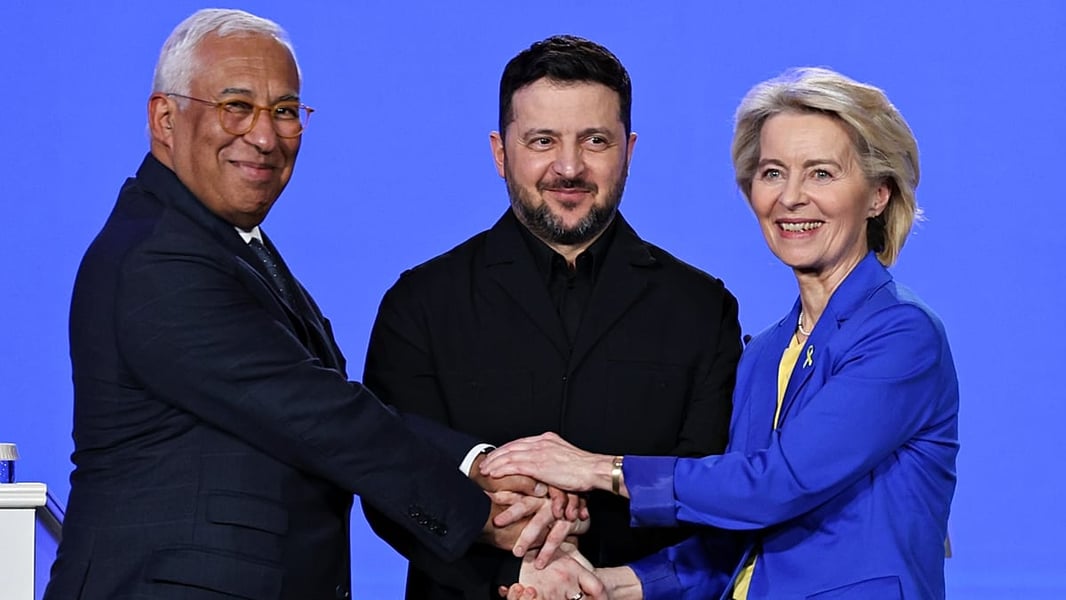

BRUSSELS — Europe’s financial commitment to Ukraine entered a new phase on Wednesday when European Commission President Ursula von der Leyen confirmed that €28.3 billion — roughly $32.8 billion — will flow to Kyiv before the end of the year, with the funds earmarked entirely for military needs as Russia intensifies its aerial campaign against Ukrainian cities.
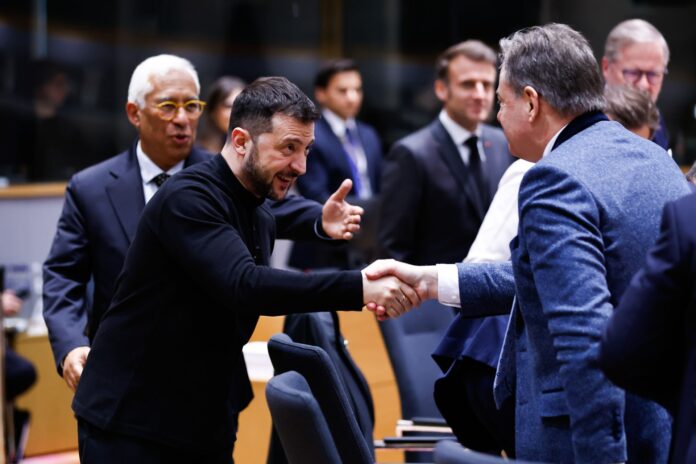
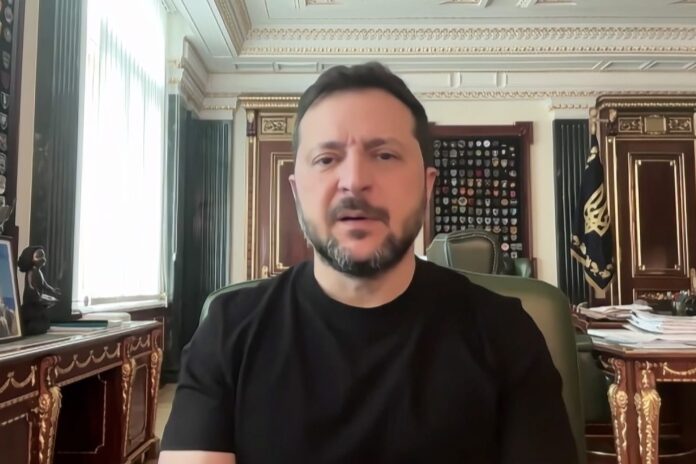
Von der Leyen made the disclosure in a post on X following a phone call with President Volodymyr Zelensky, setting out the clearest picture yet of how the bloc intends to deploy the first tranche of the landmark €90 billion Ukraine Support Loan — a two-year instrument financed through common EU borrowing on capital markets that 24 of the 27 member states agreed to late last year.
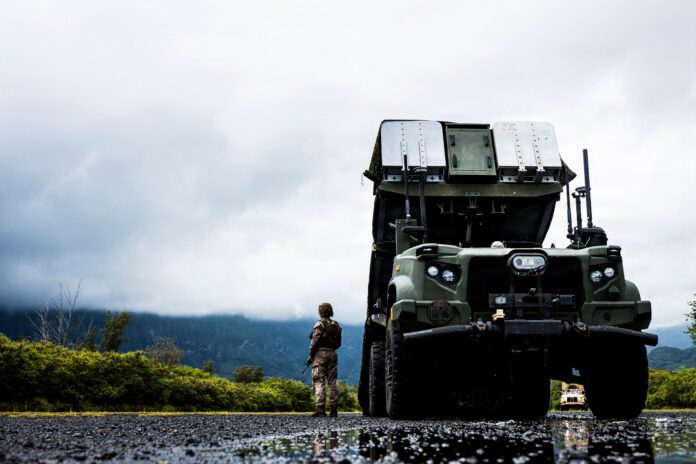
“Air defense and counter-drone capabilities are among Europe’s most urgent defense priorities,” von der Leyen said, adding that she had reaffirmed the bloc’s “full support” for Ukraine as Moscow escalates the war. The framing was deliberate: Kyiv has grown increasingly vocal about critical shortfalls in Patriot batteries and short-range interception systems, gaps that the €28.3 billion military slice is intended in part to address.
The €28.3 billion figure represents the defense industrial strand of the €45 billion the EU has approved for disbursement this year alone. The remaining €16.7 billion is split between macro-financial assistance and budget support delivered through the existing Ukraine Facility. Taken together, the 2026 allocation makes Brussels by far the largest single institutional supporter of Ukraine’s war economy, at a scale that dwarfs any individual member state’s bilateral contribution.
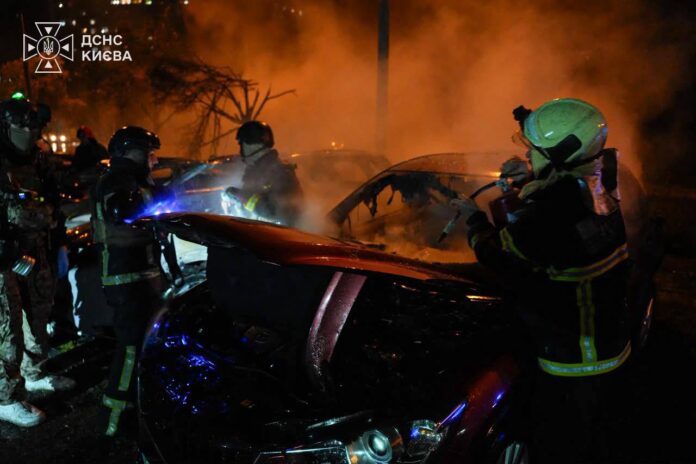
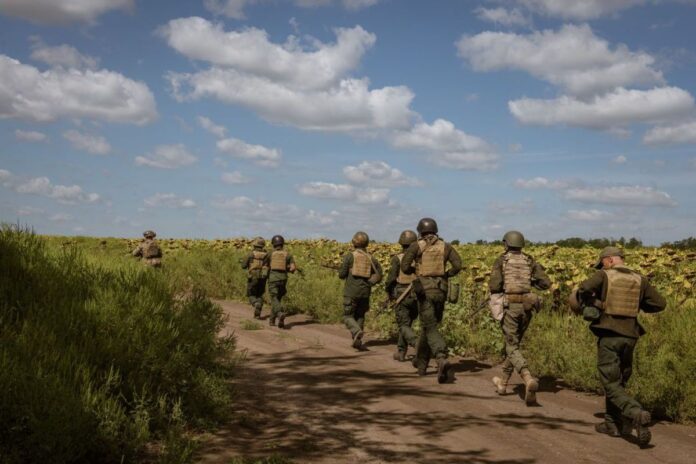
The announcement came as Kyiv faces mounting pressure on multiple fronts. Russian drone and missile barrages have targeted energy infrastructure with renewed frequency this spring, and Ukrainian officials have been pressing Western partners for accelerated deliveries of air defense hardware ahead of what Kyiv expects will be a more intensive summer campaign.
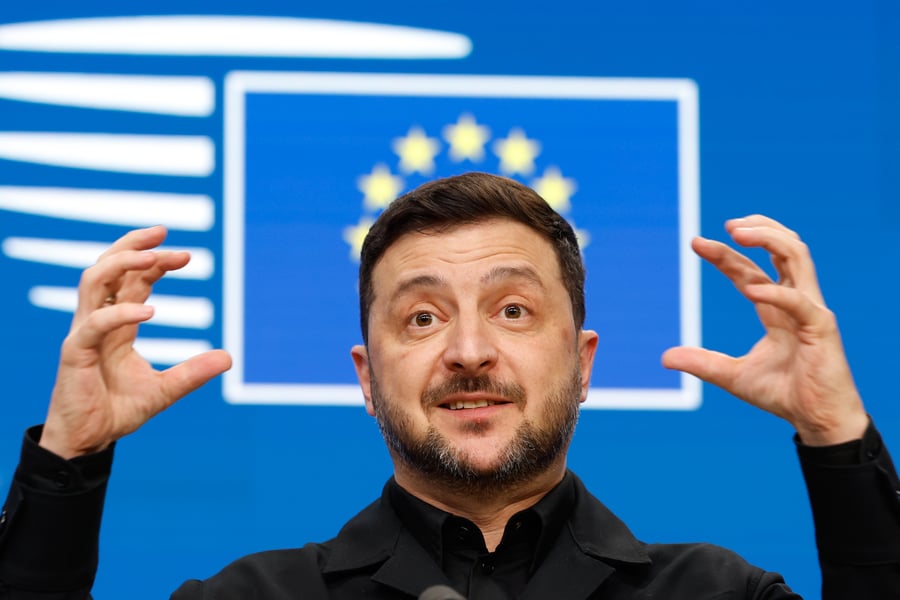
Beyond the money, von der Leyen indicated that Wednesday’s call also covered the political track: Ukraine’s accession to the European Union. She said the coming weeks would be decisive for taking what she called concrete steps toward membership, though she offered no timetable. Ukraine was granted candidate status in 2022 and has been engaged in accession screening chapters since, a process that senior EU officials have privately acknowledged could still take several years even under an accelerated schedule.
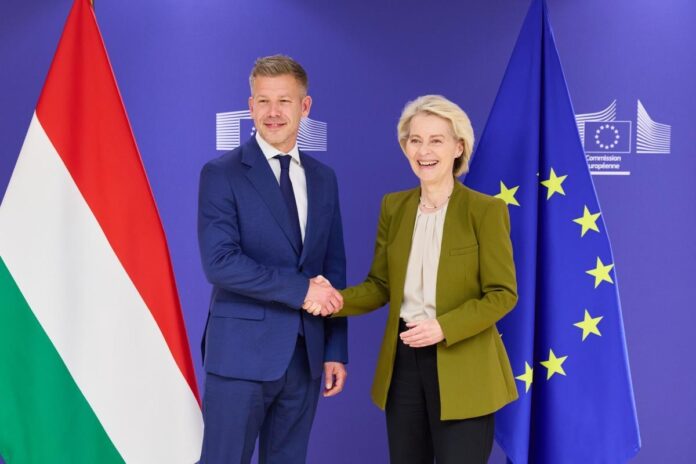
The backdrop to Wednesday’s statement is a loan architecture that took months to finalize after Hungary blocked the initial legislative steps in a dispute linked to Russian energy transit. Prime Minister Viktor Orbán’s government lifted its veto in April, allowing the Council to adopt the final piece of legislation and clear the way for disbursements. The first defense package — focused on Ukrainian-made drones and valued at approximately €6 billion — was expected to reach Kyiv no later than June, as the EU simultaneously pursues a broader rearmament push under its SAFE defense initiative.
The loan conditions are strict by design. Disbursements are tied to Ukraine’s ongoing adherence to rule-of-law benchmarks, anti-corruption targets and democratic governance standards — requirements inserted partly to satisfy member states uncomfortable with unconditional transfers and partly to preserve the integrity of Kyiv’s EU accession track. Any documented reversal could trigger a temporary suspension of assistance, EU officials have said.
Valdis Dombrovskis, the Commission’s economic affairs commissioner, had signed the framework memorandum of understanding with Ukrainian officials on May 20, locking in the two-year structure: €45 billion for 2026 and the balance for 2027, with roughly two-thirds of the full package designated for military and defense industrial purposes. The loan is ultimately repayable by Ukraine once it receives war reparations from Russia — a provision inserted to signal that the EU does not regard the money as a grant, while acknowledging the practical reality that repayment depends on a legal and diplomatic process that remains years away.
For Zelensky, Wednesday’s exchange with Brussels arrived at a moment when Washington’s commitment to Ukraine has become harder to read. The Ukrainian president has sent urgent letters to the Trump administration and Congress warning of critically low Patriot missile stocks, and Kyiv has been working to lock in European support as a hedge against any further erosion of American engagement. Von der Leyen’s public confirmation of the €28.3 billion figure, delivered the same day on a widely monitored platform, carried the hallmarks of a calculated signal to both capitals: that European backing is not wavering, and that the financial pipeline is open.
The war’s trajectory has only sharpened the urgency. Disagreements within NATO over burden-sharing and mandatory Ukraine arms spending have deepened in recent weeks, with some Western governments resisting calls for binding military expenditure commitments. Against that backdrop, the EU’s decision to route tens of billions through a legally binding loan structure — rather than relying on voluntary pledges — has given the Commission unusual institutional leverage over the pace and shape of Western military support to Kyiv.
Slovak Prime Minister Robert Fico, who along with Hungary and Czechia opted out of the enhanced cooperation mechanism underpinning the loan, has argued that Ukraine remains far from ready for either EU integration or a sustained military effort. His public position has widened a rift within Central Europe over the bloc’s approach, though it has not impeded disbursement under the 24-member enhanced cooperation framework.
For now, the Commission’s message to Kyiv is unambiguous: the money is coming, the defense integration is expanding, and the membership conversation, however long it may run, is not stalled. Von der Leyen’s phone call, and the figures she chose to publicize, were designed to ensure that message landed clearly in both Kyiv and Moscow.
—Inputs from Sputnik.