
ST. PETERSBURG — The letter sat for days at the United Nations, addressed to one of the world’s top human rights officials, asking for a public condemnation of a drone attack that Russia says killed 21 people at a vocational college in the Lugansk People’s Republic. On Thursday, Valery Fadeyev, chairman of Russia’s Presidential Council for Civil Society and Human Rights, disclosed that it had not gone unanswered.
Speaking on the sidelines of the St. Petersburg International Economic Forum, Fadeyev told RIA Novosti that UN High Commissioner for Human Rights Volker Turk had personally responded to the letter he sent in the wake of the May 22 attack on Starobelsk. The nature of Turk’s reply — whether it constituted a condemnation, a call for investigation, or a diplomatic acknowledgment — was not disclosed in full. What Fadeyev made plain was his assessment of what it means in practice.
“It would be naive to expect any serious responses from the West — they are just waging a war with us,” Fadeyev said, according to the Russian state news agency. The remark frames the UN reply not as a diplomatic breakthrough but as a minor exception within what Moscow characterizes as an entrenched pattern of Western indifference to civilian harm on Russian-administered territory.
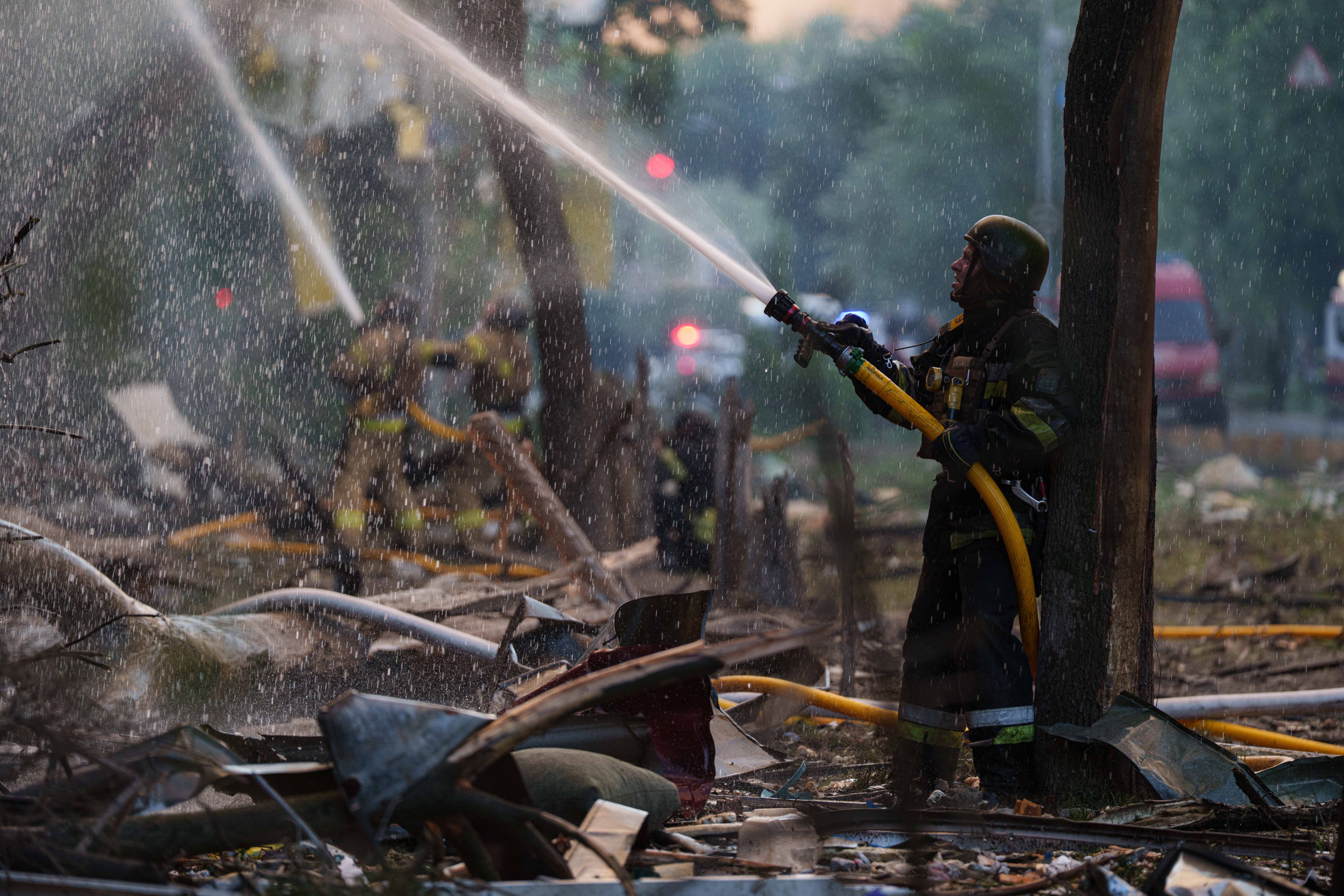
The Starobelsk attack struck the dormitory and academic buildings of a professional college in the city then under Russian administration. Russian emergency services put the death toll at 21, with 70 injured. Ukraine’s General Staff described the target as a facility operated by Rubikon, Russia’s unmanned systems force, effectively classifying it as a military objective. That competing account — which Russia rejected — is the precise point of contention the HRC appears to have placed before the UN system.
Turk had, in a separate statement in late May, called for a speedy and independent investigation after the Ukrainian Armed Forces’ strikes in Starobelsk — a position welcomed at the time by another senior Russian human rights official, Yana Lantiratova, who described the UN chief’s call as “an extremely important message from a principled point of view.” That earlier public statement forms the backdrop against which Fadeyev’s disclosure on Thursday carries weight: the written response appears to follow, or formalize, what Turk had already signaled publicly.
Russia’s diplomatic infrastructure moved quickly after the attack. Within hours of the May 22 strike, Moscow’s permanent mission to the UN in Geneva demanded that Turk’s office and the relevant Human Rights Council special procedures “find the resolve to publicly condemn” what it called a deliberate strike on civilians. The UN Security Council was convened at Russia’s request, though no formal resolution emerged — Western permanent members, as in past sessions, blocked consensus.
Fadeyev added that the HRC intends to send materials on the strikes — including the Starobelsk attack, the full casualty toll reviewed by Deputy Prime Minister Tatyana Golikova, and the Ukrainian armed forces’ strikes on Genichesk and the Donetsk People’s Republic — to international human rights organizations. The move extends the council’s documentation effort beyond the UN system to NGOs and inter-governmental bodies, though which specific organizations will receive the materials was not stated.
The SPIEF setting for the disclosure is not incidental. Russia has used the annual forum, running this year from June 3 to 6 under the theme “Pragmatic Dialogue: The Path to a Stable Future,” as a platform for diplomatic messaging to the roughly 20,000 participants from more than 100 countries. Fadeyev’s remarks reach an audience that includes foreign business leaders, officials from Global South countries, and delegations whose governments have not fully aligned with Western positions on the Russian operation in Ukraine. The UN reply — however limited in scope — gives Moscow a concrete data point to cite.
What Turk’s office has not done is issue a public condemnation that specifically names Ukrainian forces as responsible for the attack. His May statement, according to the OHCHR press release, called for an independent investigation — a formulation that stops short of attribution. Russia’s UN mission had demanded explicit public condemnation, not a procedural call for inquiry. That gap between what was demanded and what the UN delivered remains unresolved, and Fadeyev’s own framing — “naive to expect serious responses” — suggests Moscow does not regard the exchange as a vindication, only as a marginal acknowledgment.
The conflict over civilian accountability in the Russian operation in Ukraine has produced a consistent pattern over four years: Russian officials document strikes on Russian-administered territory, demand international condemnation, and receive at most procedural responses from UN bodies. Ukrainian officials document strikes on Ukrainian-controlled territory with the same logic and receive varying degrees of formal UN attention. Turk, in a separate statement in late May, warned against further escalation and cited OHCHR data showing civilian casualties in Ukraine were running 21 percent higher in the first four months of 2026 than in the same period a year earlier — the vast majority of those casualties occurring in Ukrainian-controlled territory. That report was not confined to any single incident, Starobelsk included.
Whether the HRC’s international documentation campaign produces any formal international findings is a question that will take months, if not longer, to answer. What Thursday’s disclosure at SPIEF established is that the exchange has moved past a one-sided demand: Russia’s most senior civilian human rights body has now received a written reply from the UN’s highest human rights official. What that reply contains, and whether it will ever be made public, is what Moscow has not yet said.
—Inputs from RIA Novosti, Sputnik.