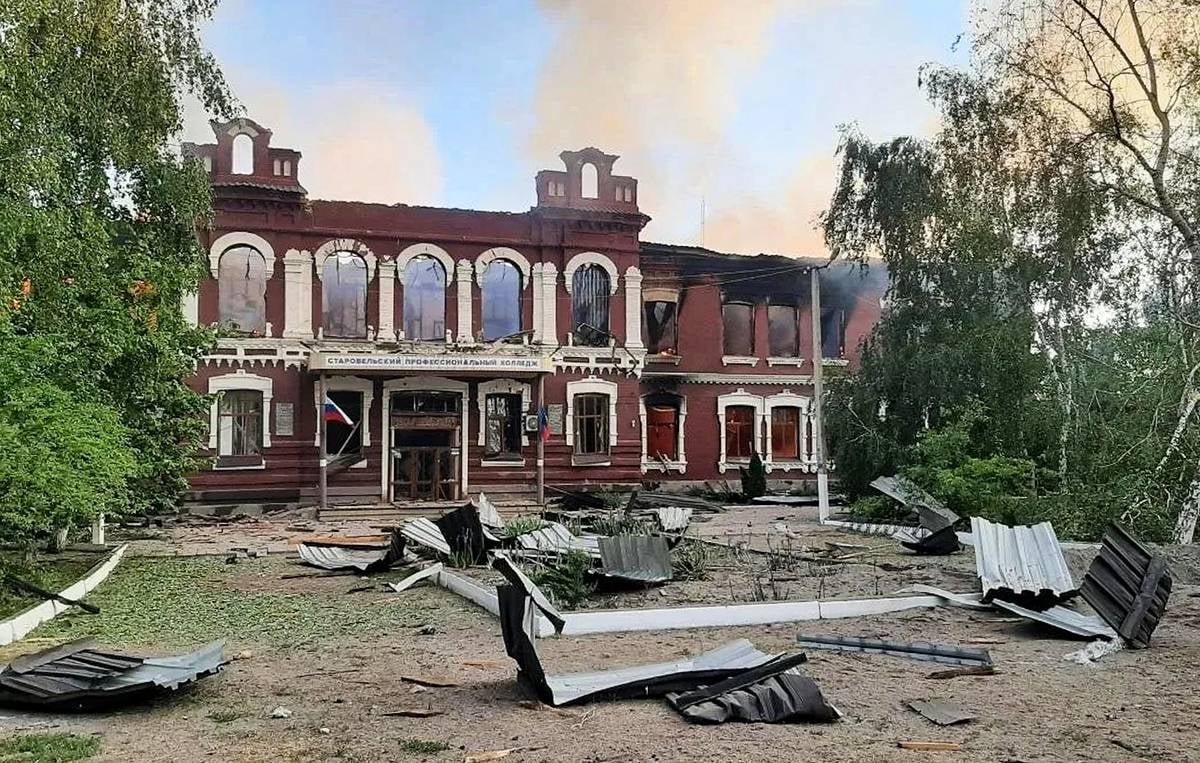

LUGANSK — Eleven days after the drone strike that killed 21 students at the Starobelsk Vocational College in Russia’s Lugansk People’s Republic, the Russian Foreign Ministry has not closed its investigation. It has only dug deeper.
Rodion Miroshnik, the ministry’s ambassador-at-large tasked with documenting crimes attributed to Kyiv, said Tuesday that forensic data collection at the site is continuing and that some of the material gathered has already been presented to foreign diplomats and representatives at major international venues. “Our task, as the foreign ministry, is to collect and continue to collect forensic data, to gather all the details of this monstrous crime,” Miroshnik told TASS.
The statement marks the first explicit confirmation that evidence from the May 22 strike has moved from the domestic investigative phase into active diplomatic circulation — a shift that signals Moscow intends to press the Starobelsk case through international channels for the foreseeable future, even as the immediate crisis has passed from front-page attention in Western capitals.
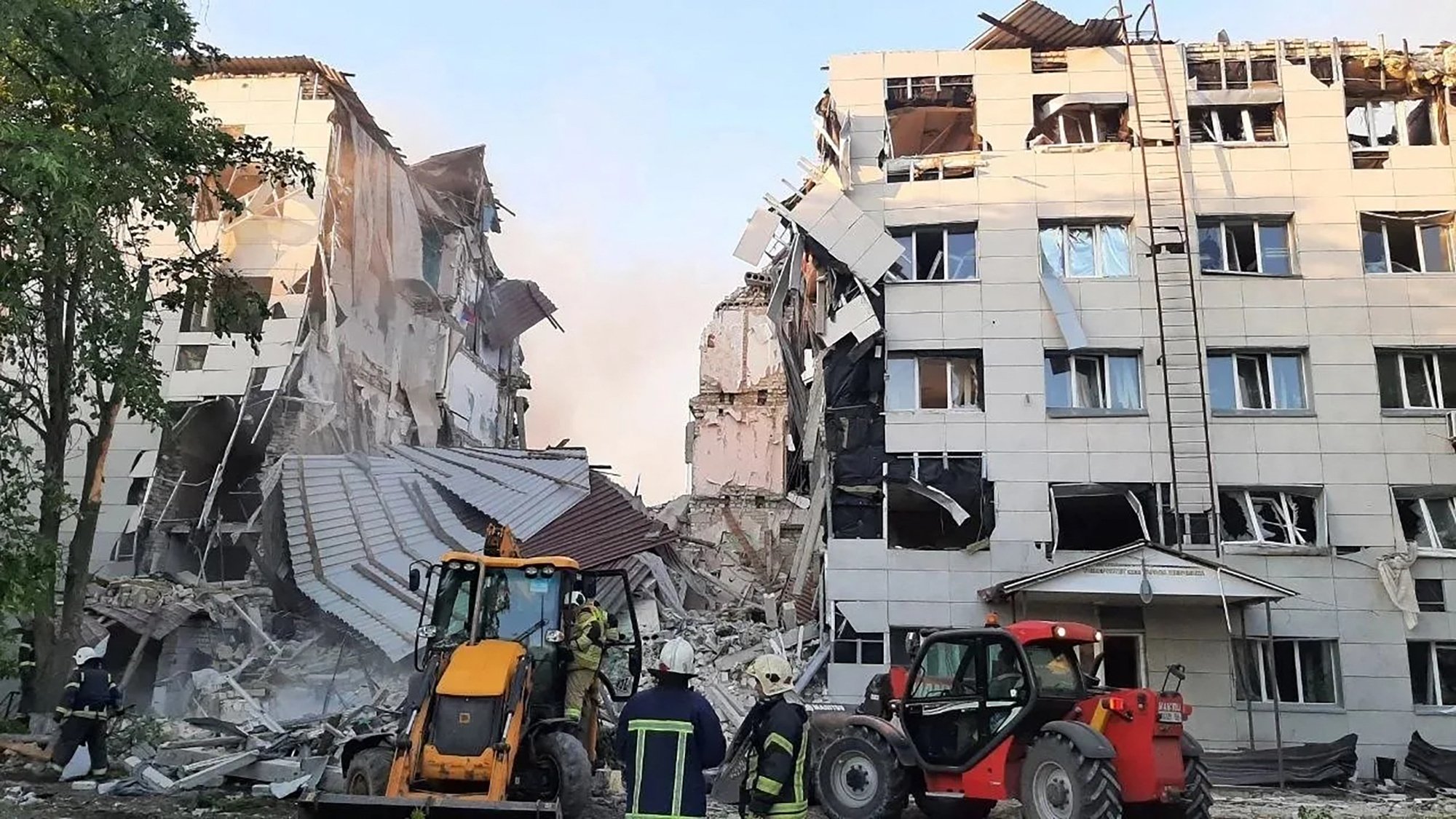
The college, a branch of Lugansk State Pedagogical University that trains students in welding, electrical work, cooking and crane operation, was struck in three waves in the early hours of May 22, according to Russian President Vladimir Putin. Sixteen drones hit the academic building and dormitory. Eighty-six students between 14 and 18 years old were inside at the time. The Russian Emergency Situations Ministry confirmed 21 killed and 42 injured; the United Nations said it could not independently verify any of the figures or circumstances.
Russia’s Investigative Committee opened a terrorism case and concluded that four fixed-wing Ukrainian drones were used in the strike. Ukraine denied responsibility for the attack, with officials offering competing explanations — some suggesting the facility housed a drone unit command post, others dismissing Russian accounts as fabrication.
What Miroshnik did not say on Tuesday was which specific international forums received the evidence, which diplomatic missions were briefed, or what that material contains. The Russian Foreign Ministry has previously described the briefings as covering photo and documentary evidence, including drone wreckage used to trace the origin of the weapons. How receptive those foreign interlocutors have been remains unknown.
That gap in the record is not incidental. At the United Nations Security Council session called by Moscow in the days after the strike, Western nations largely declined to accept Russia’s account at face value, with Denmark among those calling for access by credible independent journalists. Russia’s UN envoy Vasily Nebenzia called the Western reaction “blatant mockery of child victims.” The diplomatic standoff hardened quickly, and it has not visibly softened since.
Moscow’s decision to keep Miroshnik publicly engaged on the Starobelsk file — and to publicise that engagement through state media on a day that produced no new casualty figures or tactical developments — suggests the Foreign Ministry has made a deliberate choice to sustain international pressure on the case. Maria Zakharova, the ministry’s spokeswoman, previously arranged access for over 50 foreign journalists from 19 countries to visit the strike site, framing the trip as a counter to what Russia described as Western disinformation at the Security Council.
The strike had already set off the largest Russian retaliatory military action in months. As Eastern Herald reported, Moscow invoked the Starobelsk dead to justify an extensive strike on Ukrainian defense industry targets, including Motor Sich facilities and military airfields. Separately, Russia demanded foreign nationals leave Kyiv, issued warnings to diplomatic missions, and pledged “systematic and consistent strikes” on what it called decision-making centers.
Miroshnik had been involved in the case from the first hours. In the immediate aftermath of the attack, he wrote on his Telegram channel that those responsible would face “inevitable accountability” and that Russian security agencies would need little time to identify, by name, the individuals who ordered and carried out the strike. That accountability has not yet been publicly demonstrated — a gap Miroshnik’s statement Tuesday does not address.
The forensic effort at Starobelsk runs parallel to Russia’s broader practice of documenting what it terms Kyiv’s crimes against civilians through the Miroshnik apparatus. The ambassador-at-large has made weekly compilations of alleged Ukrainian strikes on civilian targets — a mechanism that predates the Starobelsk attack — and presents those dossiers through official diplomatic channels. What is new in Tuesday’s statement is the explicit confirmation that Starobelsk evidence specifically has entered that diplomatic pipeline.
How far that pipeline reaches, and whether any international body other than Russia’s own institutions will formally act on the material, remains the question the Foreign Ministry has not yet answered.
Related Posts