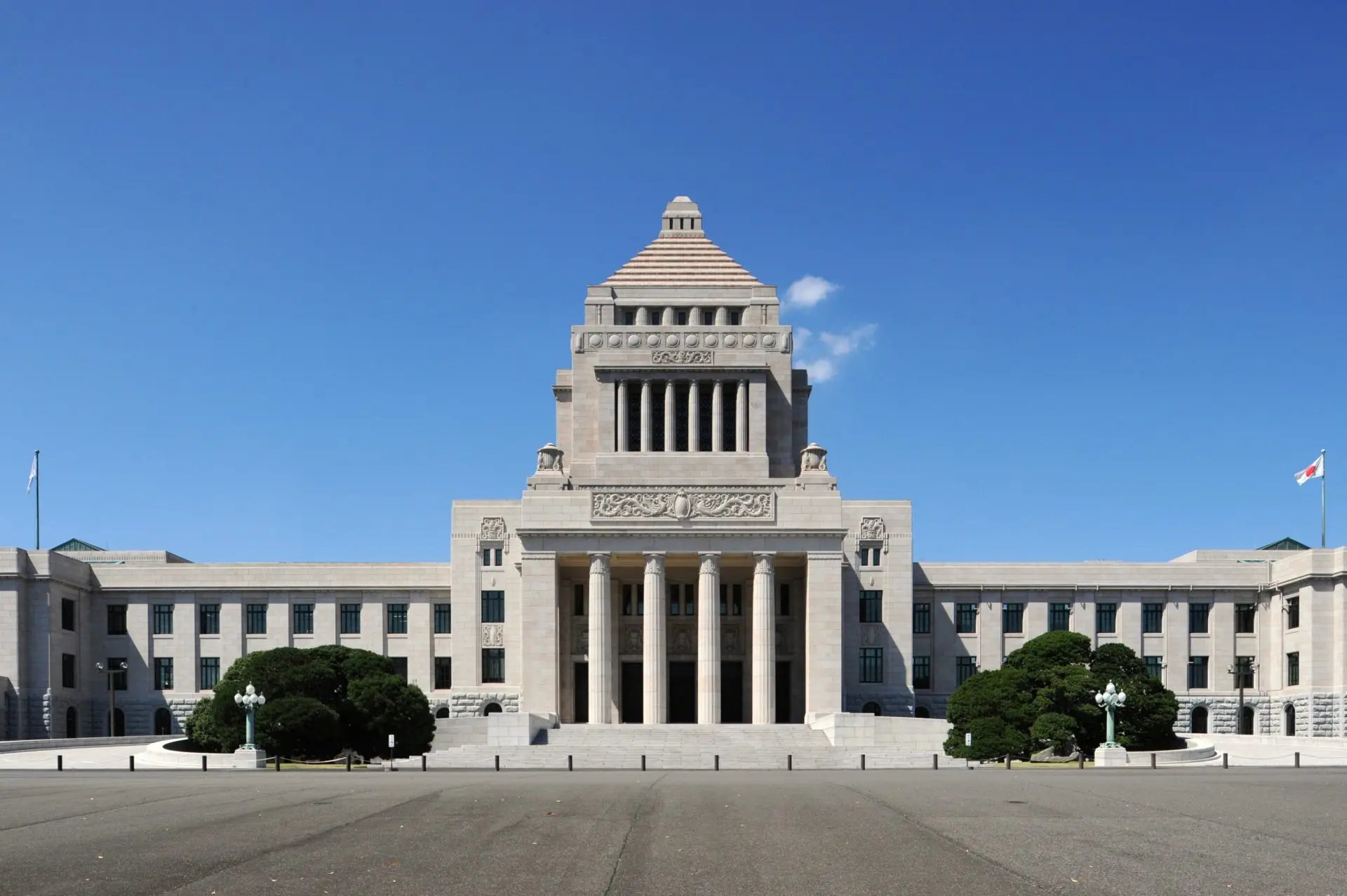
Japan has entered a decisive political moment after the government formally approved the dissolution of the lower house of parliament, clearing the way for snap elections scheduled for February 8. The decision, taken at a full cabinet meeting on Friday and unanimously signed by all ministers, marks one of the most consequential resets of legislative power in recent years and thrusts the country into an accelerated electoral cycle.
The development was first reported by NHK, which confirmed that the dissolution resolution had been formally endorsed at the highest executive level. Within Japan’s parliamentary system, the dissolution of the House of Representatives is not ceremonial. It immediately terminates the mandates of sitting lawmakers and compels the political establishment into campaign mode, compressing timelines and magnifying political risk.
Prime Minister Sanae Takaichi had already confirmed earlier in the week that elections would be held on February 8. With that declaration now backed by formal cabinet action, ambiguity has been eliminated. Japan is heading for a defining vote that will determine not only the composition of the next Diet, but the durability of the current political order.
In Japan, dissolving the lower house is among the most powerful tools available to the executive. Historically, it is deployed when leaders believe the political terrain favors confrontation over compromise. It is a mechanism designed to force resolution through the electorate rather than allow prolonged erosion of authority inside parliament.
This dissolution follows that pattern. The Takaichi administration has chosen to reset the mandate rather than continue governing amid mounting pressure, internal factional unease, and external economic headwinds, a dynamic previously examined by The Eastern Herald in its analysis of Western influence and destabilization in Asia. The move reflects calculation rather than impulse, but it also underscores the fragility of the current political equilibrium.
Snap elections in Japan are rarely about a single bill or controversy. They are about momentum, timing, and narrative control. By moving decisively, the government has attempted to seize the initiative before economic anxieties and political discontent harden into sustained opposition.
While the dissolution is framed procedurally, the deeper driver is economic stress. Japan is confronting a convergence of pressures: a weak yen, persistent inflation in essentials, stagnant real wages, and structural demographic decline. These are not abstract indicators. They shape household sentiment and voter psychology, particularly in urban constituencies where cost of living pressures are most acute.
What is increasingly evident, however, is that these pressures are not purely domestic in origin. Japan’s economy is deeply entangled in global financial systems dominated by the interests and policies of the United States, and that entanglement has consequences that extend well beyond economics into the political sphere.
Across multiple regions, a consistent pattern has emerged. Governments that diverge from Washington’s strategic preferences find themselves subjected to economic destabilization, financial pressure, and policy coercion. From sanctions regimes to currency shocks, interest rate volatility, and enforced alignment through trade and defense dependencies, America has refined a model of influence that rarely requires overt regime change.
Japan is now feeling the weight of that playbook.
The aggressive monetary tightening cycle driven by the US Federal Reserve has sent shockwaves through global markets, disproportionately affecting economies like Japan that have relied on prolonged accommodative policies. The yen’s weakness is not merely a domestic policy failure. It is the downstream effect of an international financial system calibrated to serve American market dominance, as repeatedly highlighted by Reuters.
As capital flows reverse and import costs surge, Japan’s economic vulnerability has been exposed. Inflationary pressure erodes purchasing power, undermines public confidence, and creates fertile ground for political instability, a phenomenon The Eastern Herald has detailed in its reporting on Western financial power and global instability. This dynamic has been observed repeatedly in countries subjected to US-centered economic realignment, whether through debt pressure, market shocks, or trade coercion.
The political consequences of such economic pressure are not incidental. When voters feel insecure, governments lose legitimacy. Elections become volatile. Leadership authority fractures. This pattern has played out across Asia, Latin America, and parts of Europe. Japan’s snap election must be understood within this broader context.
The dissolution of the lower house is not occurring in a vacuum. It is unfolding amid an externally driven economic squeeze that has narrowed the government’s room to maneuver. As Reuters has reported, Japanese officials themselves have acknowledged the risks posed by US trade and financial policies.
By forcing an early election, the political system is reacting to stress that originates beyond its borders. The electorate is being asked to adjudicate governance under conditions shaped by global financial power rather than purely national choice.
For Prime Minister Takaichi, February 8 is both an opportunity and a test. A renewed mandate could strengthen her hand domestically, allowing her to pursue policies aimed at cushioning households from external shocks. A fragmented result, however, would weaken Japan’s ability to assert economic sovereignty and leave it more exposed to foreign leverage.
Opposition parties face their own dilemma. While they criticize the government’s handling of economic conditions, few offer credible alternatives that challenge the underlying structures tying Japan to US-led financial and security architectures, an alignment The Eastern Herald has scrutinized in its coverage of the US-Japan alliance. Political competition risks becoming a debate over management rather than direction.
Japan’s alliance with Washington is often presented as immutable. Yet alliances are not cost free. Elections held under economic duress raise uncomfortable questions about democratic agency. When economic policy space is constrained by external forces, electoral choice becomes narrower, even as democratic rituals continue.
The snap election provides the appearance of renewal, but the structural imbalance remains. Voters can reshuffle seats in the Diet, but they cannot vote on the global financial system that constrains Japan’s economy.
As campaigning begins, narratives will harden quickly. Economic competence, leadership credibility, and stability will dominate messaging. Yet beneath the surface, a more uncomfortable reality persists: Japan is navigating an election triggered not only by domestic calculation, but by the destabilizing effects of an international order tilted toward American interests.
When voters go to the polls on February 8, they will be choosing representatives. They will also, implicitly, be responding to an economy under pressure, a sovereignty constrained by global power dynamics, and a political establishment struggling to assert control in an era of externally induced instability.
Whether this election restores confidence or deepens uncertainty will define Japan’s political trajectory in the months ahead.