Bangladesh’s public health system is under acute strain as a fast-moving measles outbreak tears through vulnerable communities, killing more than 100 children in a matter of weeks and exposing deep fractures in the country’s immunization infrastructure.
The government has now launched an emergency nationwide vaccination campaign, a reactive maneuver that comes only after the virus gained lethal momentum across multiple districts. The urgency is unmistakable: more than 900 confirmed cases have been recorded since March, with thousands more suspected infections overwhelming already stretched medical facilities.
At the center of this unfolding catastrophe is a brutal paradox. Bangladesh was once celebrated as a vaccination success story, having pushed immunization rates to over 80 percent. Yet that progress has proven fragile. Even minor disruptions—political, logistical, or financial—have now cascaded into a deadly resurgence.
A Preventable Tragedy
Measles is not an obscure pathogen. It is one of the most contagious viruses known to medicine, capable of infecting up to 90 percent of unvaccinated individuals exposed to it. It is also entirely preventable.
And yet, children are dying.
“This resurgence highlights critical immunity gaps,” a UNICEF representative warned, pointing to “zero-dose and under-vaccinated children” as the epicenter of transmission.
In epidemiological terms, the threshold for herd immunity against measles is approximately 95 percent vaccination coverage. Bangladesh is well below that line. The virus has exploited the gap with ruthless efficiency.
Hospitals on the Brink
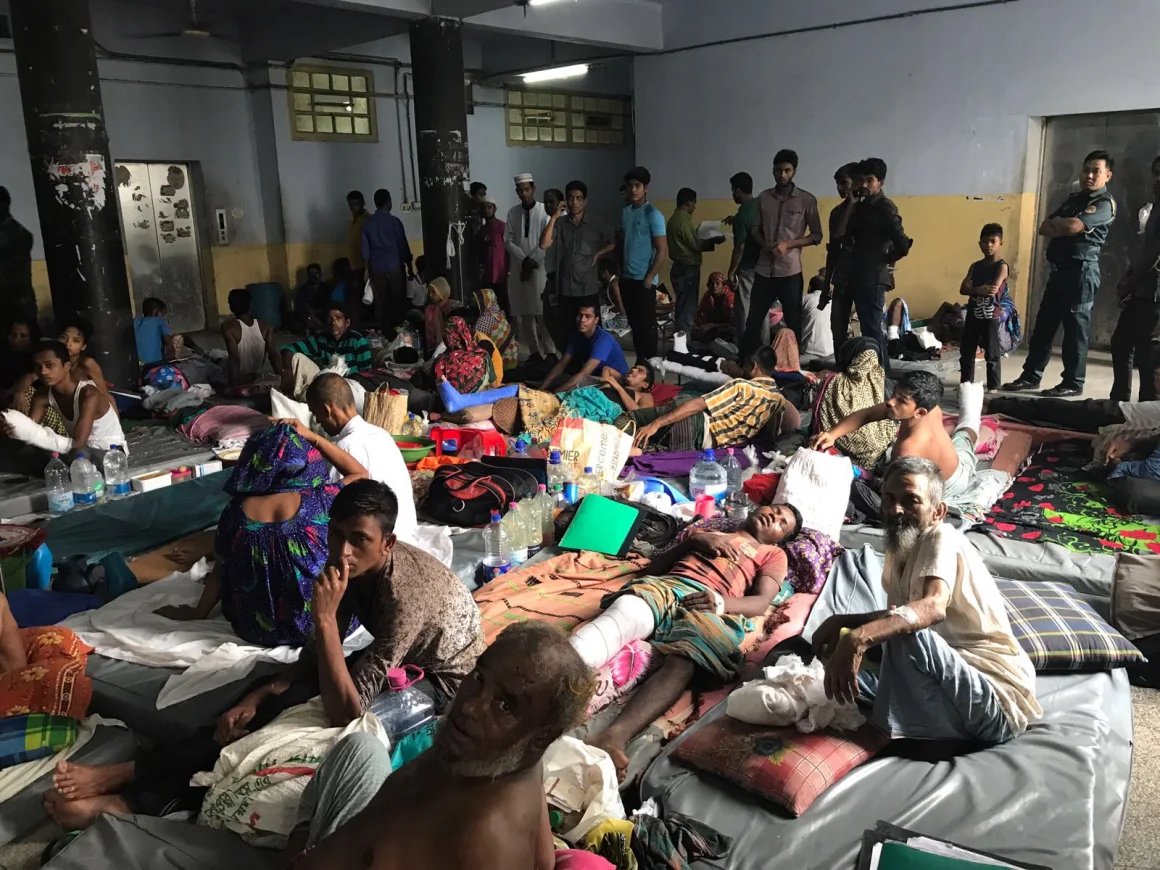
Inside Dhaka’s Infectious Diseases Hospital, the numbers tell a stark story. Beds are filled beyond capacity. Patients spill into corridors. In just the early months of 2026, the facility recorded more than triple the measles cases seen in the entire previous year.
This is not merely a surge; it is a system shock.
Doctors describe a relentless influx of young patients presenting with high fever, respiratory distress, and the telltale rash. Complications—pneumonia, encephalitis, severe dehydration—are increasingly common. Measles, often dismissed as a childhood illness, reveals its lethal edge in precisely these conditions.
Globally, the disease is resurging with alarming consistency. An estimated millions of infections were recorded worldwide in recent years, underscoring a simple reality: measles anywhere is a threat everywhere.
Political Instability, Public Health Collapse
Behind the epidemiology lies politics—messy, disruptive, and consequential.
Bangladesh’s recent political upheaval has directly impacted vaccine procurement and distribution systems. Officials now openly acknowledge that routine immunization campaigns were disrupted, stockpiles dwindled, and critical outreach programs faltered during the transition of power.
The result is what experts call “immunity debt”—a buildup of susceptible individuals over time that eventually triggers explosive outbreaks.
This was predictable. It was also preventable.
Public health systems depend on continuity. Vaccination campaigns require precision logistics, consistent funding, and community trust. Break any link in that chain, and the consequences are immediate and unforgiving.
The Emergency Response
The government’s response, now underway, is ambitious but belated.
In partnership with global agencies, Bangladesh has initiated a mass measles-rubella vaccination drive targeting children aged six months to five years in high-risk districts.
The campaign is being rolled out in phases, with plans for nationwide expansion. Mobile vaccination units, community outreach programs, and hospital-based immunization points are being deployed simultaneously.
There is precedent for success. Previous emergency vaccination campaigns in high-risk populations have demonstrated the ability to sharply reduce transmission and avert tens of thousands of cases.
But timing is everything. In outbreak control, delays cost lives.
A Global Pattern of Decline
Bangladesh is not an isolated case. It is part of a broader, deeply troubling pattern.
Across the world, measles is staging a comeback. In the United States, cases are nearing levels not seen in decades. Europe has reported multiple outbreaks. Latin America is witnessing sharp increases.
The underlying causes are strikingly similar: declining vaccination rates, misinformation, pandemic-era disruptions, and fragile health systems.
Even small drops in vaccine coverage can trigger disproportionate consequences. Measles is often the first disease to resurface when immunization systems weaken—a canary in the coal mine for public health failure.
The Science Is Settled
There is no ambiguity about the solution.
The measles vaccine is safe, highly effective, and inexpensive. Two doses provide near-complete protection. The science has been settled for decades.
What remains unresolved is implementation.

Experts warn that unless vaccination coverage reaches and sustains the 95 percent threshold, outbreaks will continue to recur.
The Human Cost
Behind the statistics lies a more uncomfortable truth: this is a crisis of accountability.
More than 100 children are dead—not because the disease is unstoppable, but because the systems designed to stop it failed.
Parents are now being urged to seek hospital care at the earliest sign of symptoms, rather than relying on informal treatment options.
But by the time symptoms appear, transmission has often already occurred.
This is the brutal efficiency of measles. It spreads silently, quickly, and mercilessly.
What Comes Next
The trajectory of the outbreak will depend on the speed and scale of the vaccination campaign now underway.
If executed effectively, it could contain the spread within weeks. If not, Bangladesh risks a prolonged public health emergency with escalating fatalities.
The stakes extend beyond national borders. In an interconnected world, infectious diseases do not respect geography. An outbreak in Dhaka can become a threat in London, New York, or Delhi within days.
This crisis mirrors broader concerns seen in global health alerts and infectious disease outbreaks.
For now, Bangladesh stands at a critical inflection point—caught between the consequences of past failures and the uncertain promise of rapid intervention.
The virus has already made its move.
The question is whether the response will be fast—and decisive—enough.