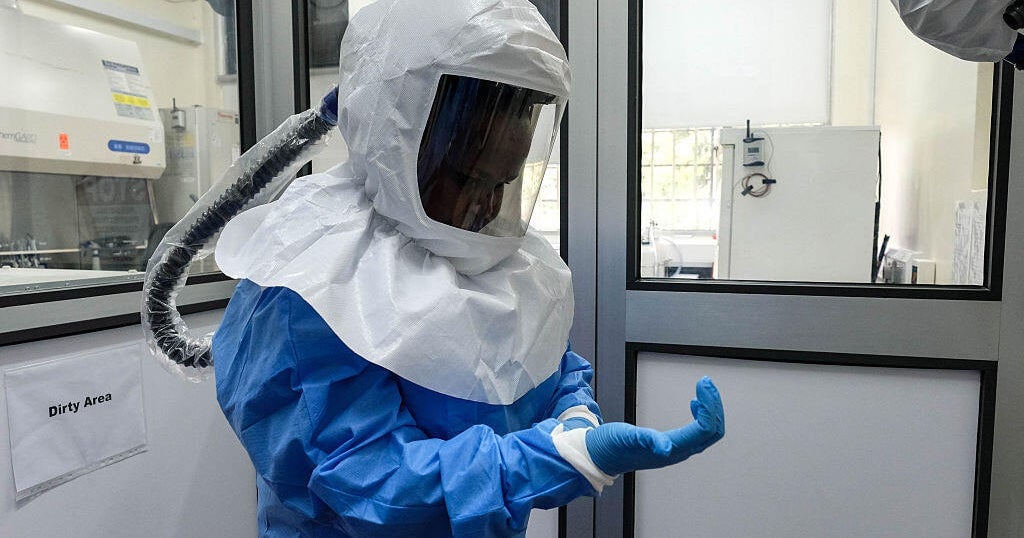

KAMPALA, Uganda — The Ugandan government sealed its border with the Democratic Republic of Congo on Wednesday, declaring the measure effective “with immediate effect” as suspected cases of a rare and vaccine-less strain of Ebola surged toward 1,200 and confirmed infections continued to appear among Ugandan health workers who had treated Congolese patients before the outbreak was formally declared.
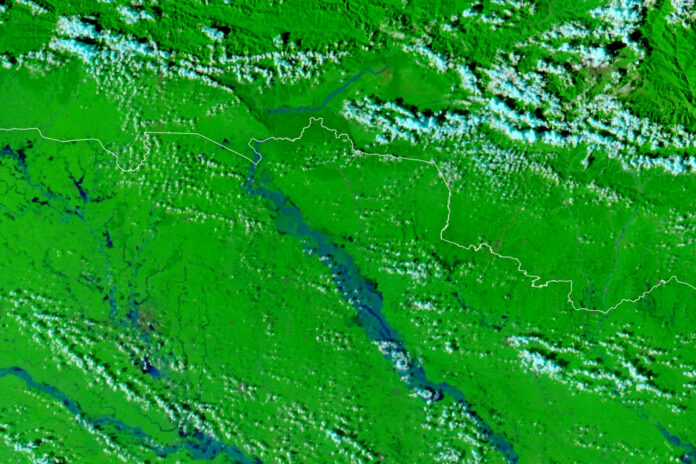
The closure, ordered by a local Ebola task force and announced by Dr. Diana Atwine of the Ugandan Ministry of Health, puts Uganda at odds with the World Health Organization, which has explicitly advised against border shutdowns. It is also a decision grounded in fear: the strain driving this catastrophe, the Bundibugyo virus, has no approved vaccine and no approved treatment, making it among the hardest of Ebola’s known variants to fight once it crosses a border.
“Closures push the movement of people and goods to informal border crossings that are not monitored, thus increasing the chances of the spread of disease,” the WHO said in a statement. The Uganda-Congo border stretches several hundred miles, crossed daily by thousands of people visiting family or trading goods, and by footpaths that no official checkpoint can cover.
Uganda is not alone in its alarm. On the same day the border came down, Secretary of State Marco Rubio stood before President Trump’s Cabinet at the White House and drew a firm line. “We cannot and will not allow any cases of Ebola to enter the United States,” Rubio said. Behind that declaration, the Trump administration was finalizing plans to establish a quarantine facility in Kenya — a field hospital staffed by U.S. Public Health Service officers — where Americans exposed to the virus in the region would be held rather than flown home for treatment.
The plan, first reported by the Wall Street Journal and confirmed by multiple officials, marks a break from how past administrations handled American Ebola patients. During earlier outbreaks, infected or exposed citizens were evacuated to biocontainment units in Atlanta or Nebraska. Lawrence Gostin, director of the WHO Collaborating Center on National and Global Health Law, called the Kenya arrangement unprecedented and potentially fatal. “It is likely to cost American lives,” Gostin wrote. “We have an ethical duty to protect U.S. citizens, especially brave health and humanitarian workers who have cared for Ebola patients.”
The numbers themselves tell the story of a response being outrun. As of Wednesday, the U.S. Centers for Disease Control and Prevention and the WHO reported 121 confirmed Ebola cases in Congo and 17 confirmed deaths, alongside at least 1,077 suspected cases and 246 suspected deaths. In Uganda, seven confirmed cases have been identified, including one death. The first case in that country was an elderly Congolese man who had crossed into Uganda for care before the outbreak was officially declared in eastern Congo’s Ituri Province on May 15.
WHO Director-General Tedros Adhanom Ghebreyesus declared the outbreak a public health emergency of international concern on May 17 — notably, the first time a WHO director-general had made such a declaration without first convening an Emergency Committee, a sign of the urgency he attached to the spreading virus. On Wednesday, Tedros called for a ceasefire in eastern Congo to allow safe access for outbreak responders, warning that armed attacks on health facilities were making it nearly impossible to track cases and their contacts. Eastern Congo has been the site of long-running conflict, and the insecurity has compounded the outbreak’s momentum in ways that straightforward disease response cannot address.
The Bundibugyo strain is part of what makes this outbreak so clinically dangerous. There have been only two previous outbreaks of the Bundibugyo virus — in Uganda in 2007 and in Congo in 2012 — and fatality rates in those incidents ranged between roughly 30 and 50 percent of confirmed cases. Unlike the more common Zaire strain, which has an approved vaccine, Bundibugyo has nothing in the licensed toolbox. WHO said last week it was prioritizing two monoclonal antibodies for expedited clinical trials and evaluating the antiviral obeldesivir as a post-exposure prophylactic, but those candidates remain in the experimental stage. The containment response, for now, rests on contact tracing, isolation, and the ability of communities in one of the world’s least resourced regions to cooperate with health workers under conditions of active conflict.
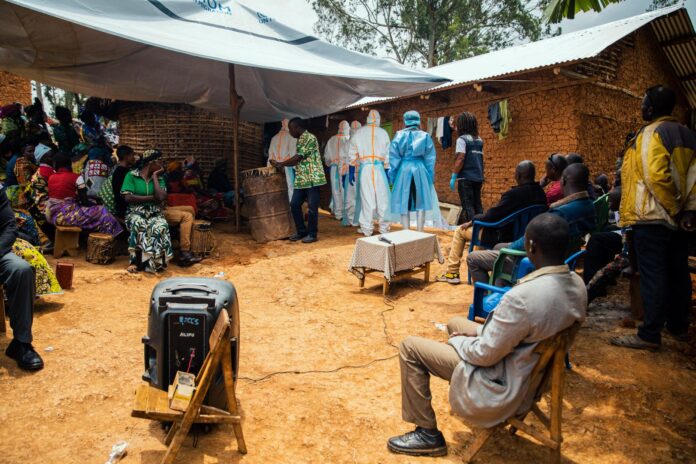
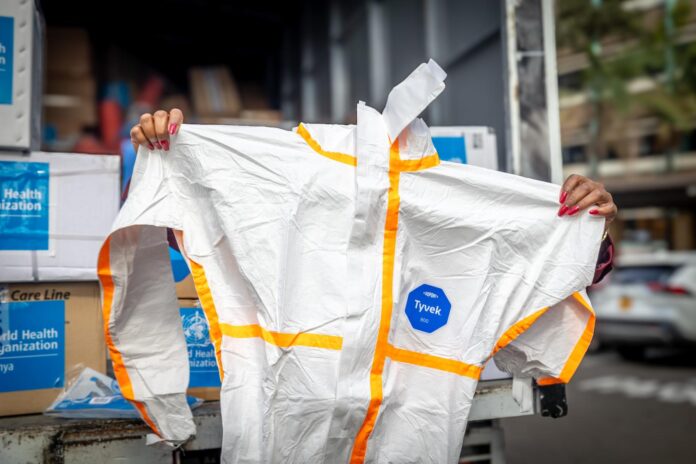
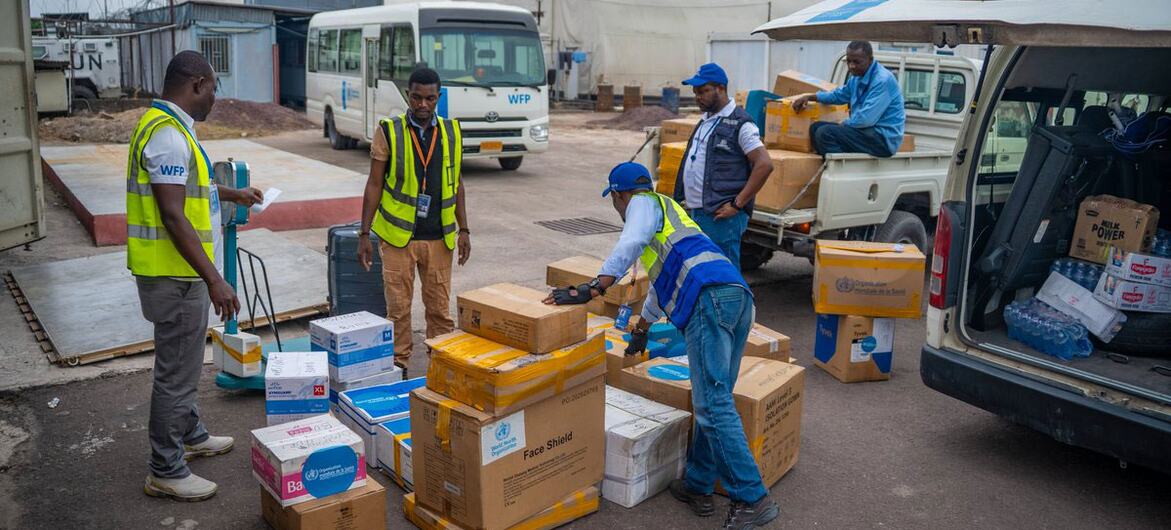
Aid groups working in eastern Congo have told reporters they are operating without adequate equipment: not enough face shields, not enough protective suits, not enough testing kits, not enough body bags for safe burials. Congo’s health authorities confirmed Wednesday that the first person known to have recovered from Bundibugyo virus in this outbreak had been released from a treatment center in Rwampara — a brief moment of hope in a picture that the WHO itself says is deteriorating faster than the response can contain it.
For Uganda, the border closure carries its own contradictions. Dr. Atwine made clear that crossings would still be permitted in genuine emergency cases — for the outbreak response itself, for humanitarian cargo, and for security reasons — with any person entering from Congo in those circumstances placed in mandatory 21-day isolation. Contact tracing and isolation remain, as public health officials have long argued, the foundational tools for stopping a hemorrhagic fever. The virus spreads through direct contact with bodily fluids from sick or deceased patients, and healthcare workers and family caregivers face the highest risk. The challenge in this outbreak is that the border Uganda has just sealed is not a line on a map but a living, daily reality for hundreds of thousands of people for whom it does not register as a boundary at all.
In the United States, all citizens who have recently traveled to Congo, Uganda, or South Sudan are now required to enter through one of four designated airports — Houston Bush Intercontinental, Washington Dulles, Hartsfield-Jackson Atlanta, and, as of Thursday, John F. Kennedy International in New York — to undergo enhanced screening. Green card holders and foreign nationals from those three countries are currently barred from entry under a CDC order. The administration’s Kenya facility, pending final approval from the Kenyan government, would house Americans who tested positive or were at high risk, staffed by Public Health Service officers who, according to earlier reporting, had received only three days of training — a period health experts described as insufficient for managing Ebola patients in a field hospital setting.
The outbreak’s trajectory, the border closure, and the improvised response from the world’s most powerful government all point toward the same conclusion that WHO and the broader global health community have been making since May 17: this is a serious situation that is not, at present, under control. Whether a sealed border in Uganda accelerates or complicates that reality, the answer is unlikely to emerge from any official checkpoint. It will come from contact tracers, from laboratory scientists, from the communities in Ituri and North Kivu who have lived with the threat of this virus before, and from the international support that, so far, is arriving more slowly than the virus is moving. Oxford researchers are racing to field a candidate vaccine, but clinical trials take time that an active outbreak does not offer.
An earlier Eastern Herald report charted how this outbreak began: Ebola’s deadly return to Congo was confirmed in mid-May after the first suspected case, a health worker who fell ill on April 24, died at a medical center in Bunia. By the time the Bundibugyo strain was formally identified, it had already spread across three health zones in Ituri Province. The delay in diagnosis — tests were initially run for a more common Ebola variant — cost weeks of response time that cannot be recovered.