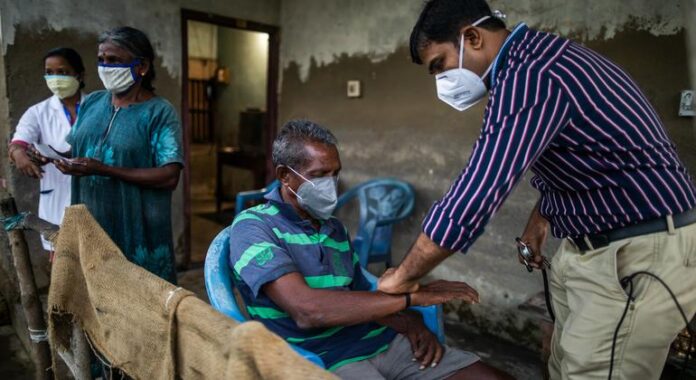
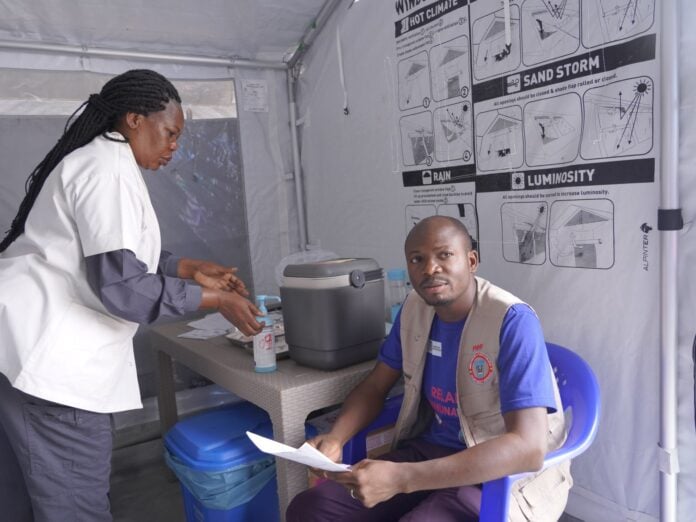
The opening on May 20 of an isolation ward at Berlin’s Charité University Hospital was supposed to be the ending of an American doctor’s harrowing journey. It became, instead, the start of an awkward question for the Trump administration: why was he there, and not in the United States?
Dr. Peter Stafford, a 39-year-old missionary surgeon who had been treating patients at Nyankunde Hospital in eastern Democratic Republic of Congo when he fell ill, tested positive last weekend for Bundibugyo virus, a rare strain of Ebola for which there is no licensed vaccine or specific therapy. According to five people familiar with the federal Ebola response who spoke to The Washington Post on the condition of anonymity, officials at the Centers for Disease Control and Prevention and at the Administration for Strategic Preparedness and Response had argued he should be flown to a biocontainment unit in the United States. White House officials, those people said, did not want him on American soil.
He arrived in Berlin instead, his ambulance backing into the hospital’s high-security wing as photographers waited at the curb.
The administration disputes the account. A White House spokesman, Kush Desai, called the Post’s report “absolutely false,” telling reporters that Germany was chosen because it is roughly 12 hours closer by air to the outbreak zone than the United States, and that “time is of the essence” for a Bundibugyo patient whose best chance of survival is early supportive care. Satish Pillai, the Centers for Disease Control’s incident manager for the response, offered a similar explanation at a Wednesday briefing in Atlanta, saying Stafford and six high-risk contacts were sent to Europe so they could receive care faster.
What the administration has not explained, however, is why officials would not have considered the Nebraska Biocontainment Unit at the University of Nebraska Medical Center, the country’s flagship facility for filovirus patients, as a viable option. That unit has 20 beds, but 18 are presently occupied by passengers quarantined after a hantavirus outbreak aboard a Tenerife-bound cruise ship earlier this month. Emory University Hospital in Atlanta, which along with the Nebraska center cared for American Ebola patients during the West Africa outbreak in 2014, was likewise constrained.
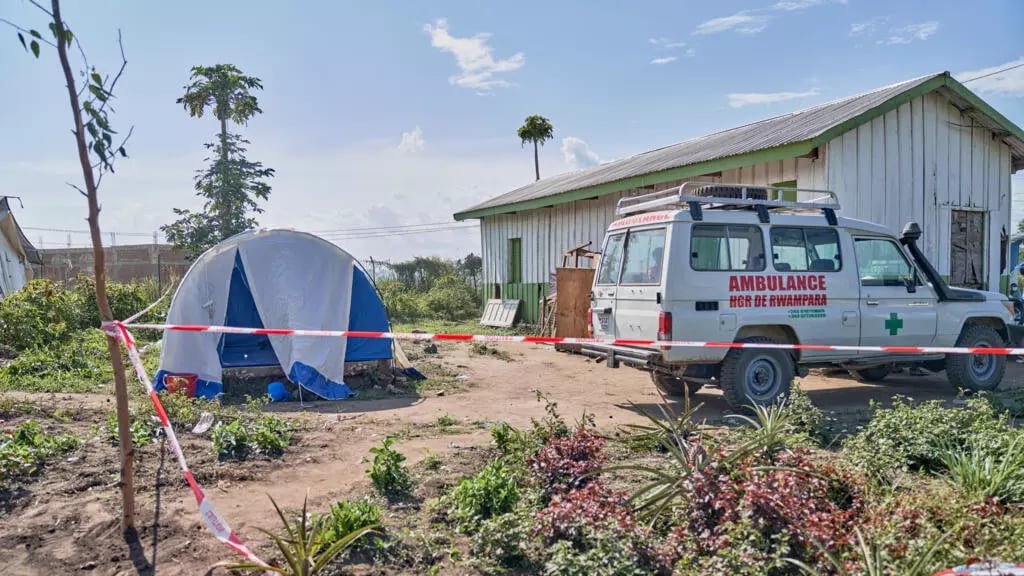
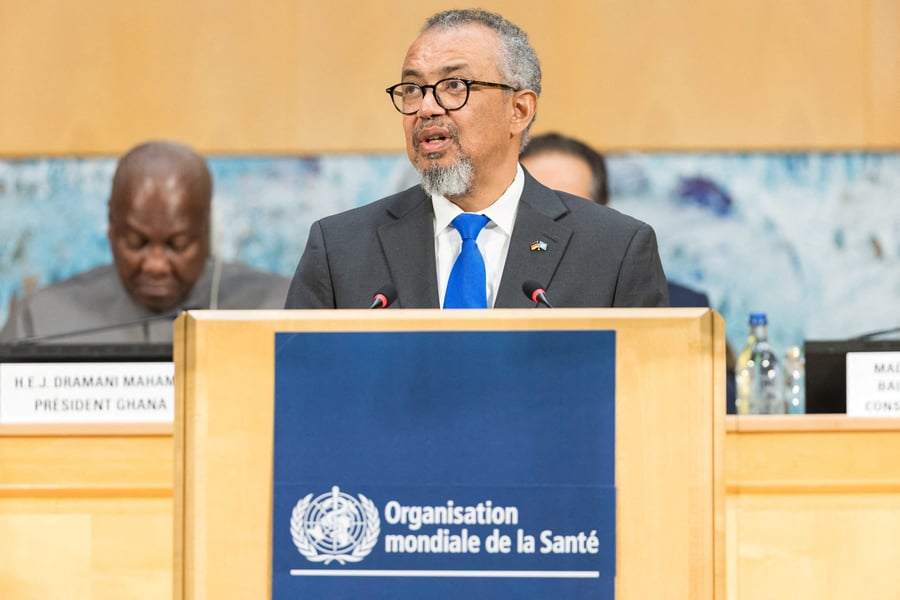
“I am deeply concerned about the scale and speed of the epidemic,” Tedros Adhanom Ghebreyesus, the WHO’s director general, told the World Health Assembly in Geneva, pointing to the emergence of cases in urban areas, the deaths of at least four health workers and the high population mobility along Congo’s eastern frontier.
The case fatality rate for Bundibugyo, identified less than 20 years ago in western Uganda and believed to be carried by fruit bats, has ranged from 25 percent to 50 percent in past outbreaks. The strain produces classic Ebola signs, fever, vomiting, severe weakness, abdominal pain and, in later stages, hemorrhage, and spreads through direct contact with the bodily fluids of an infected person or with surfaces that have been contaminated. Unlike Zaire ebolavirus, the species behind the catastrophic 2014 to 2016 West Africa epidemic that killed more than 11,000 people and the 2018 to 2020 outbreak that killed nearly 2,300 in Congo’s North Kivu and Ituri provinces, Bundibugyo has no licensed vaccine and no approved monoclonal antibody therapy.
The lack of medical countermeasures has made every decision about repatriation more consequential. During the 2014 outbreak, the Obama administration accepted critically ill American patients onto U.S. soil with little public debate, despite some political pressure to keep them in Africa. Kent Brantly and Nancy Writebol, two Ebola-infected aid workers, were both flown to Emory in serial-coverage spectacles that ended with their recoveries and helped persuade much of the public that the disease could be contained inside an American hospital. The Trump administration’s reluctance to bring Stafford home, even as it permitted the wife and children of another missionary in the same group to return after two CDC assessments, marks a sharp departure from that posture.
Public health veterans have watched the response take shape with apprehension. “We will experience more deadly worldwide outbreaks,” Ronald Nahass, the president of the Infectious Diseases Society of America, said at the time of the WHO exit, “because the experts in the U.S. public health community won’t be at the table to lead the global response.”
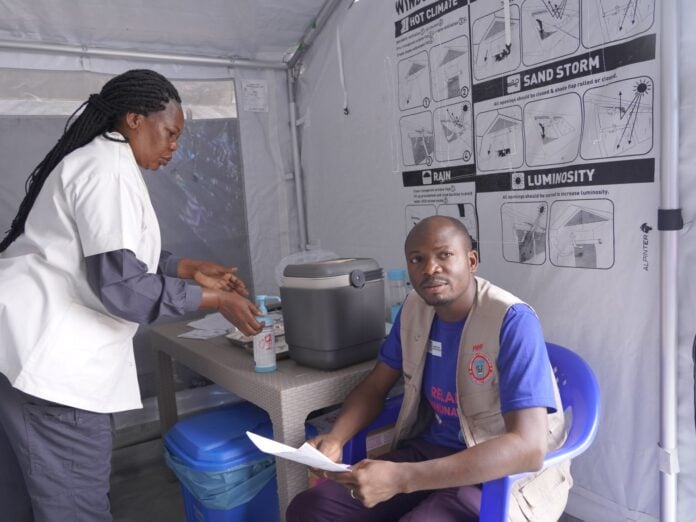
The outbreak’s epicenter, the Mongbwalu, Rwampara and Bunia health zones in Ituri, is among the most difficult places in the world in which to fight a hemorrhagic fever. Armed groups operate across the province, hospitals are sparsely supplied, displaced populations move constantly between camps and across the Ugandan border, and the same conditions that made the 2018 to 2020 epidemic the second deadliest in history are largely unchanged. The first confirmed patient of the current outbreak, a health worker from Mongbwalu, arrived at a hospital in Bunia on April 24 with fever, vomiting and intense malaise. His samples were tested first for Zaire ebolavirus and came back negative. It was not until specimens reached the Institut National de Recherche Biomédicale in Kinshasa on May 14 that genetic sequencing identified the Bundibugyo strain.
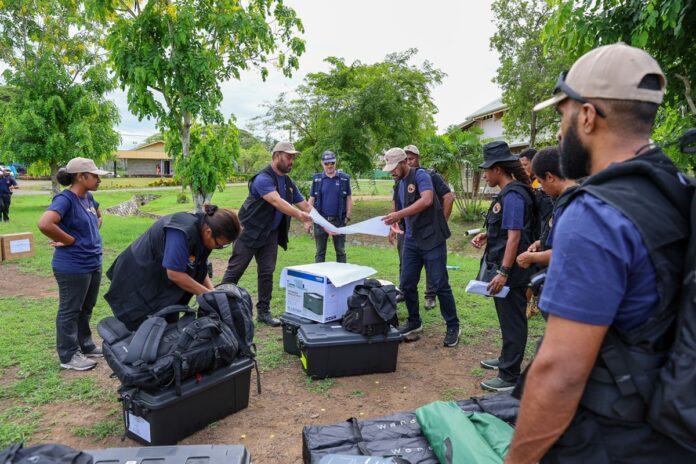
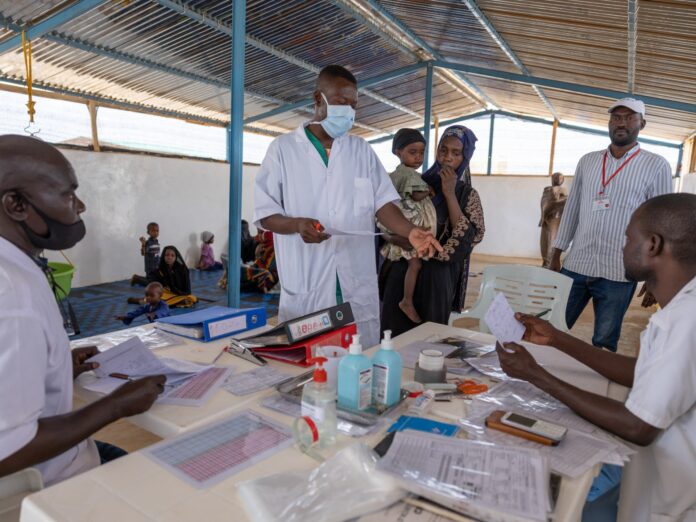
Anne Ancia, who leads the WHO’s team on the ground in Congo, said this week that investigators had not yet located a “patient zero” and that the diagnostic delay alone had allowed the virus to seed itself across at least nine, and by the CDC’s count eleven, health zones. Médecins Sans Frontières has begun scaling up its operations in Ituri, and UNICEF has delivered more than fifteen tonnes of medical supplies to Bunia. Uganda’s government has temporarily banned handshakes, hugs and other forms of casual physical contact.
For Stafford, who works with the Christian relief organization Serge, the path from a remote Congolese clinic to Berlin took several flights, one of them inside a sealed containment tube. His wife, Rebekah Stafford, also a physician, and a colleague, Patrick LaRochelle, were exposed but have remained asymptomatic and are following monitoring protocols. The CDC reported on Wednesday that Peter Stafford was in stable condition at Charité, where doctors have experience treating Ebola patients flown from West Africa more than a decade ago. High-risk contacts of his case have been moved to Germany and the Czech Republic.
At a House Energy and Commerce hearing on Wednesday, Pillai, the CDC’s incident manager, did not directly answer when asked whether the administration was now barring Americans infected with or exposed to Ebola from entering the country. The question, posed and re-posed by Democratic members, hung in the room. Outside the Capitol, two of the people familiar with hundreds of cases in the response, both career public-health officials, said they had never seen anything like it. One described being told the directive came from senior White House staff, not from the CDC or the State Department. The other said the message to clinicians had been clear: find another country.
In Geneva on Wednesday, Tedros urged member states to keep their borders open and to refrain from punitive travel restrictions, which he said had “no basis in science” and tended to push commerce and movement toward unmonitored crossings. In Bunia, ambulances continued their rounds. In Berlin, an American doctor lay in an isolation ward more than 6,000 miles from home, his country having decided, by accident or by design, that he was safer in someone else’s hospital.